Western Sydney Airport 2026 opened to passengers on 25 October 2026. After eight years of construction, NSW’s newest international hub welcomed its first commercial flight on 25 October.
This article was produced and reviewed by the Australia Develops editorial team. See our Editorial Policy for sourcing standards and methodology.
This article covers every confirmed airline, every transport link, and every key date. It also explains the airport’s role in the growing airport infrastructure investment pipeline across Western Sydney.
For official updates, visit the Western Sydney International Airport website or the Australian Government Department of Infrastructure.
What Is Western Sydney Airport 2026?
Western Sydney International Airport — officially named Nancy-Bird Walton Airport — sits at Badgerys Creek. It covers 1,780 hectares, approximately 50 kilometres west of the Sydney CBD.
Two features set it apart from Kingsford Smith Airport. First, it operates 24 hours a day with no curfew restrictions. Second, it is built to scale well beyond its initial 10 million passengers per year.
The commercial aviation market opportunity here is enormous. Western Sydney is home to more than 2.5 million residents. It has never had a direct commercial airport of its own.
The federal government committed to this project in 2014. Construction began in 2018. Eight years of building ended with the opening on 25 October 2026.
Airport Infrastructure Investment at Scale
The scale of airport infrastructure investment at Badgerys Creek is without precedent in recent Australian history.
- Total airport investment: Over $5.3 billion
- Site area: 1,780 hectares at Badgerys Creek
- Initial capacity: 10 million passengers per year
- Operating hours: 24 hours, no curfew
- Cargo capacity: About 250,000 tonnes per year initially (1.8 million at full capacity)
- Aerotropolis jobs target: 20,000 new jobs
Billions more have been committed to surrounding roads, rail, and the Bradfield City precinct. This forms one of Australia’s largest coordinated infrastructure programs in decades.
Freight: Opening July 2026
Before passengers arrived, the cargo precinct opened on 26 July 2026. It handles eight widebody aircraft simultaneously.
The freight hub has an initial capacity of about 250,000 tonnes of cargo per year, with a stated capacity of 1.8 million tonnes a year at full build-out. This makes it a major overnight hub for NSW exporters. Fresh seafood and produce can move directly to Asian markets without routing through Mascot.
Western Sydney Airport immediately opens up new export corridors for Australian producers. The commercial aviation market in Australia has long been centred on Sydney’s east. This shift fundamentally changes that equation.

Confirmed Carriers for Opening Day & Beyond
The Western Sydney Airport 2026 airline lineup covers both domestic and international routes from day one. Here is the full breakdown of every confirmed carrier.

Jetstar: First Flight at 11am on 25 October 2026
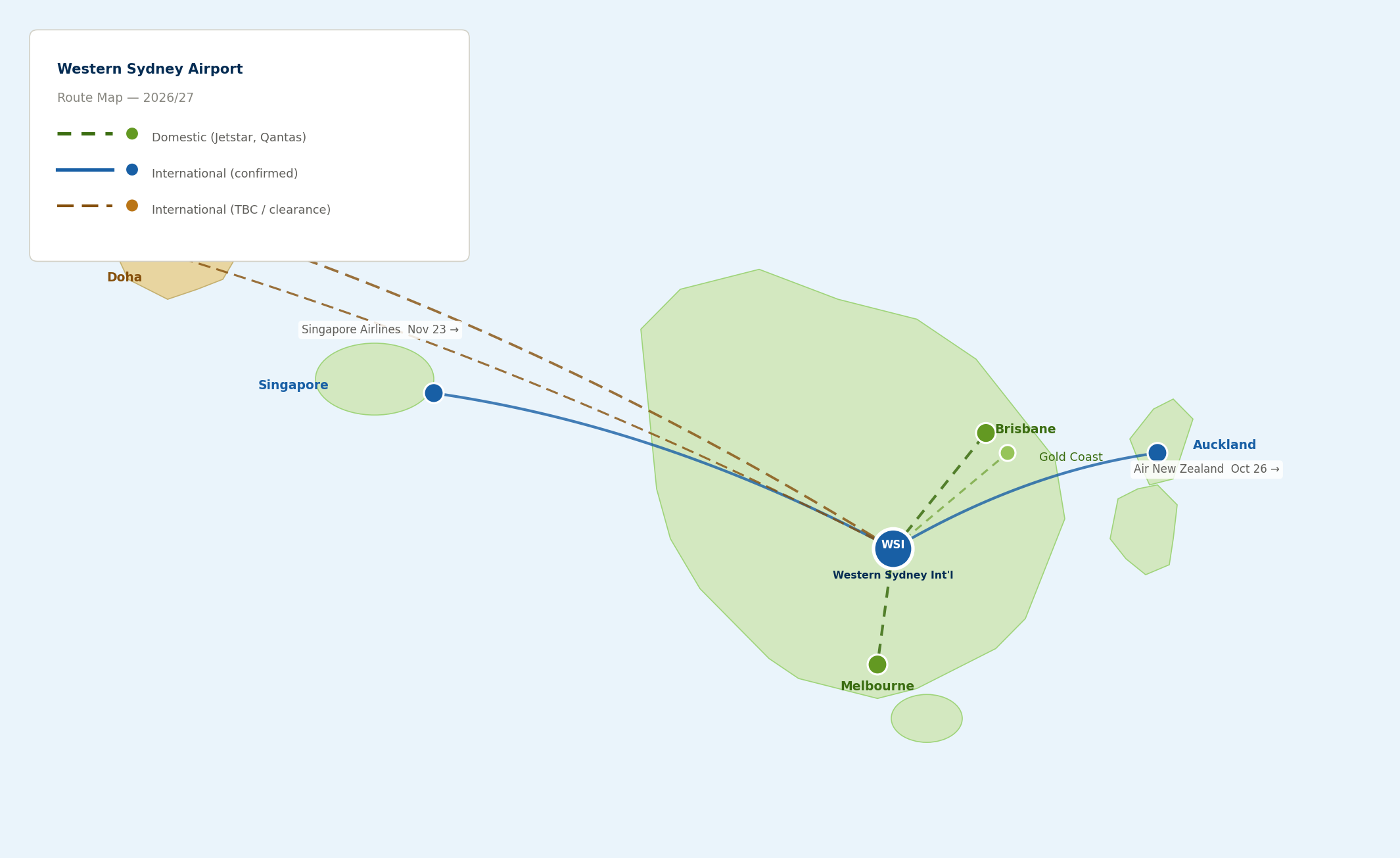
Jetstar launched the inaugural passenger flight on 25 October 2026 at 11am. It runs up to 14 weekly Melbourne services. It operates four Gold Coast flights and three Brisbane departures each week.

Air New Zealand and Singapore Airlines: International Services Begin
Air New Zealand began Auckland flights on 26 October 2026, operating three times a week (Monday, Wednesday and Friday). Meanwhile, Singapore Airlines launches its Singapore service on 23 November 2026. Singapore Airlines also connects passengers onward to Southeast Asia and Europe via its Changi hub.
Emirates and Qatar Airways: Long-Haul Clearance Granted
Emirates received government clearance in May 2026 for up to seven weekly Dubai flights. Similarly, Qatar Airways received approval for seven weekly Doha services. Qatar Airways has since announced that Doha flights will start on 15 December 2027, three times a week, with tickets on sale from 19 December 2026. Emirates has not announced a start date.
These two carriers mark a breakthrough for the local commercial aviation market. Qatar Airways (from December 2027) and Emirates (once it confirms a launch) would connect Western Sydney directly to global business hubs in Europe, the Middle East, and beyond.

Qantas: Joining the Network from March 2027
Qantas joins the network on 28 March 2027. It operates four weekly Brisbane and Melbourne services using QantasLink Embraer E190 aircraft. As a result, the full Qantas Group will serve Western Sydney Airport from early 2027.

Getting There: Roads, Buses & Future Metro Connection
M12 Motorway — Already Open
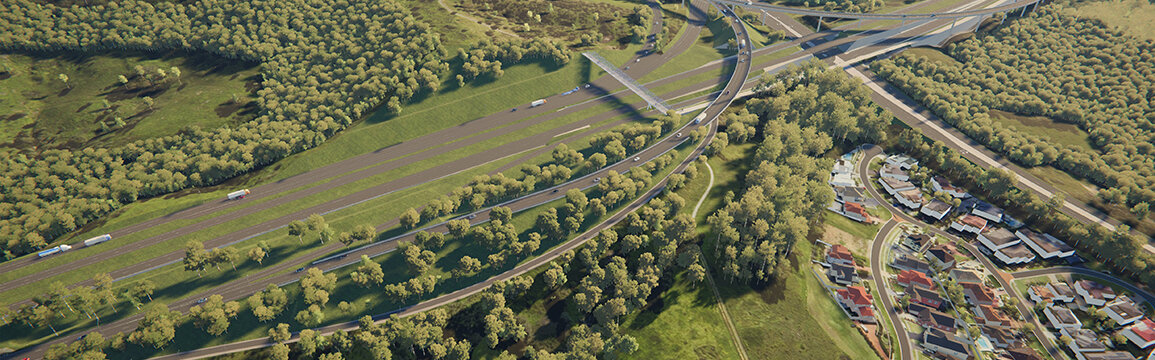
The M12 Motorway opened on 14 March 2026. It connects the M7 to the airport via a 16-kilometre, toll-free road. Drivers from Liverpool can reach the terminal in roughly 20 minutes.
WSI Link Bus — Free Shuttle from 25 October 2026
The WSI Link shuttle began on 25 October 2026, when passenger flights started. It runs every 30 minutes between St Marys station and the airport, free of charge, from 4:30am to midnight Sunday to Thursday and until 1am on Friday and Saturday. Penrith, Liverpool, Campbelltown and Leppington are served by separate bus routes (790, 825, 845 and 860), which run every 30 minutes from 5am to 10pm.
These connections are especially important for residents along the South West Growth Corridor. For more on this growth story, read the analysis of the Leppington Development Pipeline 2026 — and how it connects directly to the new airport transport network.

Sydney Metro Western Sydney Airport — Expected 2027
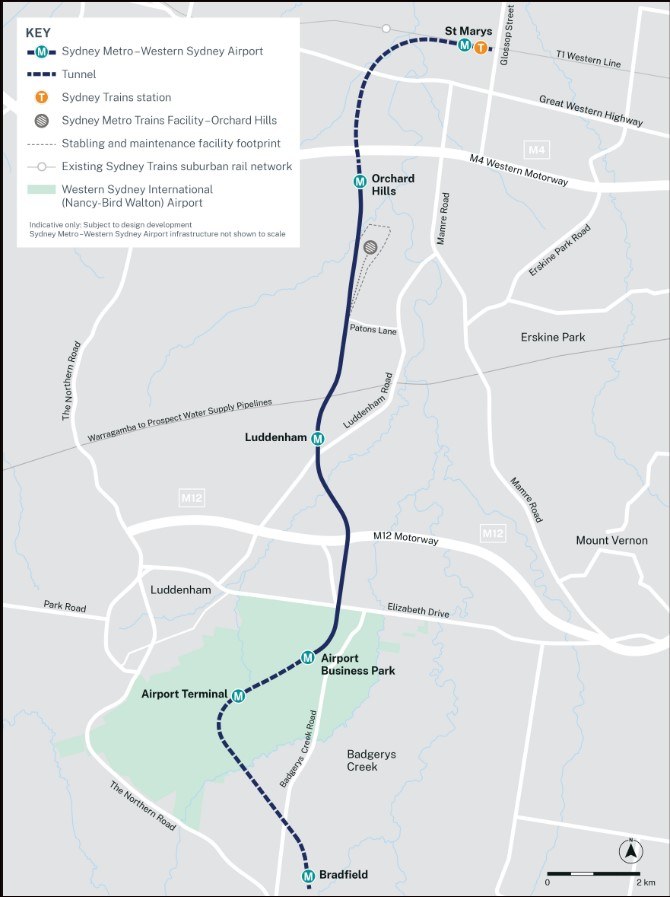
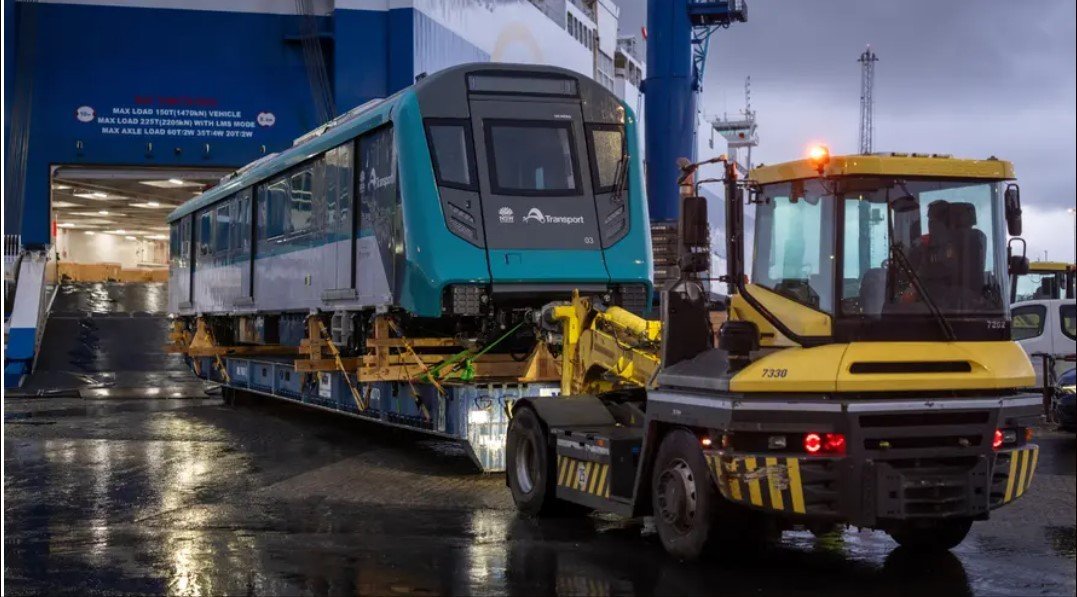
The Sydney Metro Western Sydney Airport line faces a delay. The 23-kilometre route from St Marys to Bradfield City now expects to open in mid-to-late 2027. Nevertheless, track and all station platforms are already complete.
The road and bus network provides solid connectivity from day one. The Metro arrival in 2027 will further strengthen the airport as a regional transport hub.
Western Sydney Growth & Aerotropolis Business Hub
Western Sydney Airport is more than a terminal. It anchors the Aerotropolis Business Hub — a new economic zone stretching from Badgerys Creek toward Penrith.
The Western Sydney property growth story is directly tied to this precinct. Land values around Bradfield City and the Aerotropolis corridor have risen steadily since construction accelerated. Investors and developers are positioning early.
Right beside the airport, Bradfield City is taking shape. It is Australia’s first entirely new city in over a century. It will deliver 10,000 homes, 20,000 jobs, and 2 million square metres of commercial space.
Major logistics operators and technology firms have already secured sites within the Aerotropolis Business Hub. The precinct has been attracting serious corporate investment since before opening day.
The NSW Department of Planning continues to oversee the Bradfield precinct masterplan. Development has progressed in parallel with airport construction.
For property investors and businesses in Western Sydney, this is the most significant infrastructure shift in a generation. The combination of airport infrastructure investment and the Aerotropolis Business Hub is creating long-term value across the region.
Editorial view: for most people in Western Sydney, the real change in October is a much shorter trip to the airport, not a property windfall. The property effect will build over years as jobs arrive, and it will show up first in suburbs with a short, easy drive to the terminal.
Airport-led demand is developing during a softer Sydney housing cycle. The Sydney property price drop 2026 analysis explains current declines and recovery forecasts.
Airport-linked infrastructure interacts with density growth across Sydney’s rail network. The TOD Rezoning NSW 2026 guide maps the 45 affected station precincts and controls.
Western Sydney Airport 2026 Key Dates & Numbers
Western Sydney Airport 2026 marks a turning point for NSW infrastructure, aviation, and Western Sydney property growth.
- Freight hub opens: 26 July 2026
- First passenger flight: 25 October 2026 — Jetstar, 11am
- Air New Zealand Auckland: 26 October 2026
- Singapore Airlines service: 23 November 2026
- Qantas joins: 28 March 2027
- Sydney Metro opens: Mid-to-late 2027
- Bradfield City homes: 10,000 planned
- Aerotropolis jobs target: 20,000
The airport’s 24-hour, curfew-free operation gives Western Sydney a structural advantage that Kingsford Smith can never match. As a result, airlines, freight operators, and airport infrastructure investment funds are positioning early.
Western Sydney Airport is not just a new terminal. It is the catalyst for the next decade of Western Sydney property growth, commercial aviation expansion, and Aerotropolis development.
For all official details, visit Western Sydney International Airport and the NSW Department of Planning.

Frequently Asked Questions
Western Sydney Airport (Nancy-Bird Walton Airport) opened to passengers on 25 October 2026, with Jetstar operating the first commercial flight, a Gold Coast service departing at about 11:20am. Freight operations started earlier, in July 2026.
Jetstar began flying from Western Sydney Airport on 25 October 2026, Air New Zealand began Auckland flights on 26 October 2026 (three times a week) and Singapore Airlines starts daily Singapore flights on 23 November 2026. Qantas services start on 28 March 2027 and Qatar Airways flights start on 15 December 2027. Emirates has government clearance but has not announced a start date.
The toll-free M12 Motorway connects the M7 to the airport, and the free WSI Link bus shuttle runs every 30 minutes between St Marys station and the terminal, with separate bus routes from Penrith, Liverpool, Campbelltown and Leppington. The Sydney Metro Western Sydney Airport line is expected to open in mid-to-late 2027.
Western Sydney Airport is located at Badgerys Creek, approximately 50 kilometres west of the Sydney CBD, covering 1,780 hectares and operating 24 hours a day with no curfew restrictions.
For a suburb-by-suburb breakdown of zoning, noise contours, and growth potential around the terminal, see Australia Develops’ Western Sydney Airport property hotspots guide.
The airport’s unrestricted overnight operations, examined in Australia Develops’ WSI 24-Hour Operations analysis, are central to its freight and low-cost carrier strategy.
Beyond flight routes and terminal openings, the WSI transport guide to Metro, M12 and commute times details how road and rail infrastructure will connect this precinct to Greater Sydney.
For a closer look at confirmed carriers, launch dates and entry fares, see the WSI airlines and airfares analysis.
Beyond flight routes, the airport’s opening is expected to generate thousands of local roles, covered in the WSI jobs and careers employment pathways guide.
For readers weighing air travel options in the region, the Sydney Airport vs Western Sydney Airport traveller comparison breaks down curfew rules, terminal design and ground transport differences between the two facilities.
For a closer look at the architectural design behind the new terminal, the Inside WSI: Nancy-Bird Walton legacy and future airport design feature covers the building’s sustainability engineering and long-term expansion plans.
This article is general information only and is not financial, legal or planning advice. See our Disclaimer for details.
Related Reading
Update, 2 November 2026: Wording has been updated to reflect the opening of Western Sydney International Airport (freight on 26 July 2026, passengers on 25 October 2026).
Update, 12 November 2026: Remaining pre-opening wording in the introduction and the Aerotropolis section has been updated to reflect the airport opening on 25 October 2026.
Correction, 12 November 2026: An earlier version said Qatar Airways and Emirates were confirmed to start flying from Western Sydney Airport from October and November 2026. Qatar Airways has announced that its Doha service starts on 15 December 2027 (Qatar Airways press release, 20 October 2026). Emirates has government clearance but has not announced a start date. The article has been corrected.
Correction, 12 November 2026: An earlier version gave 5 July 2026 as the start date of the free WSI Link shuttle and 220,000 tonnes a year as the freight hub capacity. Transport for NSW states that WSI Link started on 25 October 2026 and serves St Marys station only, with other stations served by separate routes. Australian Aviation reports an initial capacity of about 250,000 tonnes a year and 1.8 million tonnes a year at full capacity. It also described Air New Zealand’s Auckland service as daily; the Australian Government states it operates three times a week (Monday, Wednesday and Friday) from 26 October 2026. The article has been corrected.