Written by Daniel Whitfield, founder of Australia Develops, who has personally bought, subdivided, and built property across Australia.
WSI airlines and airfares will define its early years: the long-term commercial viability of Western Sydney International (Nancy-Bird Walton) Airport depends directly on securing firm commitments from major domestic and international airlines.
For a greenfield facility located in the outer metropolitan ring, entering a competitive aviation market requires clear economic incentives for carriers to split their existing operations away from established inner-city infrastructure.
Following extensive negotiations, several major regional and international airlines have finalised binding multi-year agreements, establishing a structured foundation for the airport’s launch phase.
Understanding WSI airlines and airfares is critical for business travel planners, logistics managers, and real estate developers tracking population movements across the region.
Property and Workforce Implications of Airline Placement
Initial airline placement decisions directly shape where crew accommodation, hospitality assets, and commercial offices take root. Foreign Direct Investment (FDI) Australia flows into airport-adjacent commercial real estate have accelerated sharply as confirmed carrier schedules have solidified the operational timeline for the precinct.
The table below details confirmed airline launches, operational dates, and initial destination routes finalised for the opening phase of WSI.
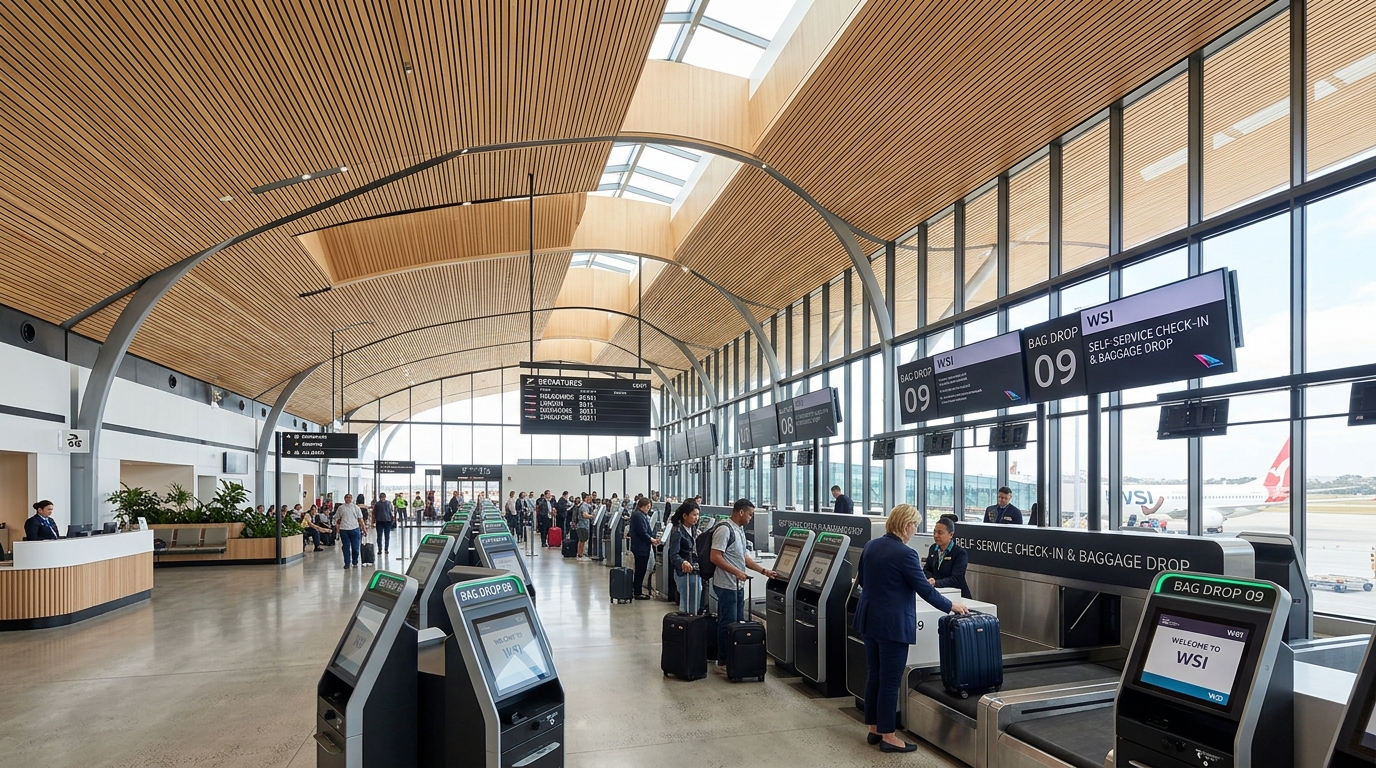
WSI’s Operating Model Behind These Airline and Route Decisions
Readers exploring the broader WSI economic ecosystem can review how overnight freight operations work in the WSI 24-hour curfew-free operations guide, and how ground transport connects to the precinct in the WSI transport guide covering Metro, M12, and commute times.
For a direct head-to-head comparison of operating profiles, the Sydney Airport vs Western Sydney Airport traveller comparison provides one.
The video below explains WSI’s 24-hour, curfew-free operating model, the structural factor behind the freight schedules and international route timing discussed in this guide.
Domestic and Freight Networks: Driving Early Activity
The initial activation of WSI occurs in two distinct phases: a dedicated air cargo phase followed by commercial passenger operations.
This structured rollout allows airport authorities to test active tarmac systems, baggage loops, and ground handling procedures under real-world conditions before managing full passenger crowds.
Dedicated Freight Initiatives
The Department of Infrastructure’s aviation policy hub outlines the federal regulatory framework these freight carriers operate under, while air traffic and route coordination across the new curfew-free airspace is managed by Airservices Australia.
Air freight networks launch ahead of passenger terminal services, with initial cargo arrivals commencing in late July 2026.
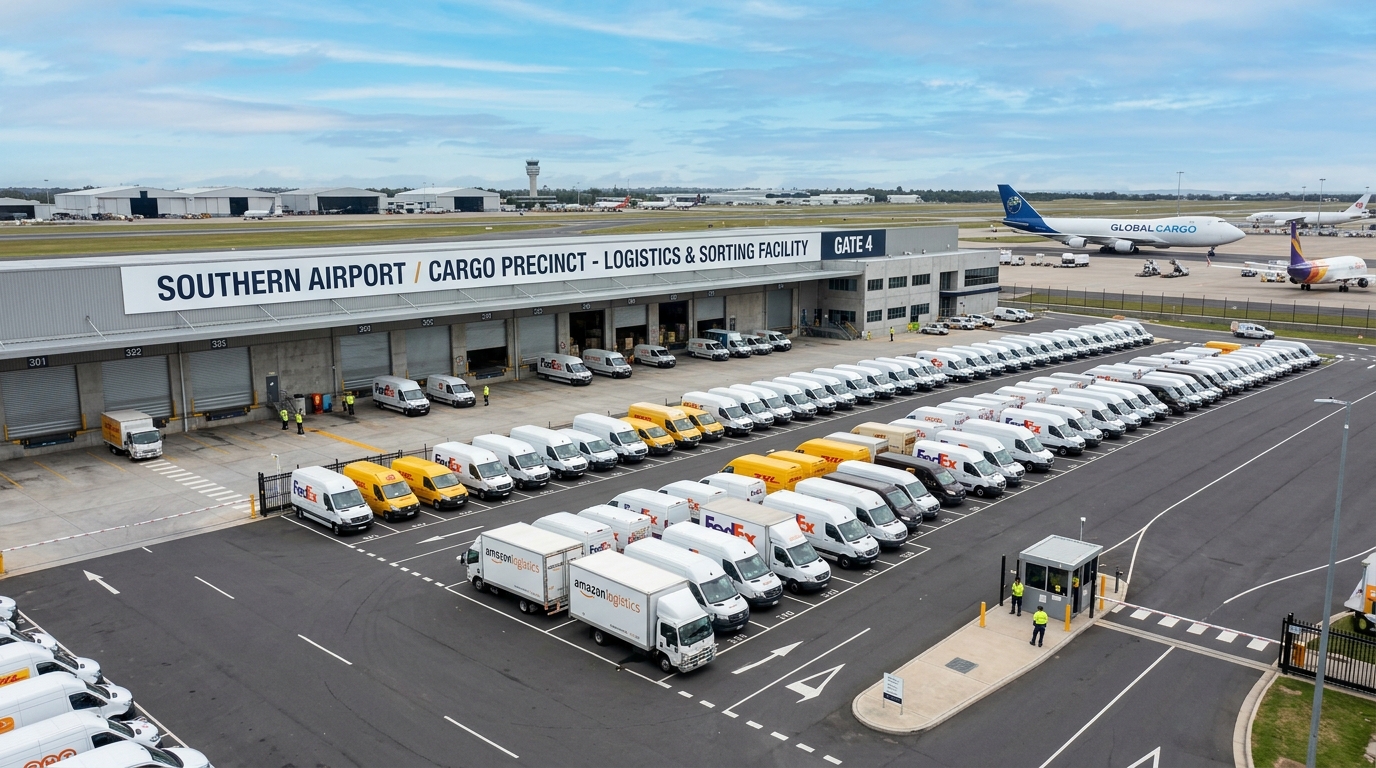
Qantas Freight plans to move its first flights on July 27, 2026, operating from a 24,000-square-metre cargo precinct located on the southern edge of the airfield.
Deploying Airbus A321 and A330 converted freighters, this facility can handle more than 850 tonnes of air cargo weekly, targeting next-day e-commerce and express retail deliveries.
Concurrently, Texel Air will commence regular operations from the cargo precinct, providing high-capacity priority logistics slots that leverage the airport’s 24-hour curfew-free mandate.
Passenger Milestones: Jetstar and Qantas
Aviation safety standards and air operator certificates for carriers launching WSI routes are governed by the Civil Aviation Safety Authority (CASA).
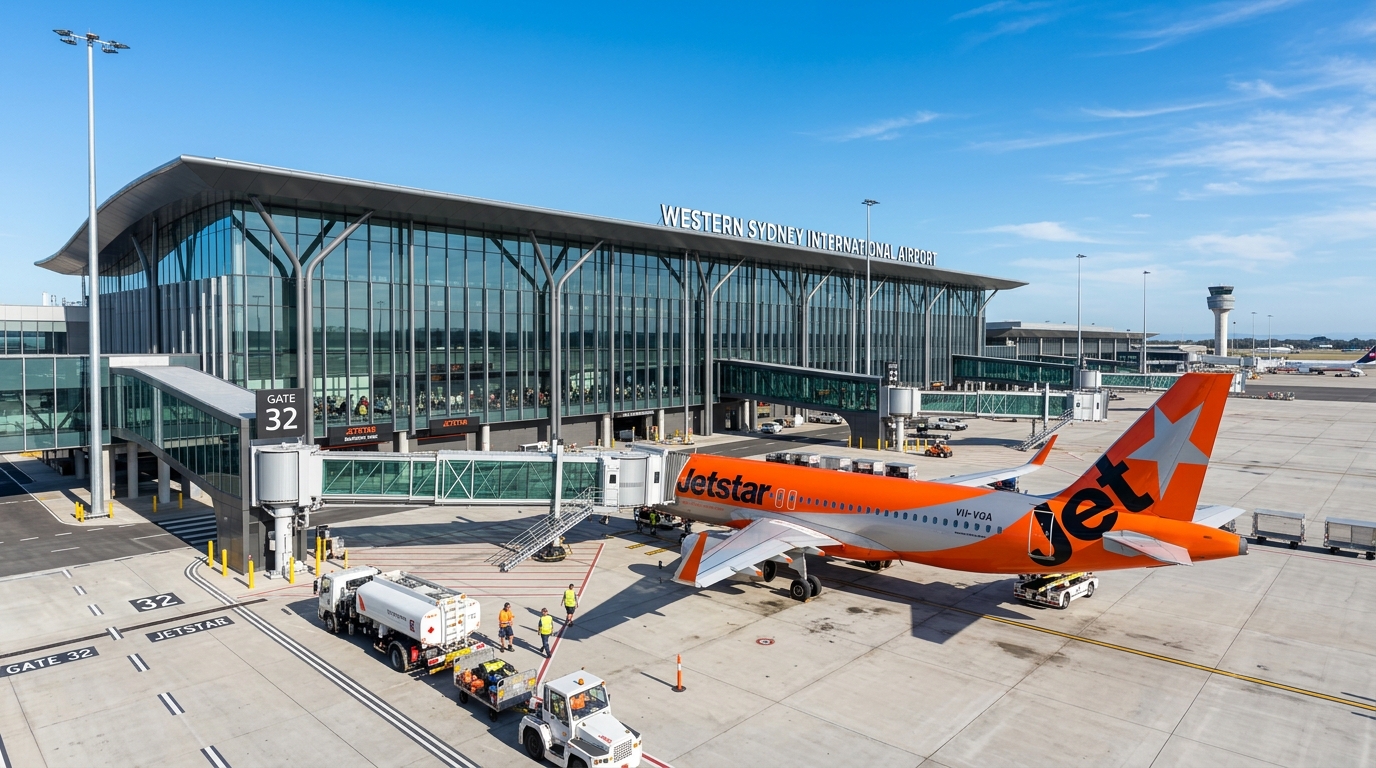
Commercial passenger services formally commence on Sunday, October 25, 2026. Indeed, jetstar will operate the inaugural passenger service, with flight JQ362 scheduled to depart at 11:00 AM for the Gold Coast.
The budget carrier will base Airbus A320 aircraft at the terminal, operating up to 14 weekly flights to Melbourne, four to the Gold Coast, and three to Brisbane.
Qantas and QantasLink will follow a staggered transition plan, deferring their regular domestic passenger launch at WSI until March 28, 2027, operating Embraer E190 regional jets on four weekly services to both Melbourne and Brisbane alongside existing high-frequency hubs at Mascot.
International Routes: Connecting to Major Global Hubs
The early integration of major international carriers confirms the long-term commercial role of WSI as a genuine global gateway.
By securing direct international routes during the opening launch month, the airport establishes immediate cross-border travel options for the Greater Western Sydney demographic basin.
Trans-Tasman Connectivity: Air New Zealand
On October 26, 2026 — one day after the domestic passenger launch — Air New Zealand will commence direct international services connecting WSI to Auckland.
Operating an economy-only Airbus A321neo configuration during the initial phase, the westbound service (NZ165) arrives in Western Sydney at approximately 7:55 AM local time, with the eastbound return (NZ166) departing at 9:05 AM.
This schedule targets the extensive visiting friends and relatives (VFR) market across Sydney’s western suburbs, allowing travellers to bypass long commutes to Mascot.
Global Transfer Strategy: Singapore Airlines
The official Western Sydney International Airport operational portal is at the Western Sydney International Airport official site, and aerotropolis planning directives shaping the commercial cargo and logistics precincts adjacent to the runway are published by the NSW Department of Planning’s Western Sydney Aerotropolis office.
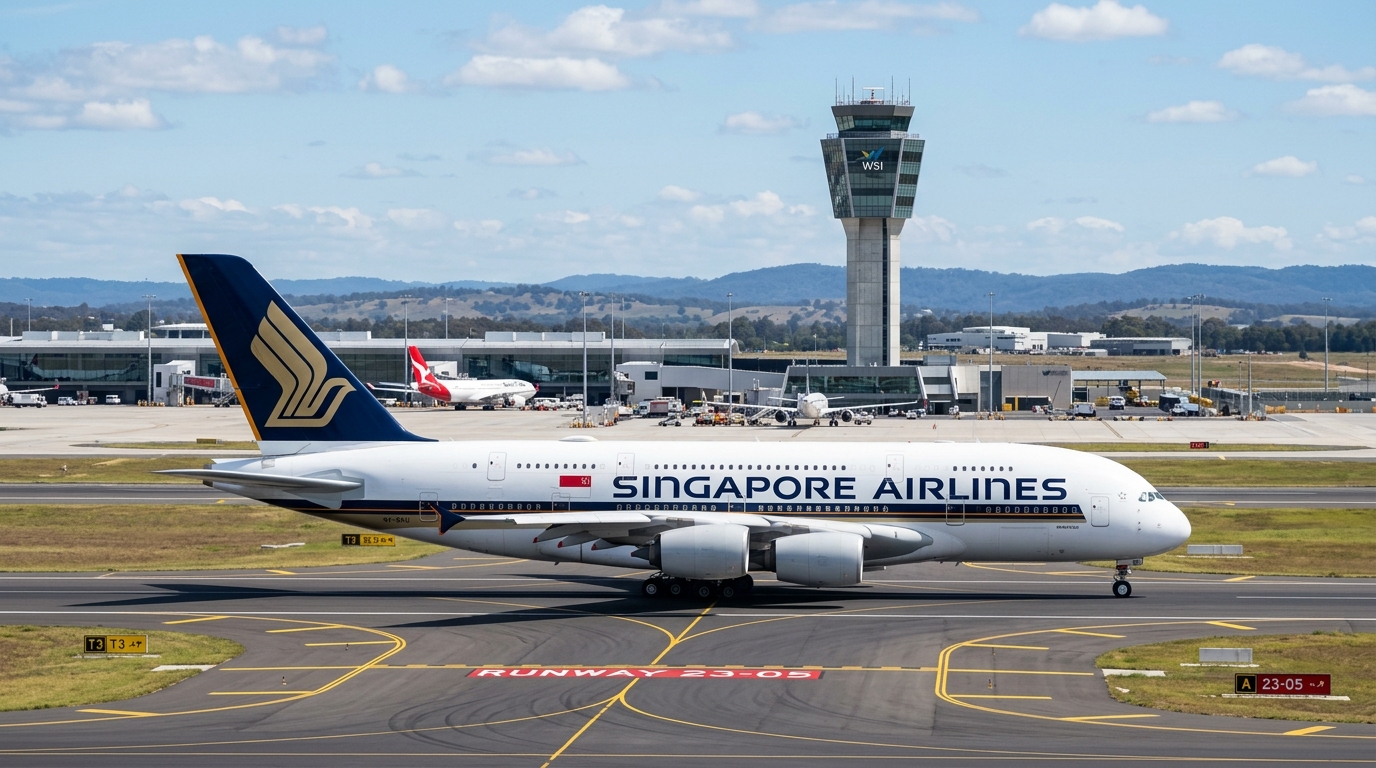
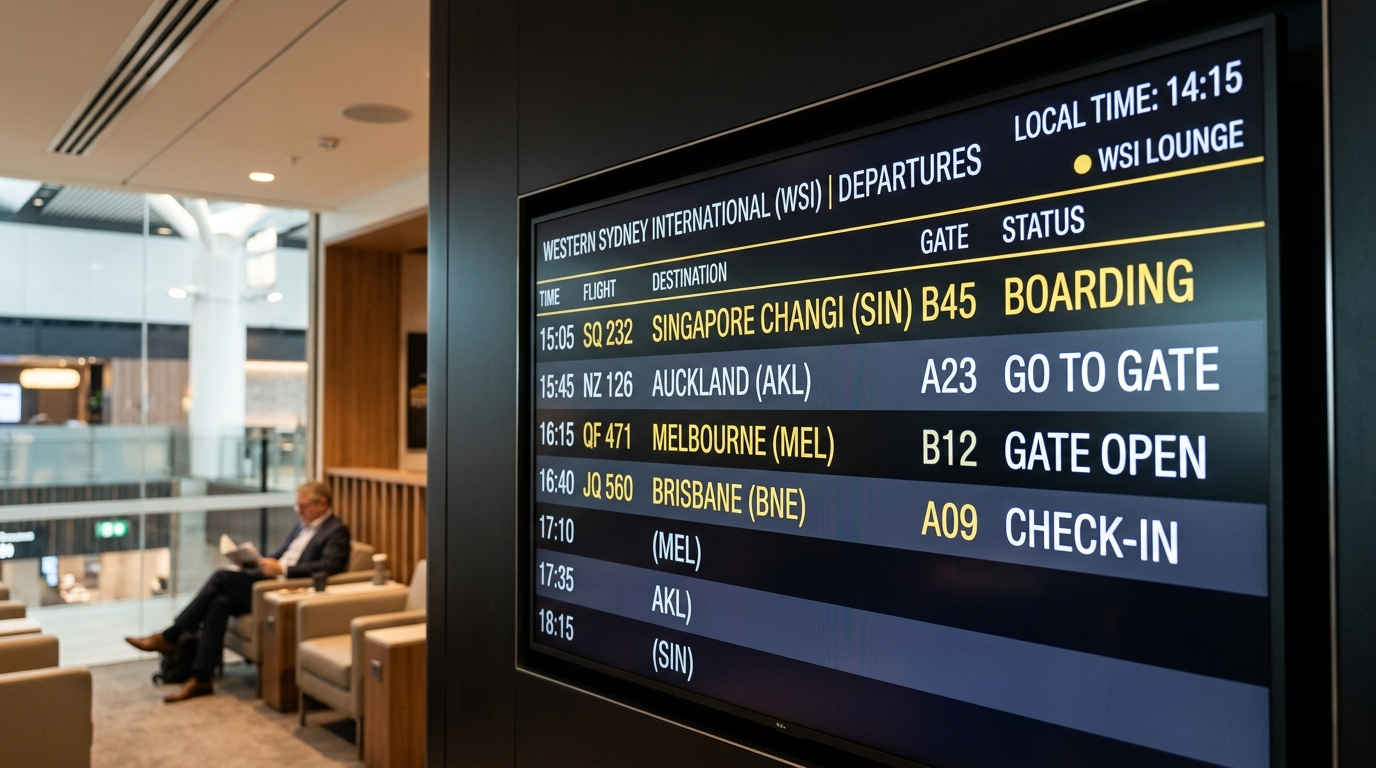
Singapore Airlines will launch daily direct services to Singapore Changi on November 23, 2026. Therefore, deploying a dual-class Airbus A350-900 with both business and economy cabins, flight SQ202 departs WSI late at night at 23:55, arriving at Changi at 5:05 AM the following morning.
This late-night slot leverages the airport’s curfew-free mandate, linking Western Sydney directly into one of the world’s premier international transit hubs.
Corporate and leisure travellers gain efficient onward connections to European, Asian, and Middle Eastern flight networks without accessing the inner-city airport precinct.
Analysts expect commercial real estate yields in hospitality and transit accommodation precincts near WSI to tighten as international passenger volumes ramp up through 2027.
Airfare Dynamics and Traveller Decision Realities
The Consumer Data Right for aviation pricing transparency is overseen by the Australian Competition and Consumer Commission’s travel and airports division.
Passenger volume and route-capacity benchmarks for Western Sydney draw on data published by the Bureau of Infrastructure and Transport Research Economics (BITRE).
Airport authorities employ strategic landing fee subsidies and carrier fee rebates to encourage market adoption and build stable passenger volumes at the new greenfield terminal.
These structural operating cost reductions translate directly into competitive downward pressure on initial ticket pricing.
The table below contrasts initial launch fare dynamics and carrier inclusions across the primary routes finalised for the WSI opening window.
Commercial Property and Supply Chain Implications
Broader Aerotropolis infrastructure coordination relevant to airline and freight precinct planning sits with the Bradfield Development Authority (formerly the Western Parkland City Authority).
The establishment of regular international and domestic flight corridors has driven a clear response from commercial real estate markets adjacent to the transport gates.
Airport business parks and nearby employment precincts are experiencing a shift in capital deployment toward dedicated corporate services, specialised aviation maintenance yards, and freight handling facilities.
Firms and private buyers seeking to capitalise on this commercial momentum in surrounding locations like Leppington or Austral must proceed with careful risk management, evaluating physical site realities alongside planning metrics.
1. Soil Considerations and Site Costs
Significantly, Constructing industrial warehousing, commercial offices, or residential crew quarters across Western Sydney requires clear accounting for civil engineering site costs.
The prevalence of reactive clay soils and the lack of pre-existing connection lines in greenfield sub-markets can introduce unexpected variations to standard construction budgets.
Developers must address these civil engineering factors prior to finalising land transactions. However, a detailed guide on these unexpected build expenses is available at site costs in Australia and why cheap land can cost more to build on.
2. Navigating Environmental Overlays and Flood Hazard Maps
The geographical topography of the outer western perimeter places certain developing sectors inside regional drainage catchments or close to fire-prone vegetation boundaries.
These environmental controls enforce explicit building restrictions — such as raised floor footprints or specific fire-resistant building materials — which directly govern council approval timelines and long-term asset insurance costs.
A critical overview of independently verifying environmental exposures before entering a contract is available at flood and bushfire maps Australia: essential mapping tools before buying property.
3. Protecting Capital from Title Registration Delays
Critically, Due to high demand for residential and light industrial space near the airport, several new land allotments are marketed as off-the-plan, unregistered parcels.
Delays in civil earthworks or utility clearances can stall title registrations for months, impacting building financing and construction contracts.
A specialised analysis on protecting capital from off-the-plan registration risks is available at managing unregistered land in Australia and why off-the-plan land can go badly wrong.
WSI Airlines and Airfares: Key Data at a Glance
The aviation metrics below summarise the core commercial benchmarks defining the WSI launch window.
In practice, To access the complete historical dataset, structural operational maps, and surface transport route connections defining this milestone launch, review the core reference report on Western Sydney Airport 2026 airlines, transport and opening dates.
To understand the broader macro-economic planning and state funding models anchoring the commercial land surrounding these runways, explore the strategic overview of the $33 billion Western Sydney Aerotropolis investment case.
Readers can review residential land supply pipelines suitable for incoming flight crews at the Leppington development pipeline 2026 and the adjacent Austral precinct development 2026.
This article is general information only and is not financial, legal or planning advice. See the Disclaimer for details.