Written by Daniel Whitfield, founder of Australia Develops, who has personally bought, subdivided, and built property across Australia.
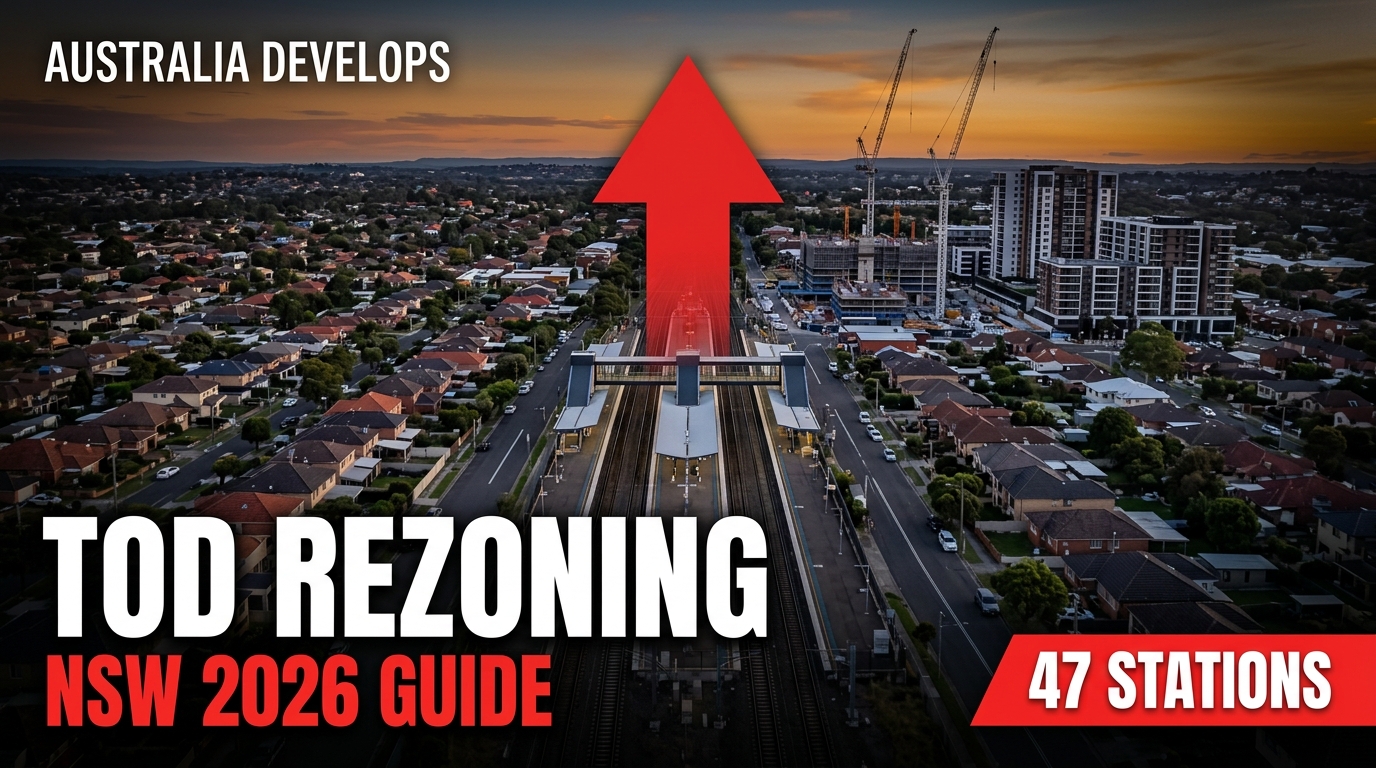
The NSW Government’s TOD rezoning NSW 2026 program represents the most significant rewrite of suburban planning controls in a generation.
Under the Transport Oriented Development (TOD) State Environmental Planning Policy (SEPP), planning rules have been permanently changed within 400 metres of 37 metro and rail stations across Greater Sydney, with eight accelerated precincts undergoing even more dramatic uplifts that allow towers well beyond 20 storeys.
For landowners, developers, and prospective buyers, understanding what has changed and which precincts are affected is now essential to navigating the Sydney property market.
The Minns Labor Government introduced the TOD program in response to a housing affordability crisis that has seen Sydney median dwelling prices exceed $1.1 million.
By unlocking high-density development within walking distance of major train and metro stations, the government aims to add more than 170,000 new homes across TOD precincts over the next 15 years.
The rezoning controls commenced on 13 May 2024 for the initial 29 precincts, with the remaining locations receiving new planning controls progressively through 2025 and 2026.
The program is being closely watched by investors who have already begun consolidating land near designated station precincts in anticipation of significant capital uplift.
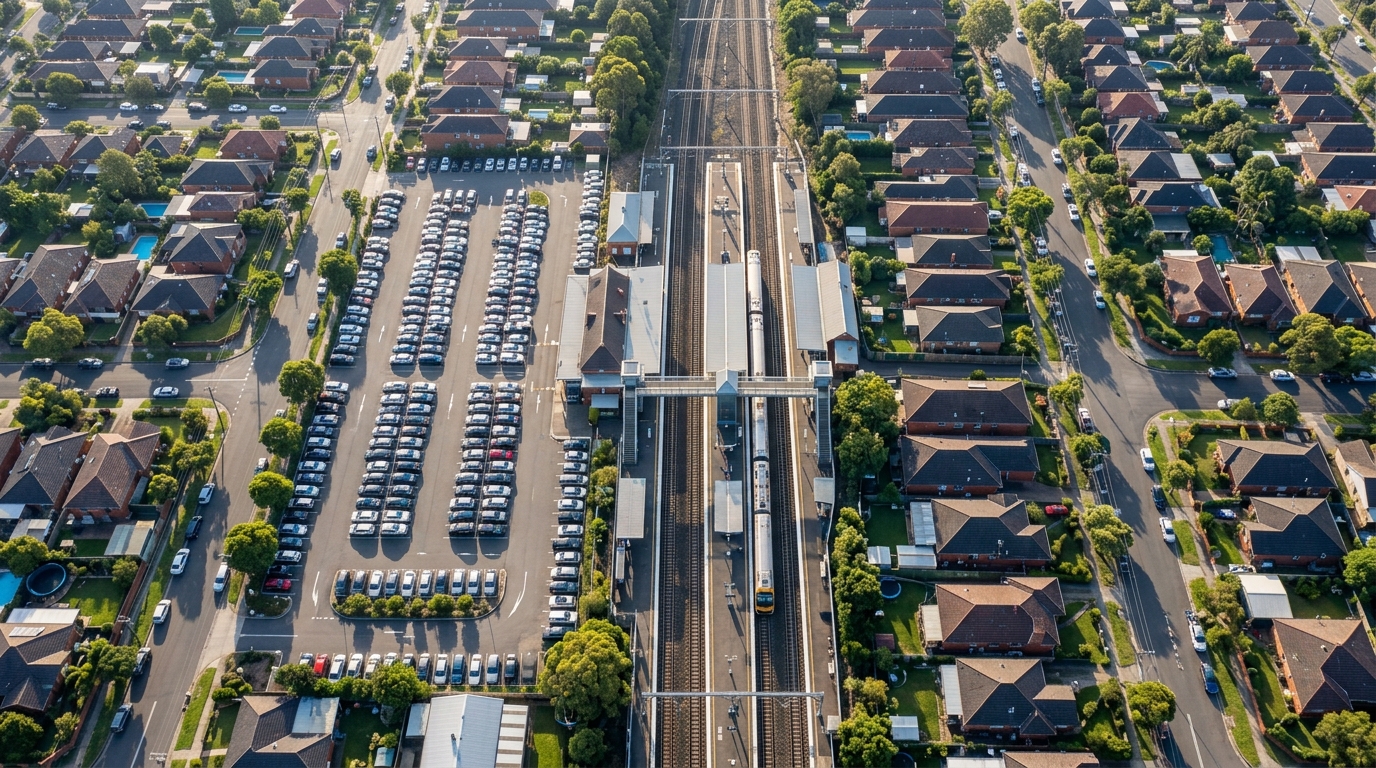
What Is the NSW TOD Program and How Does It Work?
The Two-Tier Structure of TOD Rezoning NSW
The Transport Oriented Development Program operates in two distinct tiers. In particular, the first tier sets baseline controls for all 37 designated precincts.
The first tier — standard TOD controls — applies to 37 designated metro and rail station precincts, rezoning land within 400 metres to permit residential flat buildings in residential zones and shop top housing in local centre and commercial zones.
These baseline controls set a maximum building height of 22 metres for residential flat buildings and 24 metres for shop top housing, with a maximum Floor Space Ratio (FSR) of 2.5:1 and a minimum lot width of 21 metres.
These controls remove the previous prohibition on residential flat buildings in low-density residential zones, fundamentally changing what can be built on suburban blocks near stations.
The Eight Accelerated Precincts — What Makes Them Different
The second tier —. The accelerated precincts — targets eight high-priority areas where more comprehensive rezoning has occurred through the NSW Planning accelerated precincts page.
These precincts have undergone bespoke masterplanning, with much higher density controls and towers reaching 25 storeys or more in some locations.
The accelerated precincts are: Bankstown, Bays West, Bella Vista, Crows Nest, Homebush, Hornsby, Kellyville, and Macquarie Park. Therefore, the state government rezoned seven of the eight precincts in November 2024, making development applications open from 27 November 2024.
Bays West, the final precinct, is expected to be finalised in 2025–2026.
| TOD Tier | Number of Precincts | Max Height (Residential) | Max FSR | New Homes Target |
|---|---|---|---|---|
| Standard TOD Stations | 37 precincts | 22m (approx. 6–7 storeys) | 2.5:1 | 110,000+ over 15 years |
| Accelerated Precincts | 8 precincts | Up to 25+ storeys | Bespoke (up to 10:1+) | 60,000 over 15 years |
| Total Program | 45 precincts | Varies by precinct | Varies | 170,000+ over 15 years |
Each accelerated precinct has unique housing targets and height limits under the TOD SEPP.
The Eight Accelerated Precincts — What Has Changed?
The eight accelerated precincts represent the most transformative element of the TOD program, with bespoke planning controls that unlock far greater density than the standard station precincts.
Bankstown, arguably the most high-profile accelerated precinct, is set to receive 12,500 new homes with tower heights reaching up to 25 storeys around the metro station.
The Bankstown CBD is expected to nearly triple its population by 2036, driven by the intersection of the Sydney Metro Southwest and existing train lines.
According to the NSW Government, the Bankstown rezoning alone unlocks capacity for high-rise residential towers, commercial space, and affordable housing requirements.
The Bankstown CBD development 2026 analysis details the active project pipeline around the Metro conversion.
The NSW Government allocated the largest housing target to Homebush, the biggest of the eight accelerated precincts,, with 16,100 new homes planned within a masterplanned precinct that also delivers 2,670 new jobs.
Crows Nest on Sydney’s lower North Shore, will receive 3,255 new homes within a 1.2-kilometre radius of the new Crows Nest Metro station.
Kellyville and Bella Vista in the Hills District have undergone significant uplifts, leveraging the Sydney Metro Northwest to unlock high-density living in what was previously low-density suburban land.
As detailed by Urbis, the accelerated precincts have already seen active land consolidation and development application activity in the months since rezoning took effect.
The rezoning of these eight precincts is closely connected to broader infrastructure investment in Western Sydney. Western Sydney Airport, opening to passengers in October 2026, is driving a parallel transformation in the Aerotropolis and Bradfield City, which operates under separate planning mechanisms but reflects the same principle of density around transport nodes.
Bringelly and surrounding growth corridors are seeing rapid residential expansion that complements the TOD precincts to the north and east.
The Western Sydney Aerotropolis 2026 analysis explains the separate investment framework shaping Bradfield and nearby precincts.
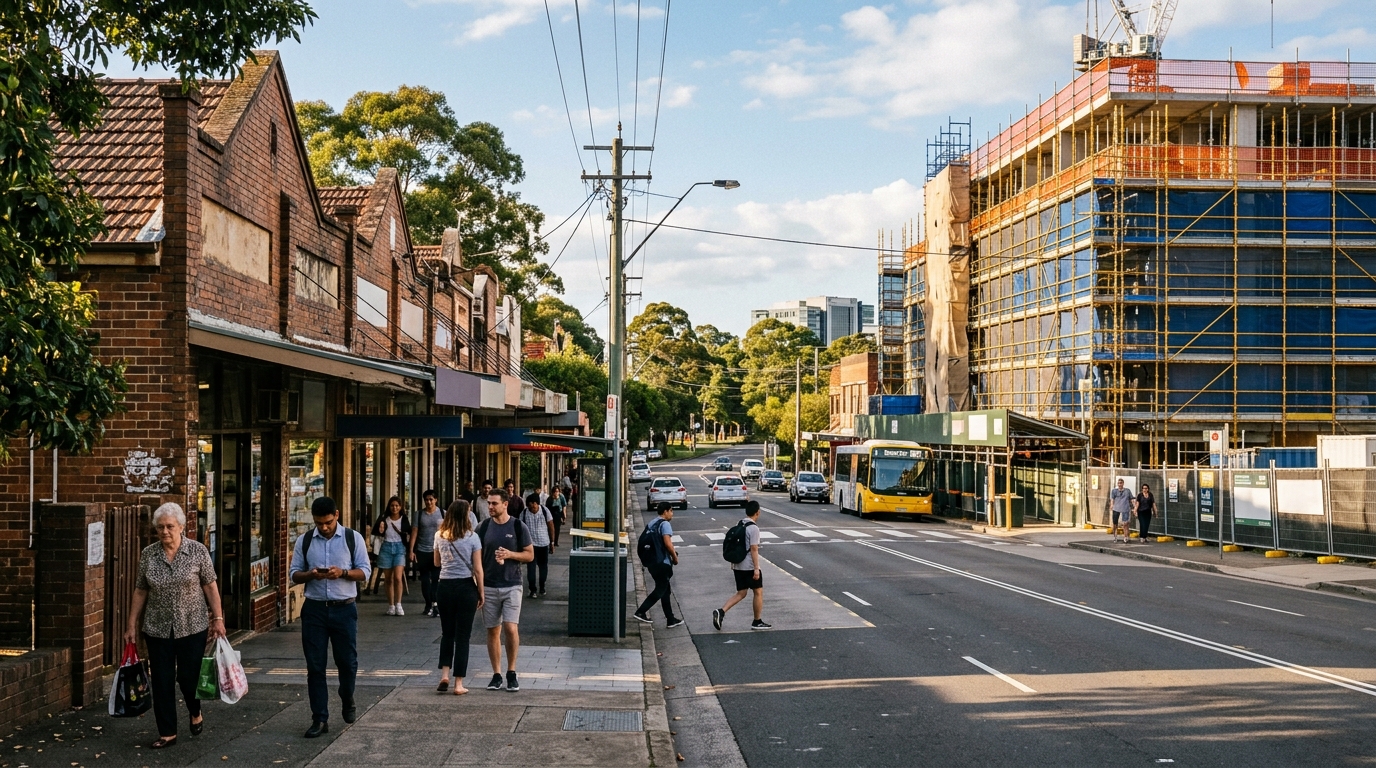
Height Limits and FSR — What Can Be Built Near Each Station?
Understanding the specific height controls and floor space ratios (FSR) applicable to each TOD station is critical for landowners and developers assessing development potential.
Under the standard TOD SEPP, residential flat buildings within 400 metres of designated stations are now permitted up to 22 metres (approximately six to seven storeys), with shop top housing permitted up to 24 metres in commercial and mixed-use zones.
The maximum FSR of 2.5:1 means a 1,000 square metre site could theoretically support 2,500 square metres of gross floor area — a significant increase over the 0.5:1 FSR that applied in many residential zones previously.
Maximum Building Envelope Under Standard Controls
As Coleman Greig Lawyers notes, the practical yield achievable on any site depends on setback requirements, site amalgamation opportunities, heritage constraints, and local infrastructure capacity.
The minimum 21-metre lot width requirement means that many narrow suburban allotments cannot directly benefit from the new controls without lot amalgamation.
This has driven a wave of off-market site consolidation activity in precincts like Hornsby, Macquarie Park, and Kellyville, where developers have been quietly acquiring adjoining properties to assemble sites with sufficient width and depth to take advantage of the maximum permissible density.
The property easements NSW 2026 guide outlines title risks before site amalgamation or redevelopment purchases.
The standard TOD controls significantly increase what can be built on eligible sites near each station.
Source: NSW TOD SEPP standard controls, Coleman Greig Lawyers analysis.
In the accelerated precincts, height limits are substantially higher and are set through bespoke Development Control Plans (DCPs) rather than the blanket SEPP controls.
Bankstown’s precinct controls consequently permit towers up to 25 storeys in the core city centre area immediately surrounding the metro station, stepping down to mid-rise buildings of 10–15 storeys in transition zones and six to eight storeys at the precinct edges.
These controls are detailed on the NSW Planning TOD program, which provides interactive mapping tools showing the applicable height limits and land use zones for each precinct.
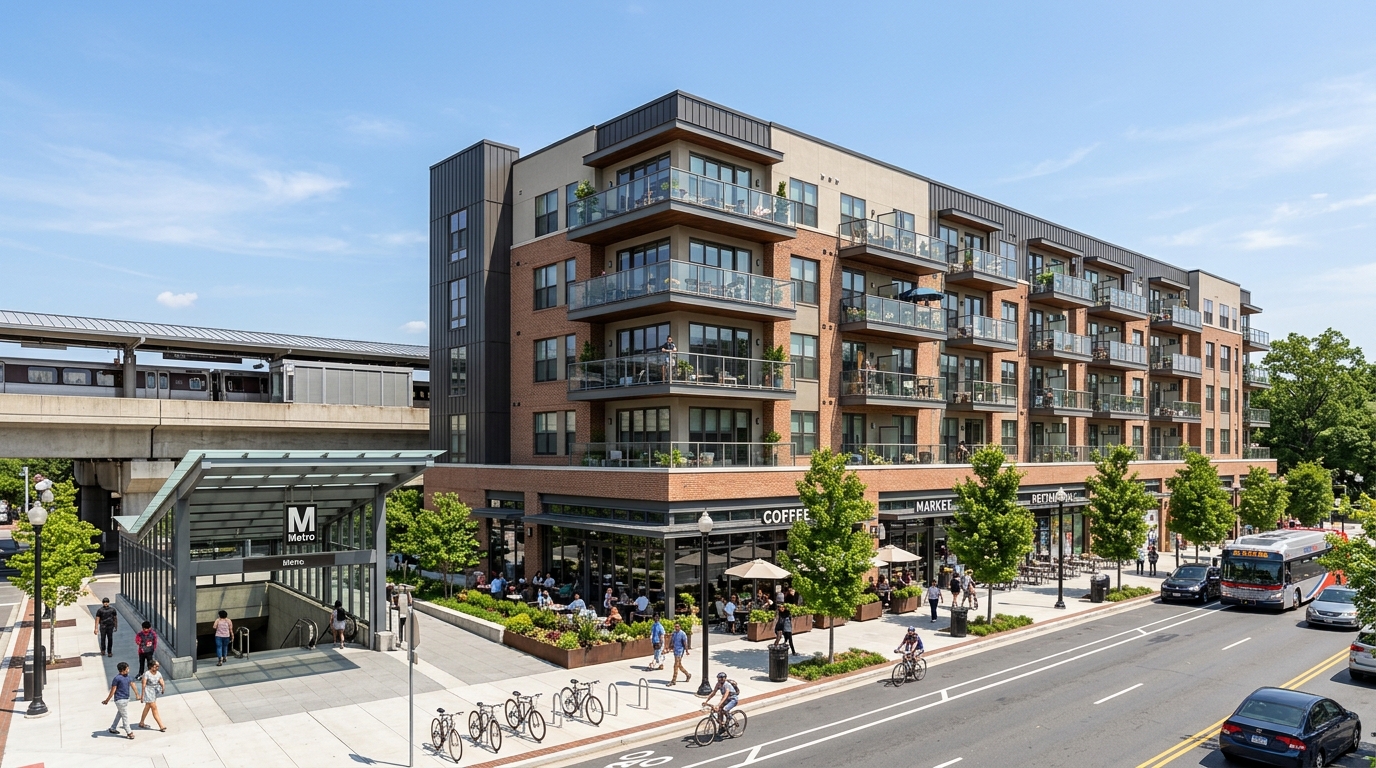
Property Price Uplift and Site Value — What the Data Shows
The rezoning of land near station precincts has historically produced significant uplift in site values, and the NSW TOD program is no exception.
Research from the University of Sydney found that homes within 800 metres of Sydney Metro Northwest stations experienced up to 15 per cent higher price growth than the broader market.
The NSW Government’s own review of rezoning impacts on land values confirms that rezoning potentiality —. The expectation of future higher-density development — flows through to land values even before any physical development occurs.
In the TOD precincts, this uplift has been most pronounced in land suitable for site amalgamation. Additionally, development sites in accelerated precincts such as Bankstown and Homebush have seen values increase materially since the rezoning was announced, as developers compete to assemble sites large enough to achieve the maximum permissible density.
As Ray White Commercial reports, the TOD program has triggered aggressive land consolidation activity across the inner west and southwestern Sydney corridors.
Homeowners in TOD precincts who may not wish to sell immediately are in a stronger negotiating position than they were prior to the rezoning, given the increased demand from developers seeking site amalgamation opportunities.
The Leppington development pipeline provides a contrasting growth-corridor example outside the standard TOD controls.
Which Landowners Benefit Most from TOD Rezoning NSW
The affordable housing mandate embedded in the TOD SEPP — requiring at least two per cent of floor space in TOD developments to be dedicated as affordable housing — has been factored into developer feasibility models.
Feasly’s developer guide to NSW housing reforms notes that the two per cent affordable housing floor space requirement adds a modest cost to TOD projects but does not materially impair feasibility given the higher density yields now achievable.
The uplift in gross realisable revenue from higher density more than compensates for the affordable housing set-aside in most modelled scenarios.
Property value data confirms the impact of TOD rezoning on land near station precincts.
How Developers and Landowners Can Benefit from TOD Controls
For existing landowners in TOD precincts, the rezoning has created options that did not previously exist. Furthermore, under the new controls, homeowners can pursue dual occupancy and residential flat building development on their existing lots — potentially doubling or tripling the income-generating potential of their land while retaining ownership of one component.
Site amalgamation with neighbouring properties is another powerful strategy, as combining lots unlocks access to the higher FSR and building heights permitted under the TOD SEPP.
The Urban Developer has documented numerous cases of developers approaching homeowners in TOD precincts with unsolicited off-market purchase offers as a result of this dynamic.
Existing landowners in TOD precincts have several new options for unlocking value from their sites.
Source: The Urban Developer, TOD precinct market activity.
Developers operating in NSW should be aware of the development application pathway changes that accompanied the TOD SEPP.
Certain TOD developments are now assessed as Complying Development under the State Environmental Planning Policy (Exempt and Complying Development Codes) 2008, meaning they can be approved by a private certifier without a full council development application process — significantly reducing approval timelines and sovereign risk.
This fast-track approval pathway applies to residential flat buildings meeting the standard TOD controls, though accelerated precinct developments still require a standard DA process through the relevant consent authority.
TOD Implementation Timeline — Where Is the Program Now in 2026?
The TOD program has progressed rapidly since its announcement in late 2023. Additionally, the standard TOD planning controls first commenced on 13 May 2024 for 29 of the 37 designated station precincts, with the remaining eight precincts added progressively through late 2024 and early 2025.
Seven of the eight accelerated precincts — Bankstown, Bella Vista, Crows Nest, Homebush, Hornsby, Kellyville, and Macquarie Park — were rezoned on 27 November 2024, with development applications able to be lodged from that date.
The eighth accelerated precinct, Bays West, has undergone an extended masterplanning process and is expected to be finalised in 2025–2026.
Program Rollout: Key Milestones
The timeline below traces the program’s rollout from initial announcement through to its current 2026 status.
By mid-2026, the first wave of development applications lodged under the new TOD controls are progressing through assessment, with some early approvals already issued for residential flat building projects in precincts such as Kellyville and Macquarie Park. Ashurst’s analysis of the TOD program notes that the full impact on housing supply will take three to five years to materialise as development pipelines are assembled, approved, and constructed.
Infrastructure capacity — particularly water, sewer, and road connections — remains a practical constraint on the rate of development in some precincts despite the zoning uplift.
The NSW Government has been working with local councils and infrastructure agencies to coordinate capacity upgrades in the highest-priority TOD precincts.
Station-by-Station Overview of Key TOD Precincts
While all 37 standard TOD precincts plus the eight accelerated precincts have received uplifted planning controls, a subset of stations are attracting the most development interest due to their location, transport connectivity, and land amalgamation potential.
The table below summarises the key characteristics of the major TOD precincts most likely to see significant development activity through 2026 and 2027.
| Precinct | Type | New Homes Target | Max Height (Core) | Rezoning Status |
|---|---|---|---|---|
| Bankstown | Accelerated | 12,500 | 25 storeys | – Rezoned Nov 2024 |
| Homebush | Accelerated | 16,100 | 20+ storeys | – Rezoned Nov 2024 |
| Crows Nest | Accelerated | 3,255 | 20+ storeys | – Rezoned Nov 2024 |
| Macquarie Park | Accelerated | ~10,000 | High-rise permitted | – Rezoned Nov 2024 |
| Hornsby | Accelerated | ~8,000 | 20+ storeys | – Rezoned Nov 2024 |
| Kellyville | Accelerated | ~5,000 | 15+ storeys | – Rezoned Nov 2024 |
| Bays West | Accelerated | TBC | TBC | –³ In Progress 2025–2026 |
| Standard TOD Stations (29) | Standard | Varies | 22m (6–7 storeys) | – Active from May 2024 |
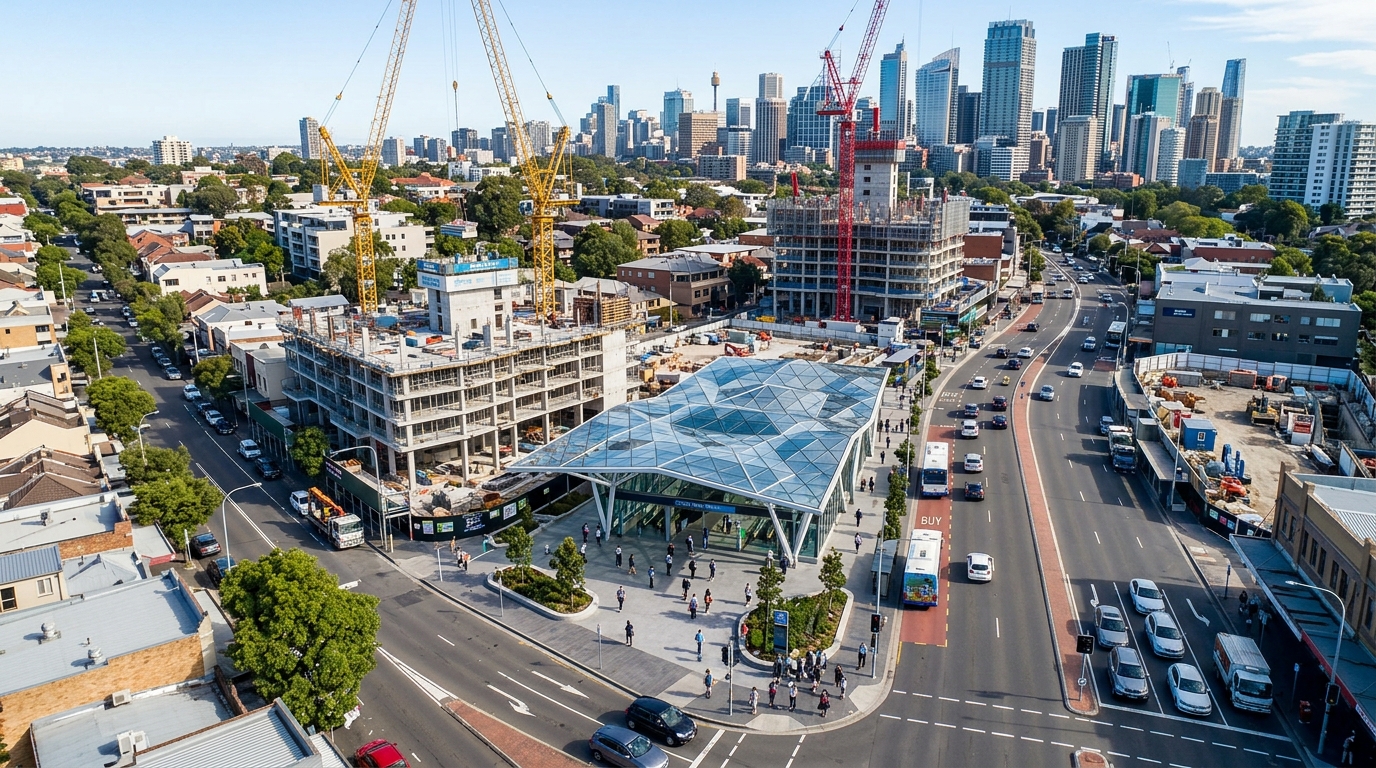
Challenges, Constraints, and Community Concerns
Despite the broad consensus among planners and industry groups that the TOD program is a necessary response to Sydney’s housing shortage, implementation has not been without challenges.
Local councils in affected precincts — particularly on the North Shore and in heritage-sensitive areas — have raised concerns about the pace of change, the adequacy of local infrastructure, and the potential impact on neighbourhood character. Ku-ring-gai Council, for example, has been an outspoken critic of the standard TOD controls, arguing that the 400-metre radius in some parts of its local government area encompasses established residential streets with heritage conservation area overlays.
The TOD program has drawn both strong support and pointed criticism from different stakeholders.
Source: Property Council of Australia, Ku-ring-gai Council public submissions.
The program has broad support from housing advocates, the Property Council of Australia, and the development industry.
As the Property Council has noted, the TOD program represents a meaningful step toward addressing Sydney’s chronic under-supply of housing near employment centres and transport corridors.
The Minns Government has shown a willingness to override local council objections where necessary, using the Housing SEPP as a state-level instrument that supersedes local environmental plans.
The TOD controls are legally operative regardless of whether individual councils support or oppose the underlying policy.
Key Data at a Glance — TOD Rezoning NSW 2026
These key metrics summarise the scale and scope of the NSW TOD program across Greater Sydney.
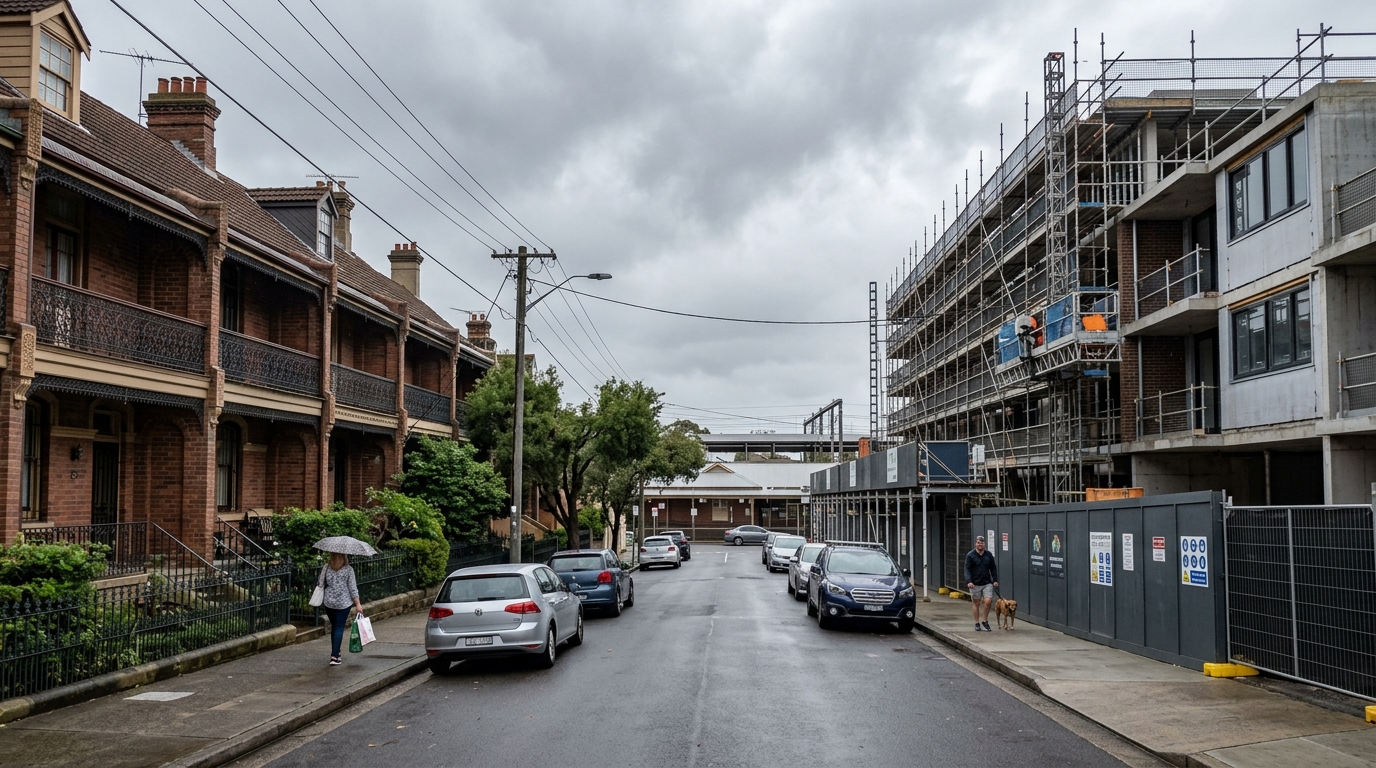
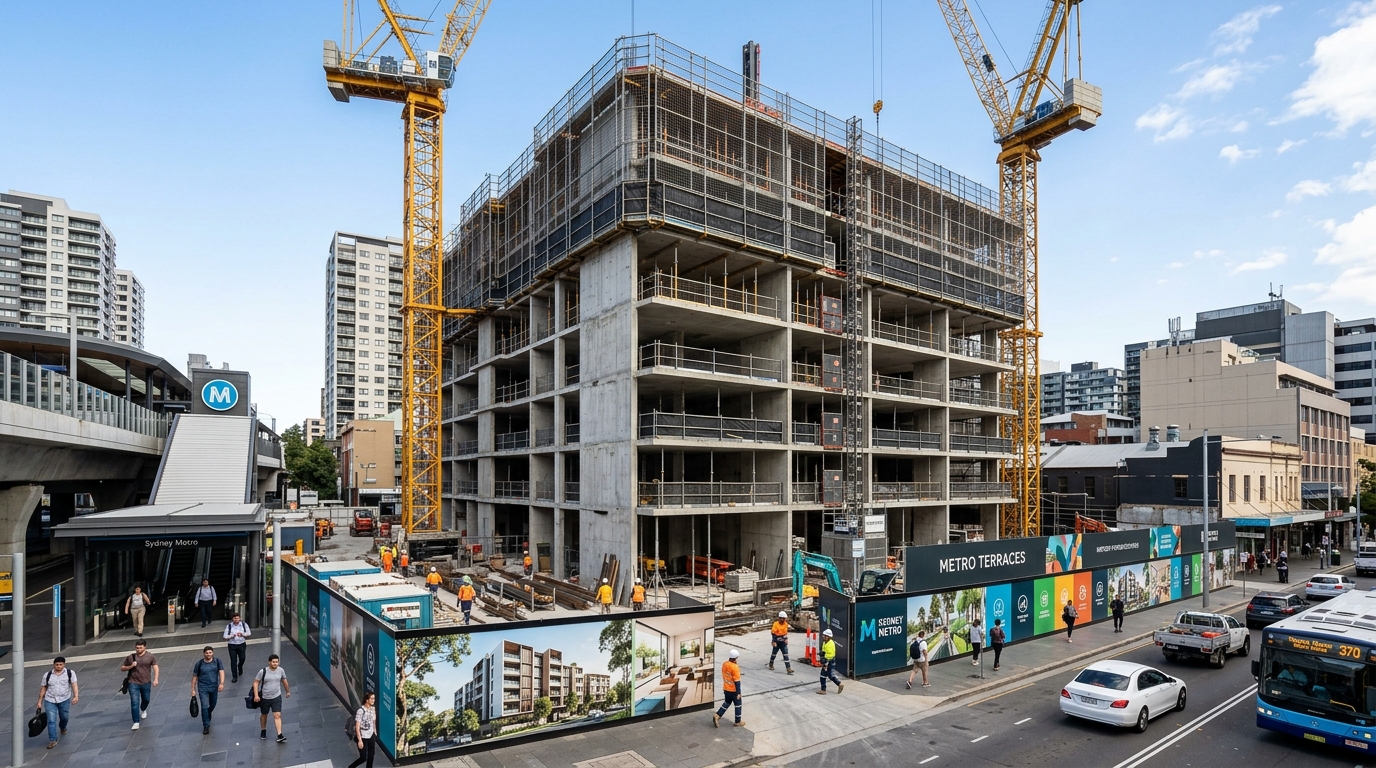
These figures illustrate how far the TOD program has progressed since its 2023 announcement. Construction activity such as the metro station site pictured below reflects the accelerated precincts now moving from planning approval into physical delivery.
Frequently Asked Questions
The following questions address the most common concerns about the NSW TOD rezoning program in 2026.
How many station precincts are covered by the TOD program?
The program covers 37 standard TOD precincts across Greater Sydney, plus 8 accelerated precincts with bespoke planning controls, totalling 47 train stations affected by the rezoning changes announced since late 2023.
What can be built near a standard TOD station?
Residential flat buildings up to 22 metres (roughly six to seven storeys) are permitted within 400 metres of a designated station, with shop-top housing up to 24 metres in commercial and mixed-use zones, at a maximum FSR of 2.5:1.
How has TOD rezoning affected property values?
Property price data shows higher price growth within 800m of TOD-rezoned Sydney stations compared to surrounding areas, reflecting the added development potential unlocked by the increased height and FSR controls.
Is the TOD program controversial?
The Property Council of Australia and housing advocates support the program as a necessary supply response, while councils such as Ku-ring-gai have raised concerns about pace of change and impacts on heritage-sensitive neighbourhoods.
Rezoning effects will emerge during a softer Sydney market. The Sydney property price drop 2026 analysis compares current declines across suburbs and growth corridors.
Summary — What the TOD Rezoning Means for NSW Property
The NSW TOD rezoning program has permanently altered the development potential of land within 400 metres of 37 metro and rail stations, with eight accelerated precincts receiving even more ambitious uplifts that will reshape the urban fabric of Sydney’s key transport corridors.
The changes are real, legally operative, and already generating development application activity across the state. For landowners in affected precincts, the rezoning may have materially increased the value of their property — particularly where lot amalgamation with neighbours is feasible.
For developers, the TOD SEPP represents a significant pipeline of new development opportunities in established, well-serviced urban locations.
TOD Rezoning NSW: The Long-Term Outlook
The broader impact on housing supply —. The program’s primary objective — will take years to fully materialise as development pipelines are assembled, approved, and constructed.
Infrastructure constraints, site amalgamation complexity, and construction costs remain practical challenges that will moderate the pace of delivery relative to the headline targets.
The direction of travel is clear: Greater Sydney is in the process of becoming a denser, more transit-oriented city, and the TOD program is the most significant legislative mechanism driving that transformation.
The TOD program should be understood in conjunction with other major NSW planning reforms and infrastructure investments underway across the metropolitan area.
The Bringelly and Western Sydney growth corridors, explored in detail across Australia Develops, represent a parallel axis of growth that — alongside the TOD station precincts — is reshaping where and how Sydney grows over the next decade.
The NSW planning landscape in 2026 is more dynamic and more consequential for property owners and developers than at any point in recent memory.
This article is for informational purposes only and does not constitute financial, investment, or legal advice. Seek independent professional advice before making any property decisions.