Written by Daniel Whitfield, founder of Australia Develops, covering Western Sydney infrastructure and property development.
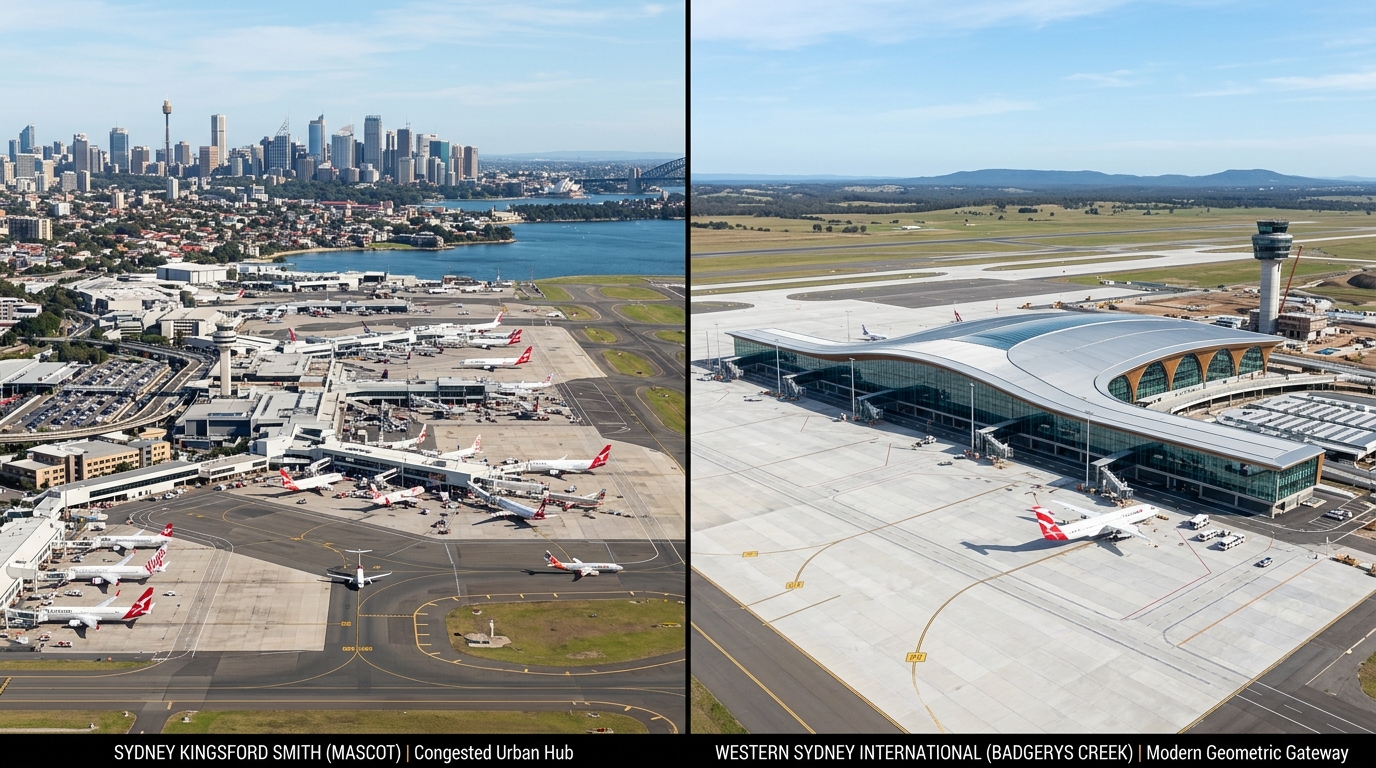
For more than half a century, the aviation market in Greater Sydney has operated under a single-gateway monopoly managed via Sydney Kingsford Smith Airport at Mascot.
This legacy arrangement faces structural transformation with the operational launch of Western Sydney International (Nancy-Bird Walton) Airport (WSI).
For international holidaymakers, corporate commuters, family groups, and heavy air-freight forwarders, selecting between these two major infrastructure assets requires an objective evaluation of structural, financial, and logistical variables.
The Sydney Airport vs Western Sydney Airport comparison is increasingly shaping how Foreign Direct Investment (FDI) Australia flows into airport-adjacent commercial real estate across Greater Sydney.
Beyond Distance: What Actually Separates the Two Airports
Readers wanting more depth on the WSI side of this comparison can review the WSI airlines and airfares analysis for confirmed airline routes, the WSI transport guide covering Metro, M12 and commute times for multimodal transport access, and the Inside WSI: Nancy-Bird Walton legacy and future airport design feature for the architectural design of the new terminal.
The choice is no longer simply about geographic distance from the CBD. Travelers must evaluate how contrasting operating parameters, terminal structures, next-generation security mechanics, and specialized surface transport links affect overall transit efficiency and trip economics.
Property investment Western Sydney is accelerating in direct response to these structural shifts, with commercial real estate demand tracking the confirmed employment and passenger volume ramp across both corridors.
The table below provides a head-to-head operational comparison separating the core design specifications of Mascot from the greenfield terminal layout at Badgerys Creek.
Enforced nightly 11:00 PM – 6:00 AM.
Separate, disconnected domestic and international buildings.
Standard manual / X-Ray liquid removal systems.
Eastern Suburbs, lower North Shore, Inner West.
None. 24/7 continuous operational capacity.
Integrated single-roof swing-gate design for transfers.
Advanced 3D CT non-removal scanning platforms.
Greater Western Sydney, Parramatta, Blue Mountains, South-West.
Bradfield and Bringelly: The Growth Corridor Behind WSI’s Rise
Part of what is reshaping this Sydney Airport vs Western Sydney Airport comparison is the broader Bradfield City Centre and Bringelly growth corridor forming around WSI.
This is adding commercial, educational and residential capacity that Mascot’s built-out precinct cannot match. Overall, the video below covers that corridor context.
Terminal Architecture: Fragmented vs Integrated Passenger Streams
The federal curfew legislative framework separating these operating parameters is maintained by the Department of Infrastructure’s aviation policy hub, while the Sydney Kingsford Smith curfew regulations enforced nightly are administered under the Department of Infrastructure’s leased federal airports framework.
A major structural differentiator affecting the traveler experience is the fundamental physical layout of the terminal buildings. For instance, mascot’s layout reflects decades of incremental expansions bounded by local marine channels and established urban neighborhoods.
This footprint forces an absolute physical separation between the international terminal (T1) and the domestic terminals (T2/T3).
The Transfer Friction Point at Mascot
Passengers transferring between domestic and international flights at Kingsford Smith face distinct logistical friction points. The terminals sit on opposite sides of primary runways, requiring travelers to purchase a transfer rail ticket or navigate local public shuttle buses through congested inner-city arterial roads.
This physical distance increases minimum connection times, introduces travel uncertainty. Creates clear challenges for family groups or travelers managing large amounts of luggage.
Integrated Swing-Gate Efficiency at WSI
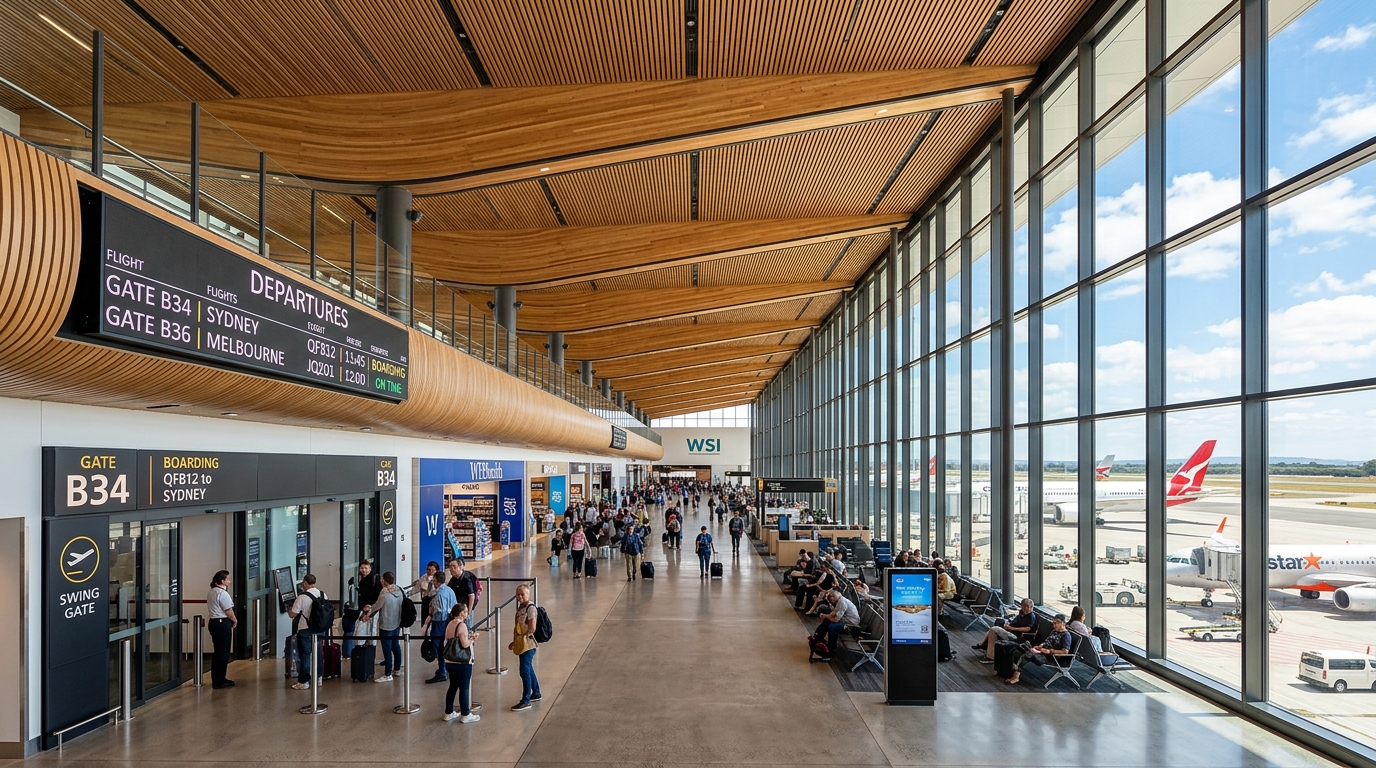
WSI addresses this structural issue from day one by employing a modern, single-roof integrated swing-gate terminal design. This layout routes domestic and international passenger streams through a unified building footprint.
A traveler arriving from an interstate capital on a domestic budget flight can walk directly to an adjacent international departure gate within the same lounge footprint.
This design shortens connection windows, eliminates the stress of terminal transfers. As a result, matches the processing efficiency found in modern international transport hubs like Singapore Changi.
Security Mechanics and Next-Generation Luggage Tracking
Aviation safety regulations and air operator certification across both airports are governed by the Civil Aviation Safety Authority (CASA).
The integration of modern technology directly alters passenger processing speeds at the primary terminal checkpoints, establishing a distinct operational gap between legacy systems and greenfield design.
Advanced 3D Computed Tomography (CT) Scanning
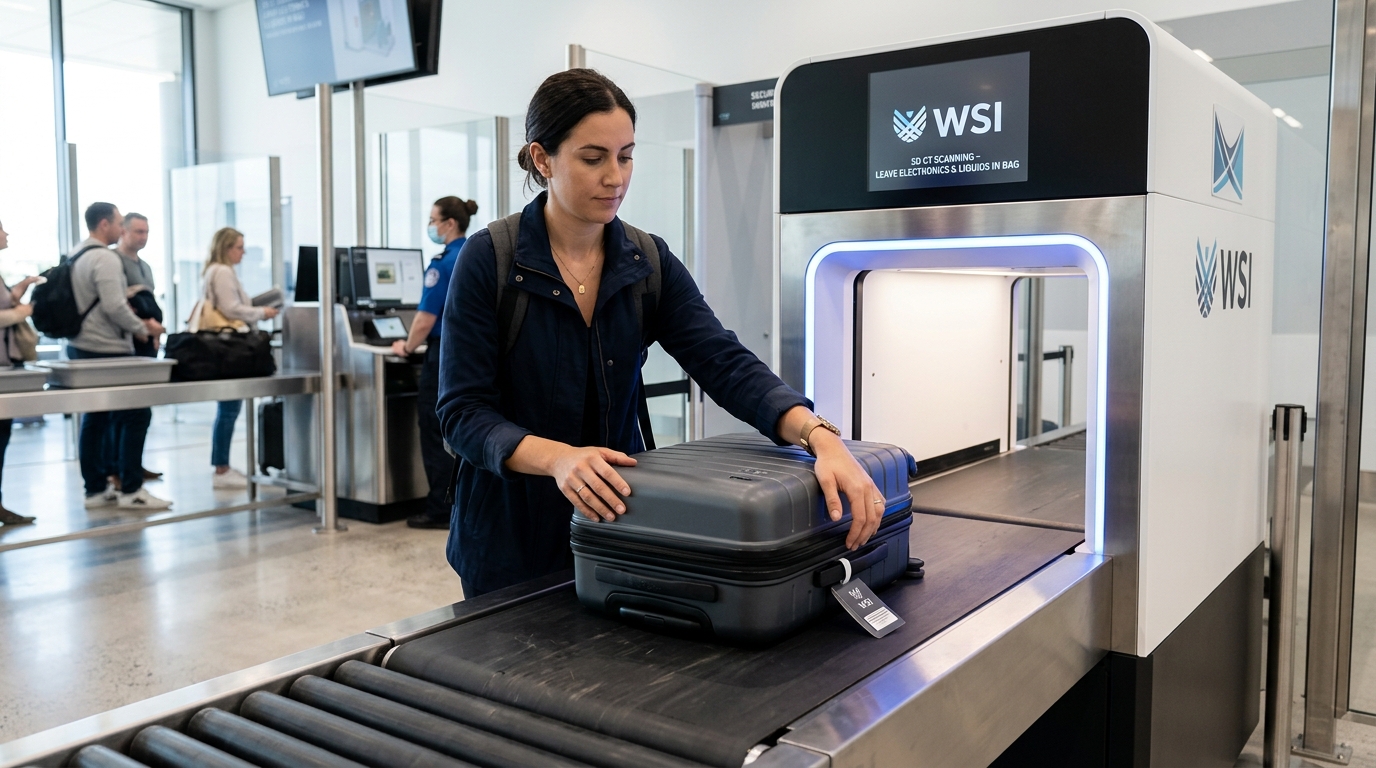
Inside the WSI check-in hall, security lanes are equipped with advanced 3-Dimensional Computed Tomography (CT) security screening systems.
This technology generates highly detailed, 360-degree rotational views of carry-on items, allowing operators to accurately detect prohibited elements without requiring travelers to manually unpack laptops, digital devices, or liquid containers.
This non-removal protocol reduces processing times, eliminates the typical bottlenecks seen at legacy security checkpoints. Consequently, improves passenger throughput speeds during peak morning and evening travel windows.
Automated RFID Baggage Integrity
Below the passenger terminal, luggage logistics are handled by an automated baggage handling system integrated with radio-frequency identification (RFID) tracking tags.
Every bag is scanned continuously as it moves along smart conveyor loops from the check-in counter straight to the aircraft container hold.
This real-time visibility significantly reduces baggage loss metrics, improves turn-around efficiencies for operating airlines. Moreover, ensures high tracking integrity compared to manual legacy bar-code systems.
Surface Transport and Parking Economics
Ground transport connectivity for the toll-free M12 Motorway accessing WSI is documented at Transport for NSW’s M12 Motorway project page. Additionally, the official WSI operational portal is at the Western Sydney International Airport official site, and Sydney Kingsford Smith’s official capacity and terminal network information is published at the Sydney Airport Corporation official site.
Evaluating the net financial cost of an international or domestic trip requires careful analysis of ground transport options, road toll configurations. Consequently, parking pricing models across different geographic nodes.
The table below breaks down realistic transit times, access mechanics. Moreover, parking cost structures separating the two primary Sydney gateways.
While Kingsford Smith retains a clear geographic advantage for residents based within the eastern urban ring, the lower North Shore, and the inner financial core, the transport economics shift dramatically for travelers located west of the M7 orbital motorway.
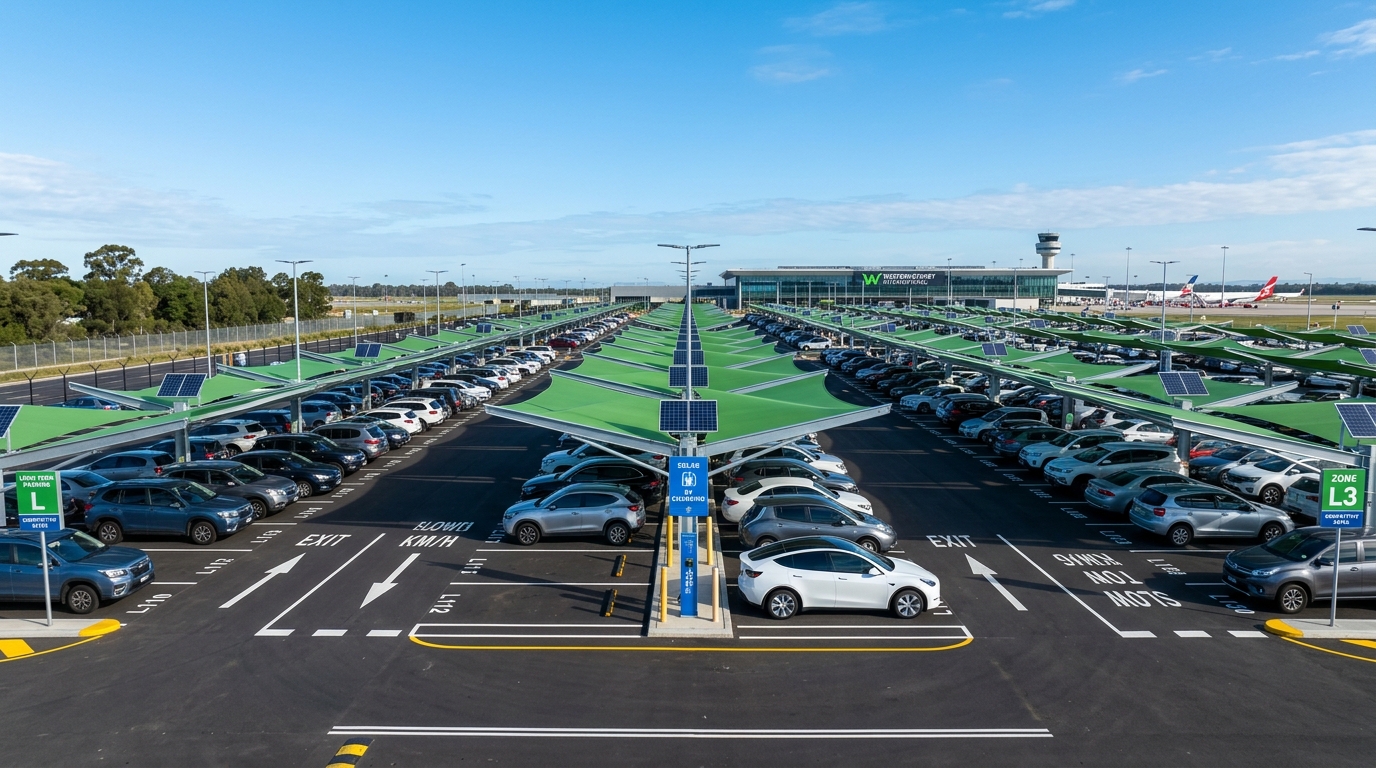
For a family or a corporate traveler based in Parramatta, Penrith, or Liverpool, WSI eliminates cross-city road toll outlays, shortens total driving times, and provides flexible, ground-level parking configurations that bypass the elevator bottlenecks common to Mascot’s multi-storey car structures.
Traveller Profile Preference Matrix: Strategic Selection Guide
Ground transport patronage and mode-share data cited in this comparison draw on statistics published by the Transport for NSW open data portal. In particular, passenger volume and airport capacity benchmarks referenced across both precincts draw on data published by the Bureau of Infrastructure and Transport Research Economics (BITRE).
Significantly, To assist consumers and corporate travel managers in determining which airport gateway aligns with their operational priorities and travel constraints, the table below provides a practical selection guide based on specific travel profiles.
Real Estate Footprint Alignment: Tracking Capital Across the Basins
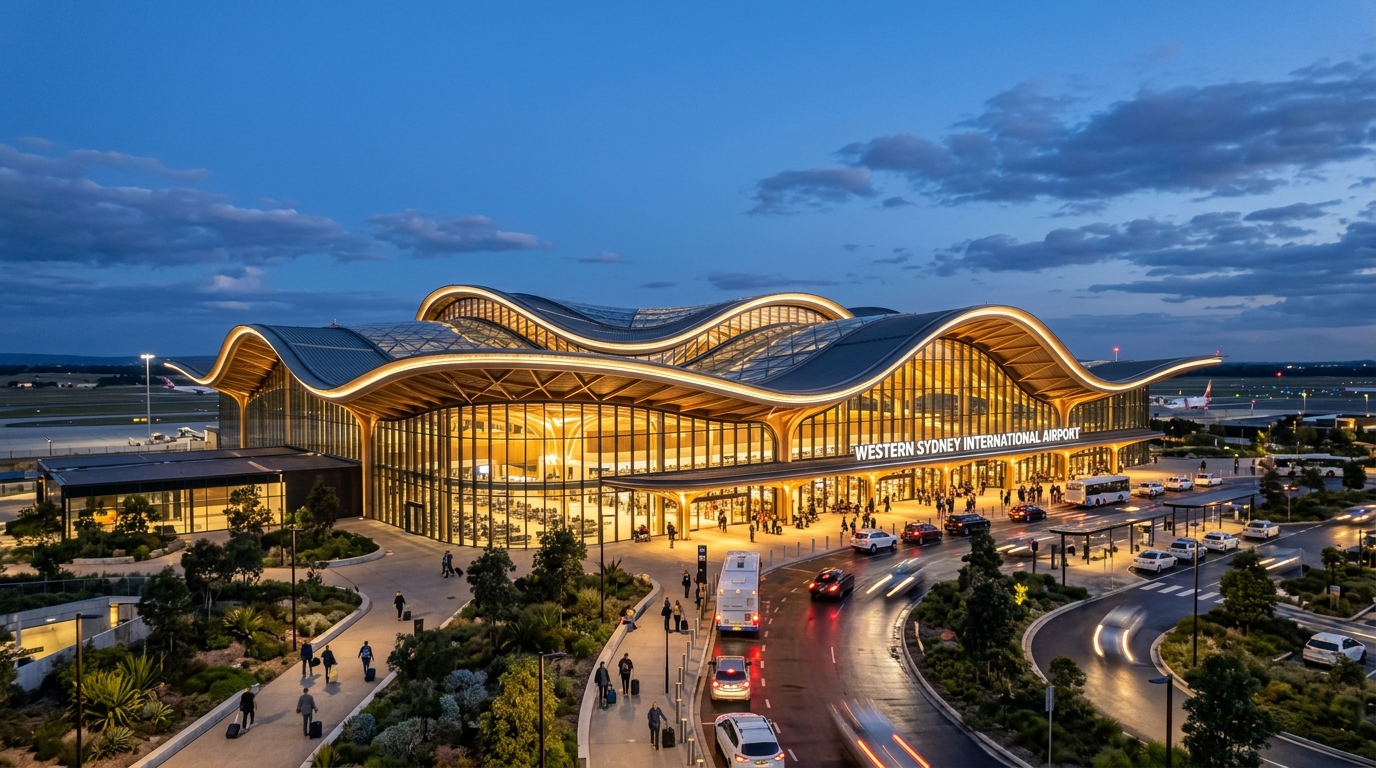
In the Sydney Airport vs Western Sydney Airport contest, the structural competition between Mascot and Badgerys Creek goes beyond airline selection, directly influencing how commercial and residential real estate values deploy across Greater Sydney.
FDI Australia flows into airport-adjacent commercial real estate are increasingly bifurcating between the premium inner-east and the high-growth western corridor, where property investment Western Sydney offers sub-market entry points with strong infrastructure-led capital growth forecasts.
Critically, Private buyers and industrial developers seeking to establish assets near the new western transport gates must maintain a rigorous risk management strategy, assessing physical site variables alongside planning metrics.
1. Soil Profiles and Site Costs
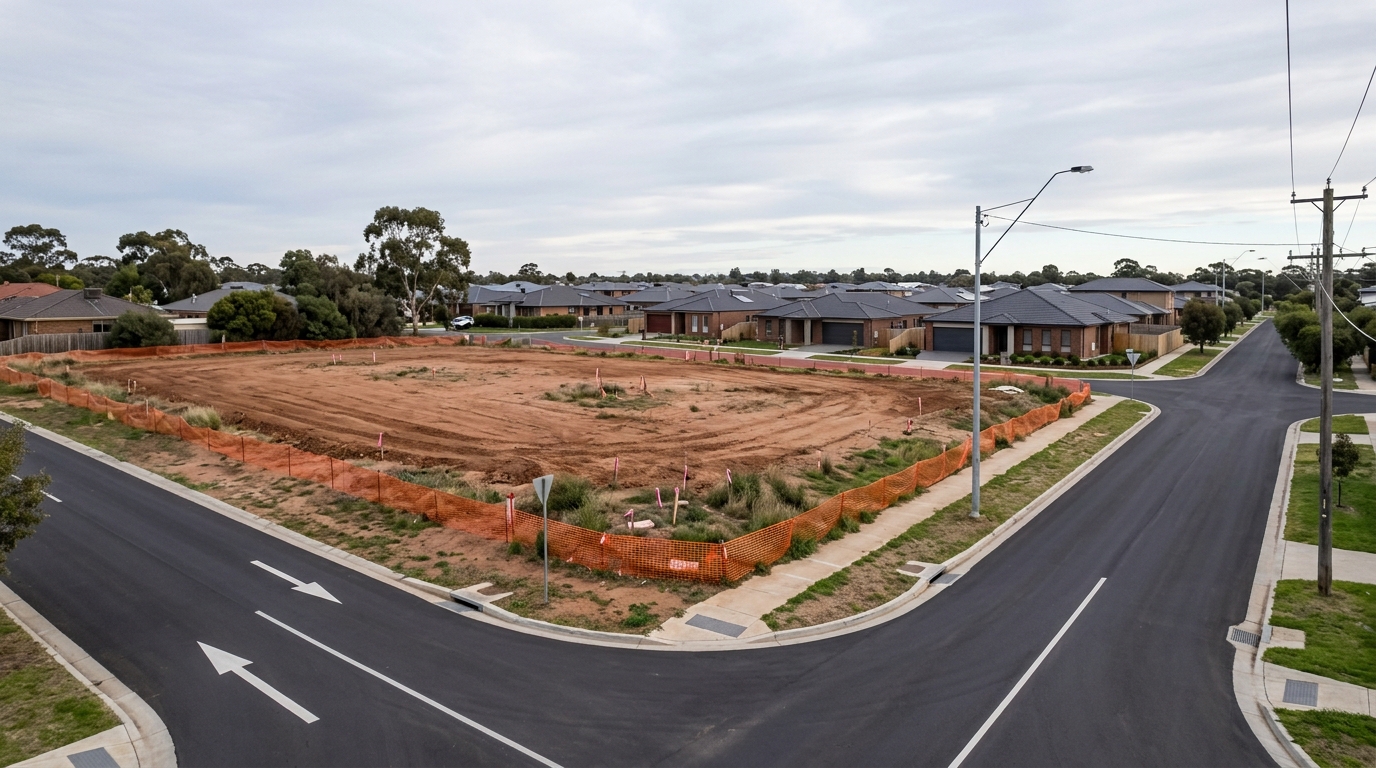
In practice, Constructing industrial warehousing, commercial office structures, or residential blocks near the new western transport corridors requires clear accounting for civil site costs.
The presence of highly reactive clay soils and the lack of pre-existing connection lines across greenfield precincts can introduce unexpected variables to standard development tenders.
Firms must address these civil engineering factors prior to finalizing land transactions. The site costs in Australia and why cheap land can cost more to build on guide covers how property researchers can analyze and plan for these unexpected build expenses.
2. Navigating Environmental Overlays and Flood Hazard Maps
The geographical layout of the outer western perimeter places certain developing sectors inside regional drainage catchments or close to fire-prone vegetation boundaries.
These environmental controls enforce explicit building restrictions, such as raised floor footprints or specific fire-resistant building materials.
This directly govern council approval timelines and long-term asset insurance costs. Indeed, the flood and bushfire maps in Australia: the essential mapping tools to check before buying property overview covers how to independently verify a target property’s environmental exposures before entering a contract.
3. Protecting Capital from Contractual and Title Registration Delays
Due to the high demand for residential and light industrial space near the airport, several new land allotments are marketed as off-the-plan, unregistered parcels.
Delays in civil earthworks or utility clearances by developers can stall title registrations for months, impacting building financing and construction contracts.
The unregistered land in Australia and why off-the-plan land can go badly wrong analysis covers how to protect capital from these off-the-plan registration risks.
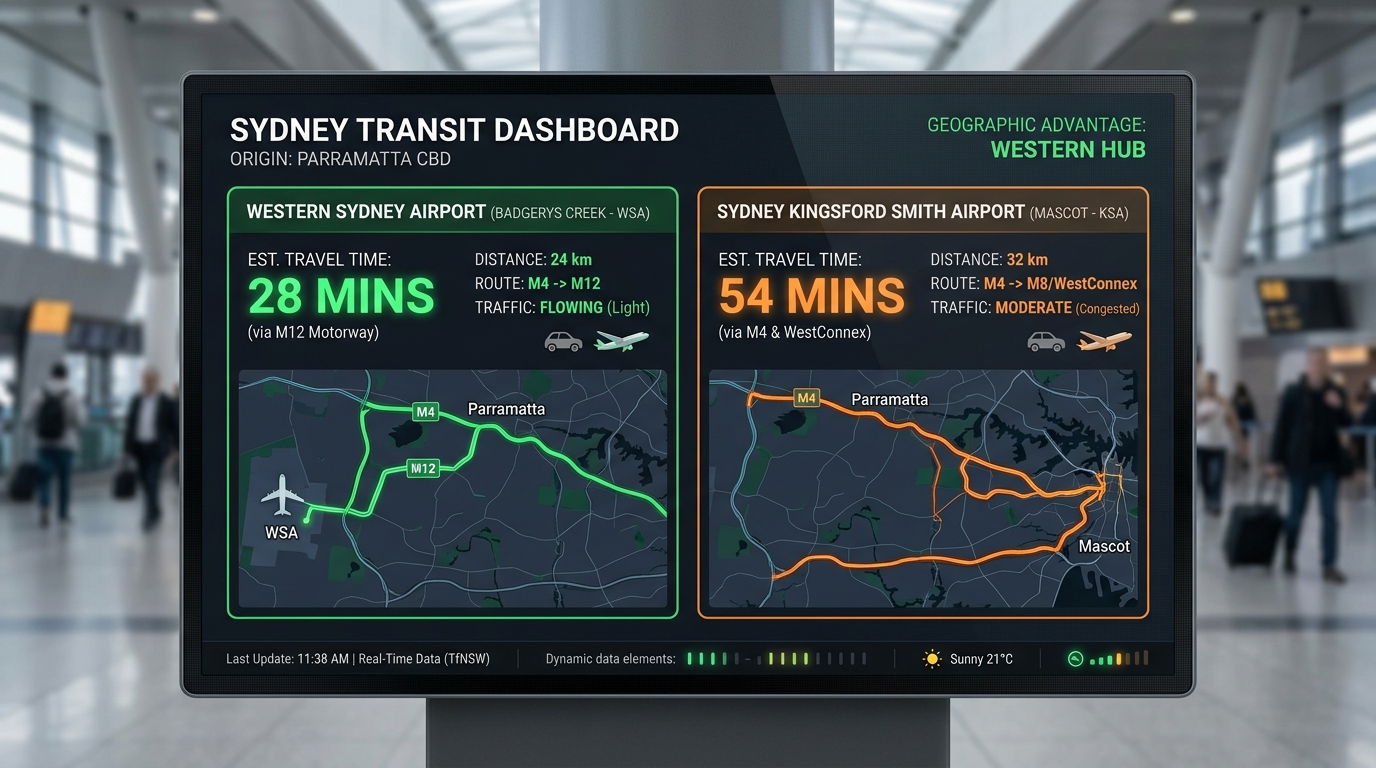
Key Data at a Glance: Sydney Airport vs Western Sydney Airport Profile Metrics
To evaluate the long-term government commitments and macro-economic funding structures anchoring the commercial land surrounding these runways, the $33 billion Western Sydney Aerotropolis investment case provides a strategic overview.
For a comprehensive overview of the precise flight timelines, confirmed carrier allocations, and transport integration phases defining the initial launch window, the Western Sydney Airport 2026: airlines, transport and opening dates report provides a core reference.
This article is general information only and is not financial, legal or planning advice. See the Disclaimer for details.