Written by Daniel Whitfield, founder of Australia Develops, who has personally bought, subdivided, and built property across Australia.
WSI jobs and careers are shifting fast: the transition of Western Sydney International (Nancy-Bird Walton) Airport from heavy civil engineering to live operational readiness marks a major shift in the structural labour market of Greater Western Sydney.
During its primary capital works phase, the greenfield aviation precinct served as a significant regional employment engine, generating thousands of direct construction roles.
As the infrastructure pipelines move toward completion, the employment matrix is shifting permanently toward ongoing, multi-shift operational, logistical, aviation, and customer service positions.
Who This Employment Analysis Serves
Readers exploring the broader WSI economic ecosystem can review confirmed airline routes and international fare benchmarks in the WSI airlines and airfares analysis, and how the absence of overnight flight bans affects freight logistics planning in the WSI 24-hour curfew-free operations guide.
Property buyers tracking commute-time accessibility can also reference the Western Sydney Airport property hotspots suburb guide.
For economic researchers, corporate recruitment planners, and real estate analysts, understanding WSI jobs and careers is essential. Consequently, the creation of a continuous, 24-hour workforce changes local residential housing demand, alters baseline household income distributions, and drives commercial development patterns across the Cumberland Plain.
Foreign Direct Investment (FDI) Australia flows into airport-adjacent commercial real estate are directly linked to this expanding permanent workforce base, as property investment Western Sydney accelerates around confirmed employment precincts.
The table below outlines the core operational sectors and active recruiting partners managing the live ramp-up phase within the WSI boundary.
Bradfield and Bringelly: The Wider Employment and Housing Corridor
WSI job growth does not sit in isolation. Moreover, it connects directly to the wider Bradfield City Centre and Bringelly growth corridor, where new commercial, educational and residential precincts are being built to house and employ the same workforce this guide analyses.
The video below covers that broader corridor context.
Technical Roster Deployments: Aviation and Ground Infrastructure
Operating an aviation gateway without a night flight curfew requires a significantly different workforce strategy than legacy, curfew-bound airports like Mascot.
The absence of traditional night restrictions means ground support operations, terminal management, and transport hubs must support permanent, multi-shift rosters that remain consistent across late-night and early-morning blocks.
Ground Operations and Heavy Airside Handling
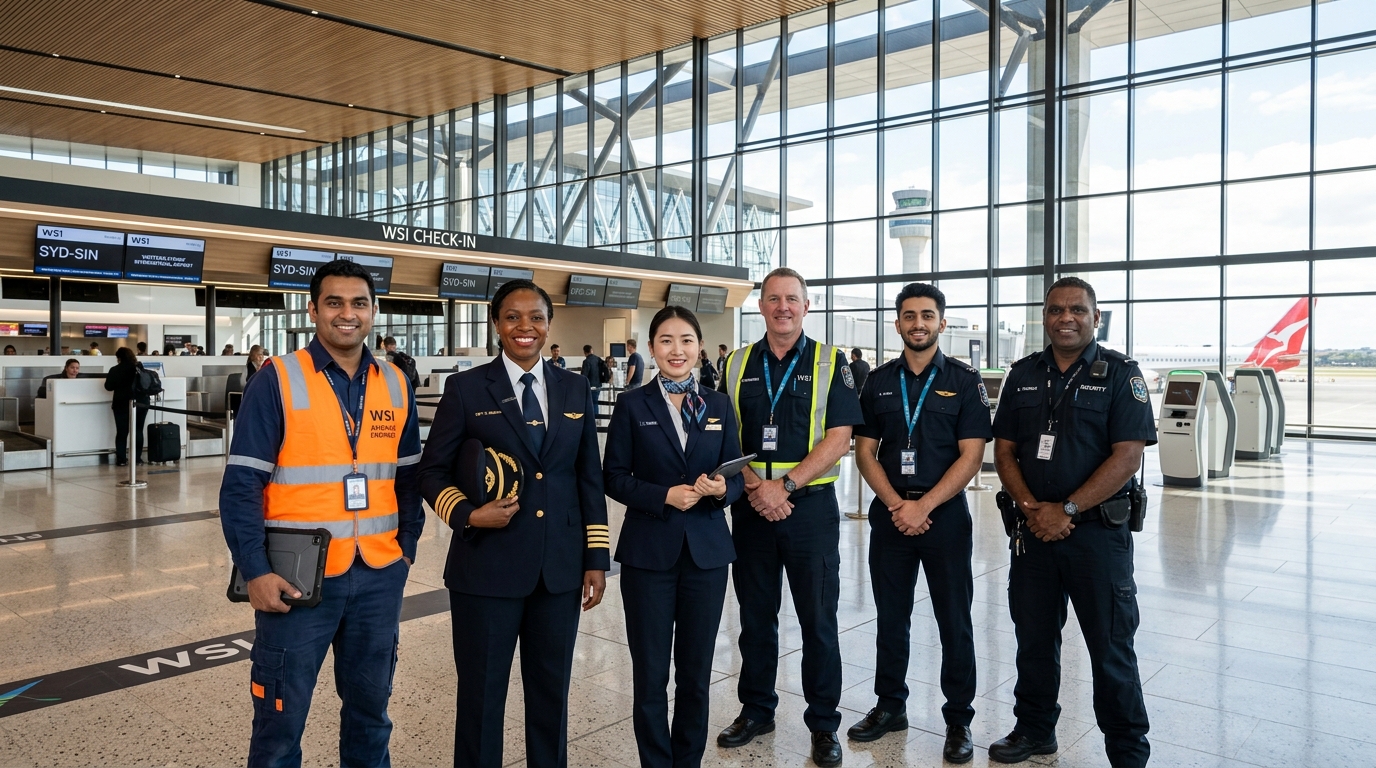
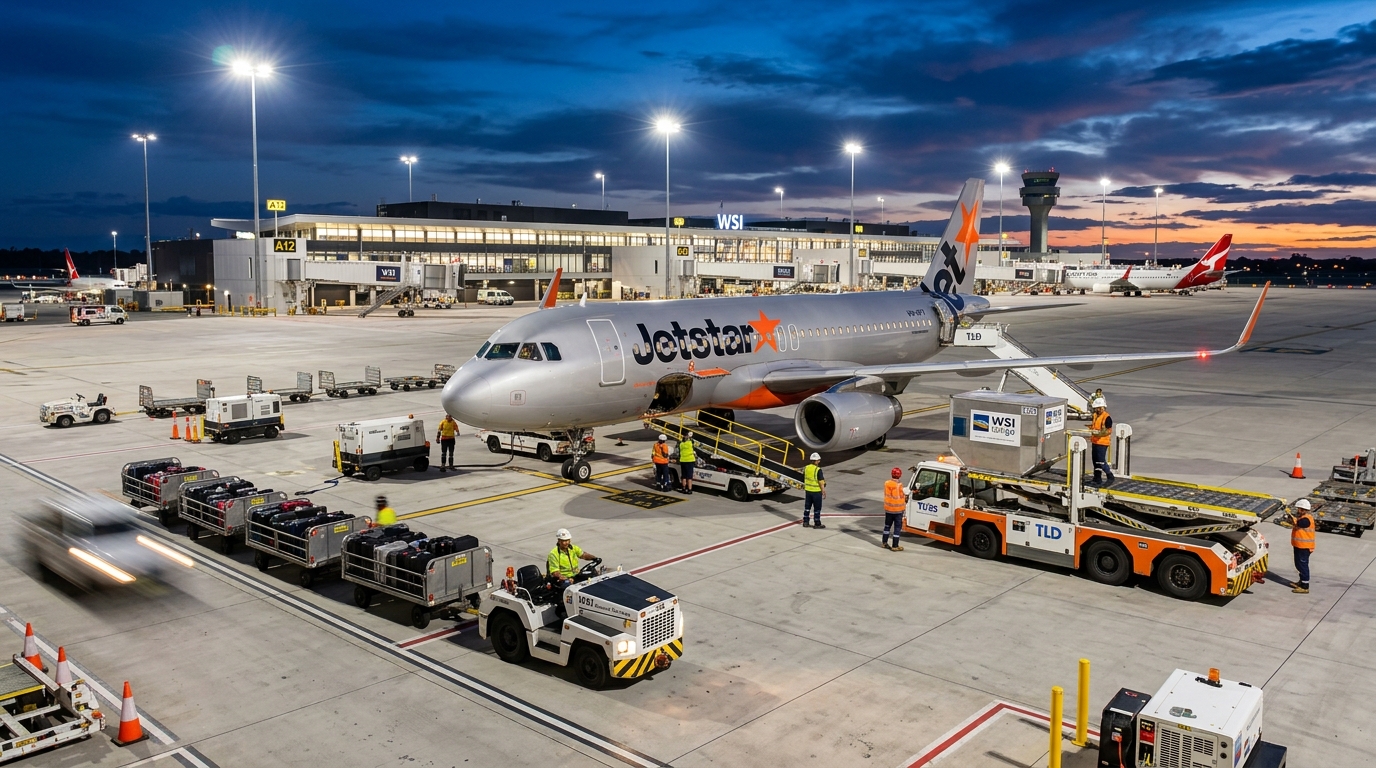
Major operational partners, including Menzies Aviation and Star Aviation, manage the baseline of the airside labour force.
Positions in this sector focus on high-throughput aircraft turnarounds, comprising baggage tug operators, aircraft refuellers, marshalling crews, and ground support equipment mechanics, because these roles are directly linked to live aircraft schedules, workers must secure an Aviation Security Identification Card (ASIC) and undergo rigorous federal background checks.
The requirement for continuous night support introduces substantial shift-loading premiums into local wage structures, lifting median household incomes across the immediate employment catchment area.
Government Regulatory and Border Security Deployments
The Department of Infrastructure’s aviation policy hub documents the Federal Government’s official framework for WSI jobs and careers development, while air traffic management and air navigation staffing frameworks are governed by Airservices Australia.
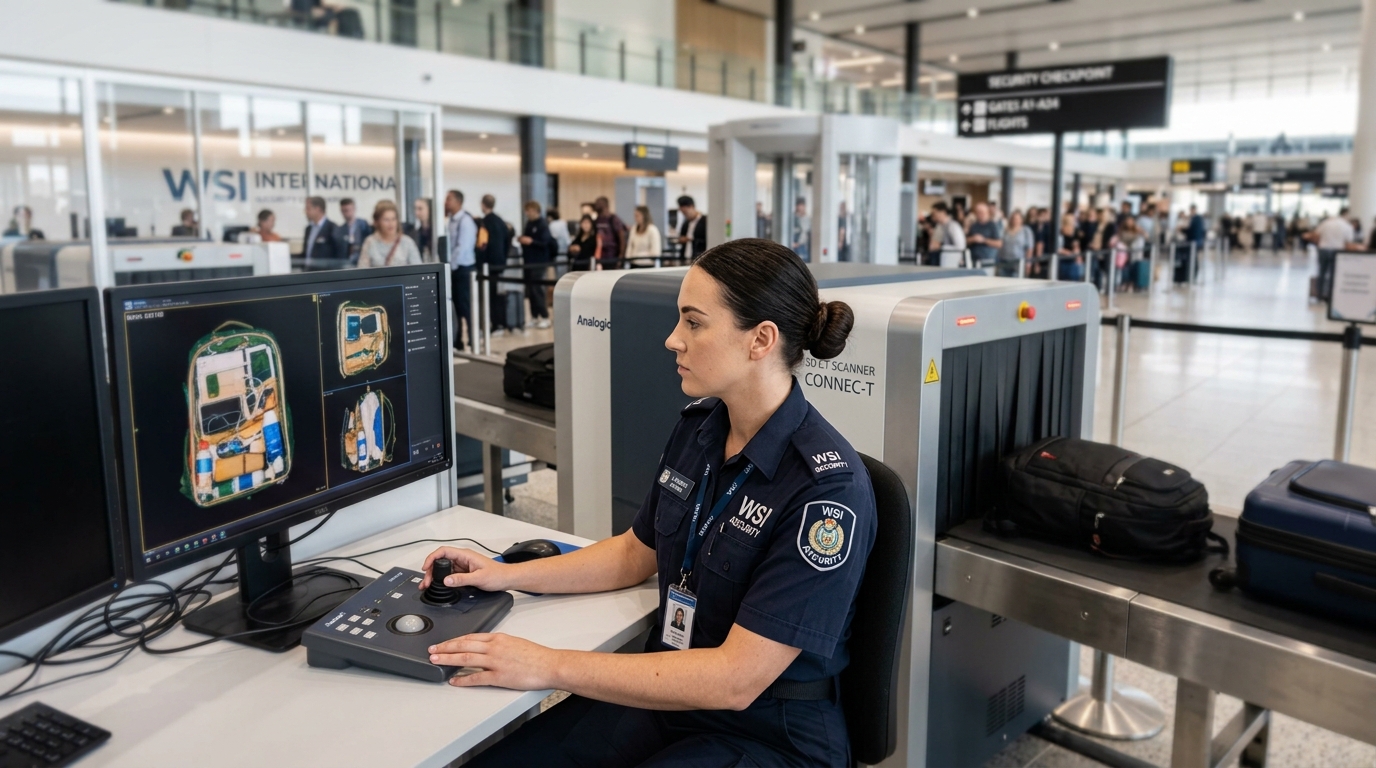
A significant segment of the permanent employment footprint at WSI consists of specialised federal and state government agencies. These entities manage border security, passenger compliance, and airspace security around the clock.
Key regulatory bodies establishing active operational bases at the terminal include the Australian Border Force (ABF), managing international passport control, customs inspections, and airside border protection enforcement.
The Department of Agriculture, Fisheries and Forestry (DAFF) runs continuous biosecurity screening networks to safeguard domestic agricultural supply chains from international pest contamination.
Airservices Australia deploys advanced air traffic control teams and digital terminal management personnel to guide flight patterns safely through the expanding western airspace.
Both the Australian Federal Police (AFP) and NSW Police Force supply dedicated counter-terrorism, policing, and general security coverage throughout the transport precinct.
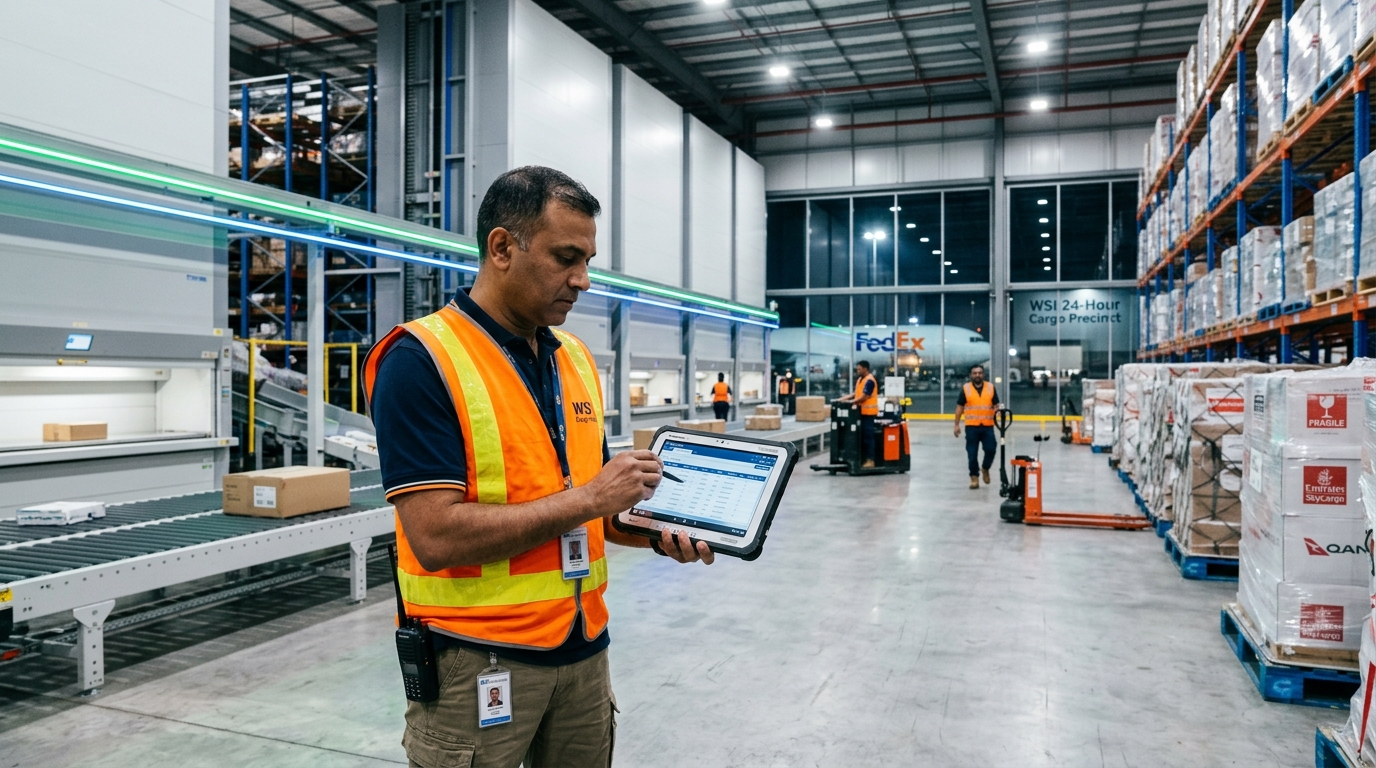
Supply Chain Integration: The 24/7 Cargo Precinct and Commercial Retail
The unique operational asset driving long-term freight employment at WSI is the specialised Cargo Precinct, engineered to support automated, high-volume cargo distribution.
Unlike legacy logistics parks that must cease operations during evening blocks, the WSI freight core functions continuously.
Automated Freight and Cold-Chain Logistics
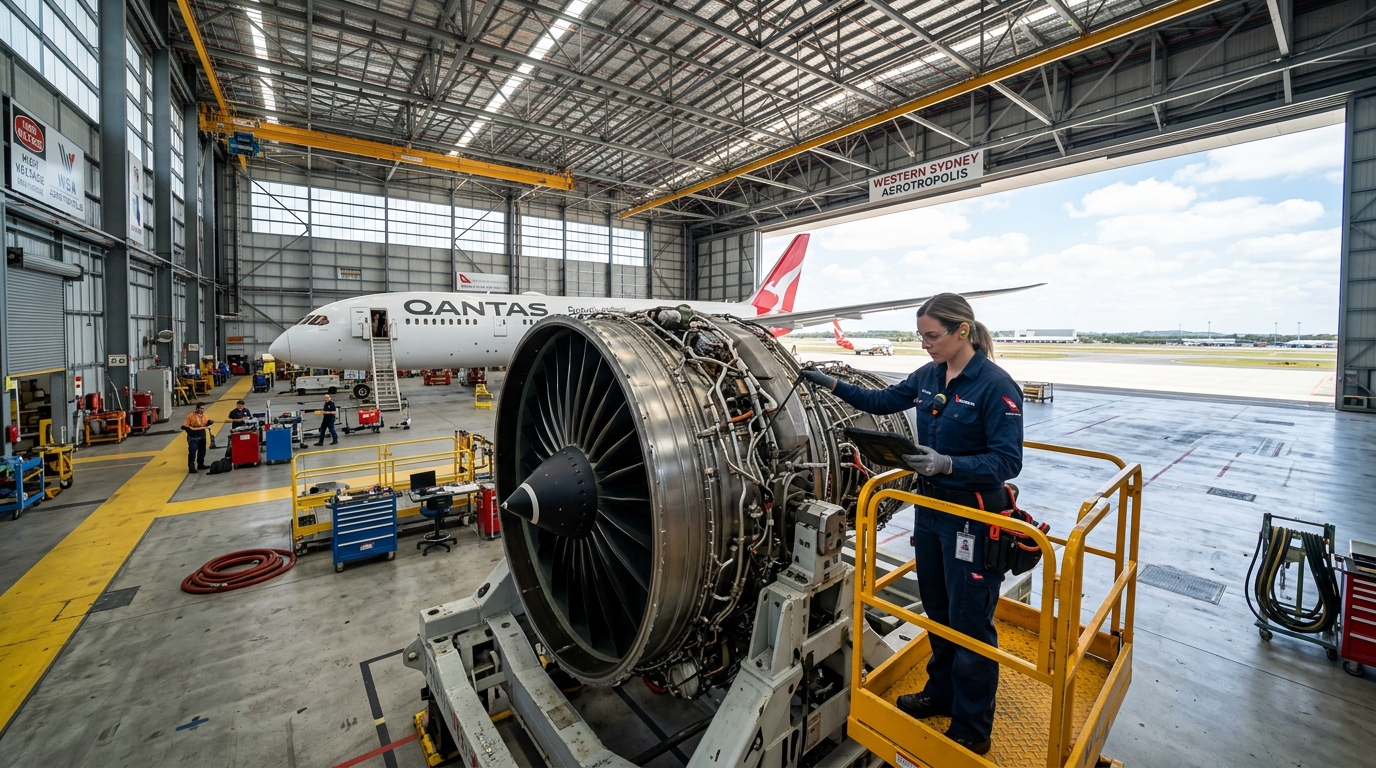
Logistics partners like dnata Cargo and Qantas Freight are actively recruiting technical personnel to operate newly built distribution hubs within the airport fence line.
Positions go beyond traditional warehousing roles, focusing heavily on automated inventory systems control, programmable logic controller (PLC) monitoring, high-capacity cold-chain processing, and international freight forwarding orchestration.
This shift increases the demand for specialised logistics certifications and technical trade qualifications throughout Western Sydney.
Retail and Hospitality Vacancies
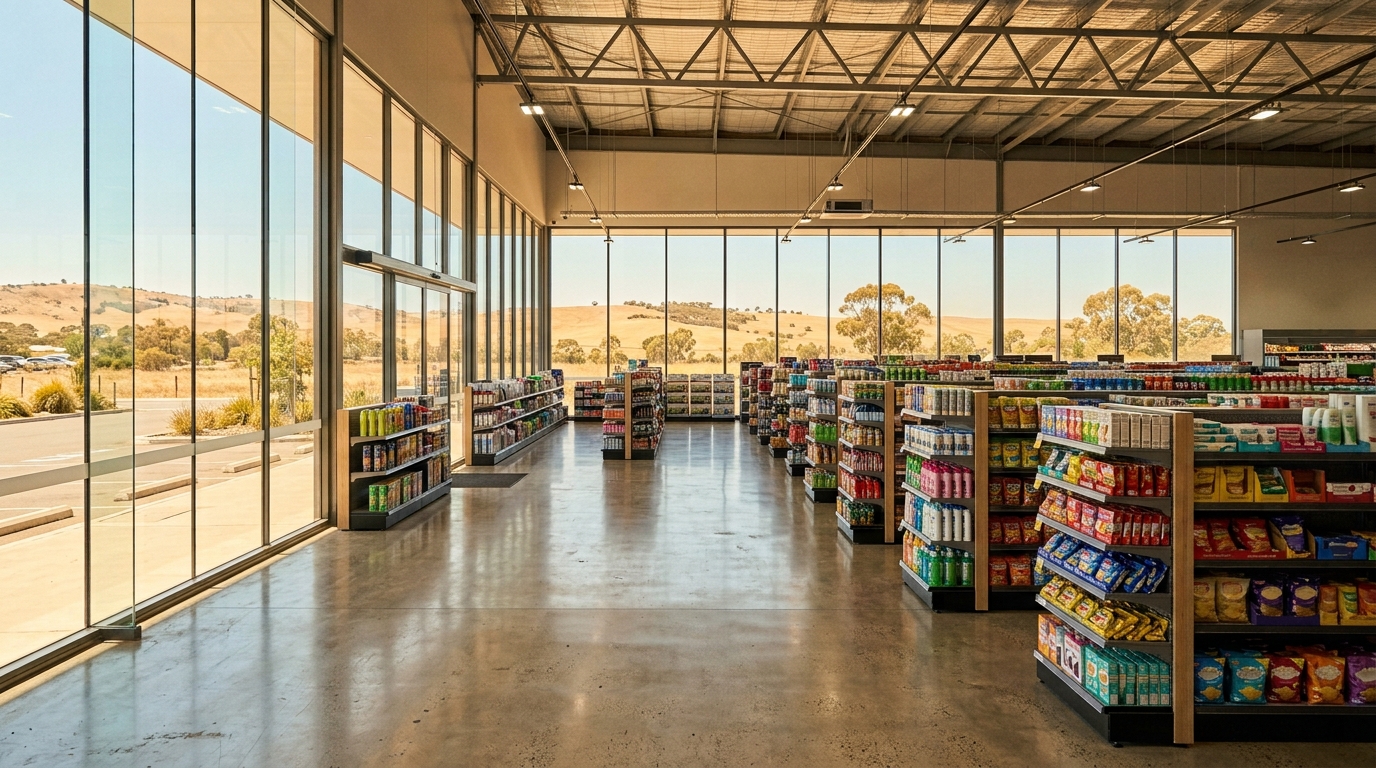
Inside the passenger terminal, retail and hospitality partners are developing a major consumer ecosystem designed to service millions of travellers annually.
Multi-year retail agreements finalised with travel retail specialists Lagardère AWPL and Airport Retail Group Australia are driving demand for duty-free store managers, hospitality operators, luxury brand specialists, and currency exchange coordinators.
These positions scale in direct alignment with international flight departure slots, creating flexible employment pathways for the regional student and customer service demographic.
This commercial property and supply chain expansion draws significant commercial real estate investment into the precinct, with new retail-pad, hotel, and mixed-use developments tracking the passenger volume ramp closely.
Vocational Upskilling: Targeted Educational Pathways
To fulfil explicit federal and state mandates targeting high levels of local worker inclusion, Western Sydney’s educational institutions have implemented specialised training systems.
These programs aim to provide local residents with clear, direct pathways into technical aviation roles, reducing historical reliance on workers commuting from outside the region.
TAFE NSW and School-Level Collaborations
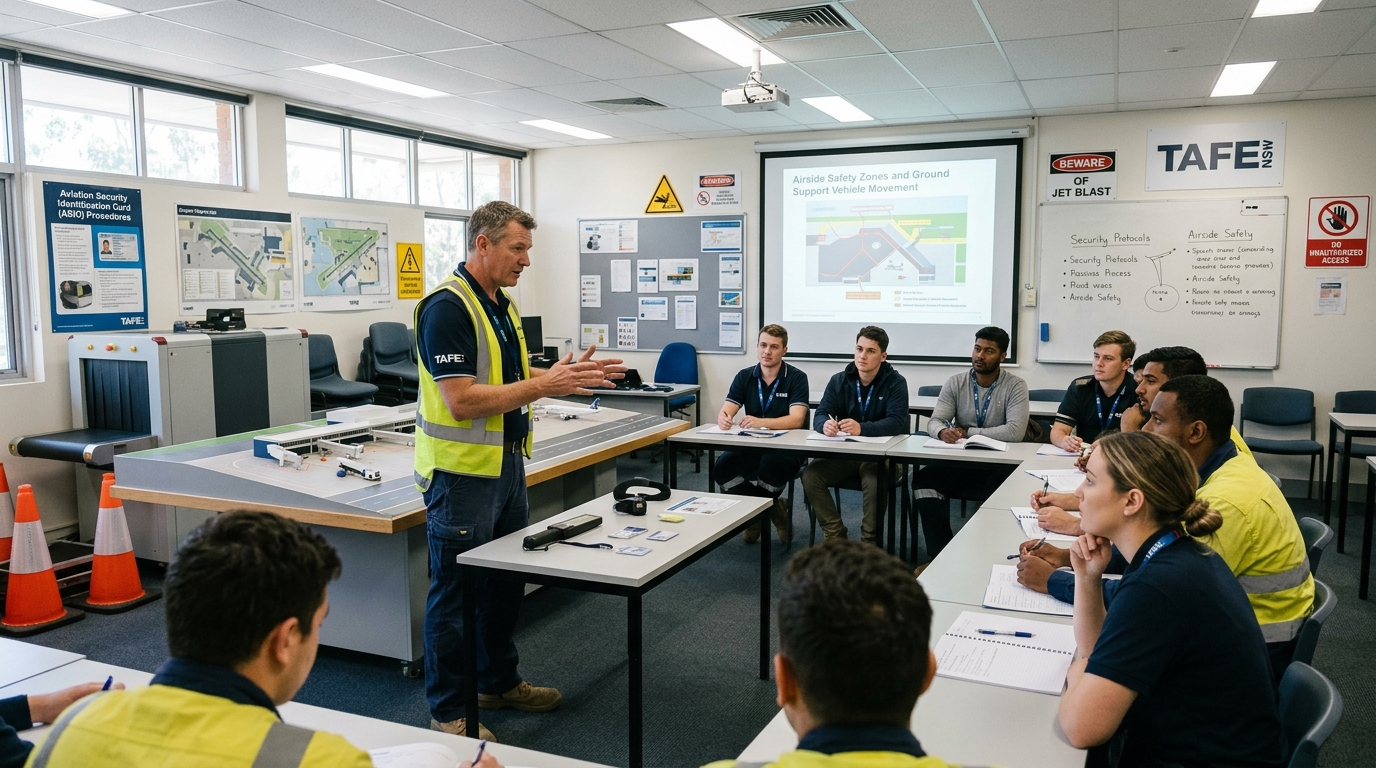
TAFE NSW, the state’s primary vocational education provider, delivers vocational training pathways for aviation, logistics, and ground-handling roles.
TAFE NSW has partnered closely with WSI to deliver targeted vocational training frameworks designed to match immediate hiring needs.
Courses include the Certificate IV in International Freight Forwarding and specialised certifications in airport ground operations, security screening management, and logistics coordination.
Initiatives like the Vocational Innovation Centre at Seven Hills High School allow high school students to complete a Certificate I in Aviation and a Certificate II in Supply Chain Operations alongside their standard school curriculum, embedding industry-standard technical skills directly into the secondary school network.
Western Sydney University Micro-Credentials
Vocational upskilling pathways and school-to-industry partnerships referenced in this guide are coordinated through Western Sydney University.
At the tertiary level, Western Sydney University (WSU) has launched an innovative Introduction to Aviation Operations micro-credential program in collaboration with airport authorities. Therefore, this program targets career changers, school leavers, and active logistics workers looking for formal industry credentials.
It provides a nationally recognised Statement of Attainment that shortens training times and ensures applicants are fully prepared for live terminal operations.
Workplace Scenario Matrix: Aligning Experience with Airport Roles
Significantly, To assist local job seekers in evaluating potential employment pathways within the expanding aviation precinct, the table below provides a scenario matrix outlining experience parameters, required entry clearances, and training pathways.
Real Estate Implications: The Rise of Workforce Housing Demand
The Western Sydney Aerotropolis economic development strategy, which underpins these employment growth projections, is maintained by the NSW Department of Planning’s Western Sydney Aerotropolis office, and the official airport portal publishing current employment and contractor opportunities is at the Western Sydney International Airport official site.
The creation of a large, continuous employment hub has a direct, measurable effect on residential real estate markets in the surrounding area.
An expanding demographic of airport personnel, flight crews, technical engineering specialists, and border security officers who prioritise living within a tight commute of the terminal gates is joining traditional corporate tenants and leisure renters.
This workforce trend changes the structural requirements for rental housing across neighbouring suburbs like Leppington, Austral, and St Marys.
Rental Market Adjustments and Yield Performance
Critically, Traditional, high-maintenance detached houses face shift-worker competition from low-maintenance, high-security apartments, modern townhouses, and dual-occupancy properties designed for busy professional routines.
While the airport’s employment targets continue to support long-term rental demand, temporary spikes in land lot delivery across master-planned estates can impact short-term yields.
The $33 billion Western Sydney Aerotropolis investment case provides a comprehensive analysis of the government and corporate funding trends shaping these regional land valuations.
Navigating Greenfield Subdivisions and Building Logistics
Regional employment and workforce housing demand projections draw on data published by Jobs and Skills Australia and the Australian Bureau of Statistics (ABS).
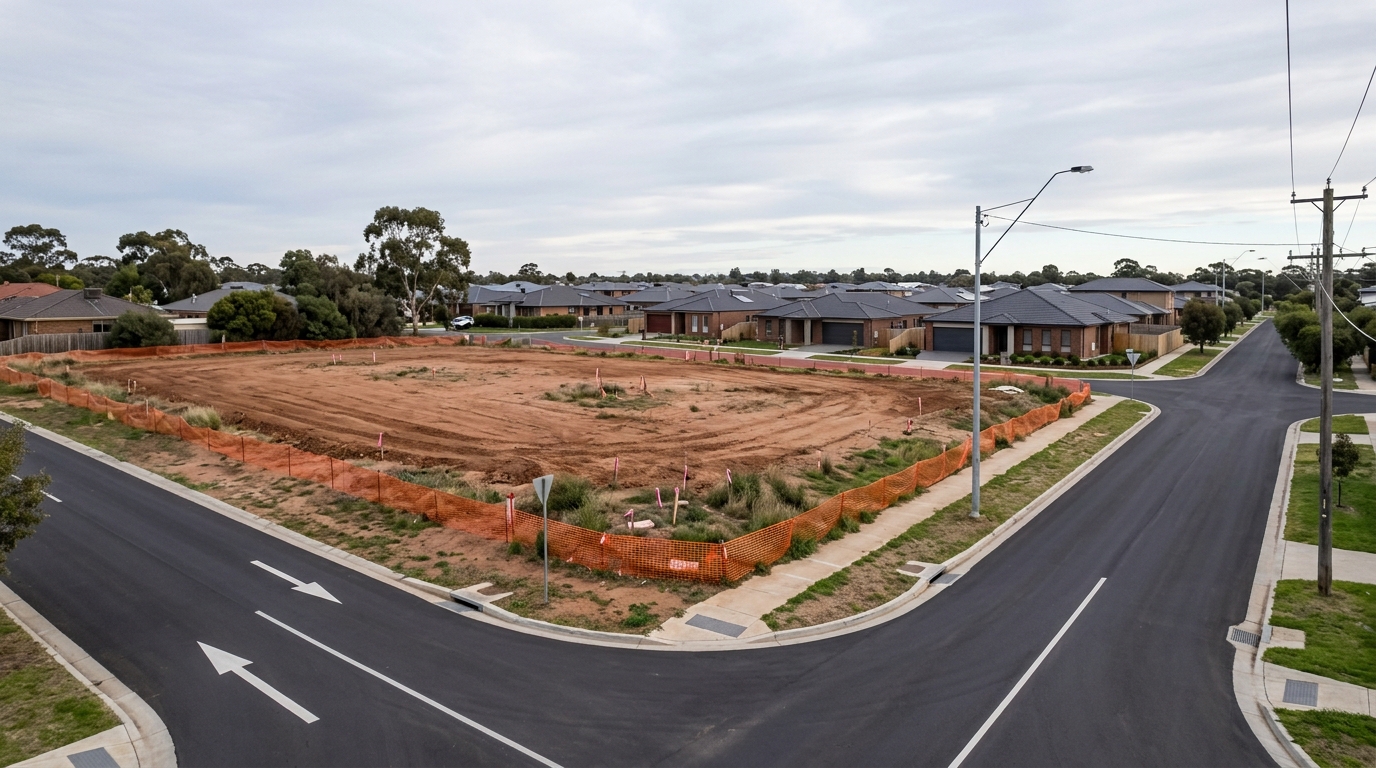
In practice, buyers seeking to build new residential or commercial assets within the primary employment corridors must carefully navigate the unique regulatory and engineering requirements found in outer western growth fields.
Many new allotments are sold as off-the-plan, unregistered packages. As a result, delays in developer civil works can push out title registrations for months, impacting construction schedules and financing terms.
The managing unregistered land in Australia and why off-the-plan land can go badly wrong analysis covers how to protect capital from these off-the-plan land registration delays.
Calculating structural build margins in these corridors requires a clear understanding of site costs. Furthermore, the presence of highly reactive clay soils and the lack of pre-existing connection lines can add unexpected foundation requirements to standard tenders.
The site costs in Australia and why cheap land can cost more to build on technical breakdown covers how private buyers can mitigate these unexpected contractual variables.
WSI Jobs and Careers: Key Data at a Glance
The employment metrics below summarise the core workforce benchmarks defining WSI’s operational labour transition.
Tracking the performance of these localised residential markets requires evaluating specific zoning pipelines across individual suburbs.
For a comprehensive review of residential land supply and lot delivery trends in the immediate growth footprint, see our detailed profiles on the Leppington development pipeline 2026 and the adjacent Austral precinct development 2026.
To understand the transport corridors connecting this workforce to the broader Sydney basin, review our foundational guide on the WSI transport guide: Metro, M12 and commute times.
This article is general information only and is not financial, legal or planning advice. See the Disclaimer for details.