Written by Daniel Whitfield, founder of Australia Develops, who has personally bought, subdivided, and built property across Australia.
The operational framework of aviation logistics across the Sydney basin has been governed for decades by the parameters of the Sydney Airport Curfew Act 1995. This federal legislation enforces a strict operational freeze at Sydney Kingsford Smith Airport (Mascot.
SYD) between 11:00 PM and 6:00 AM, limiting late-night scheduling flexibility and forcing overnight air freight onto complex interstate routing networks.
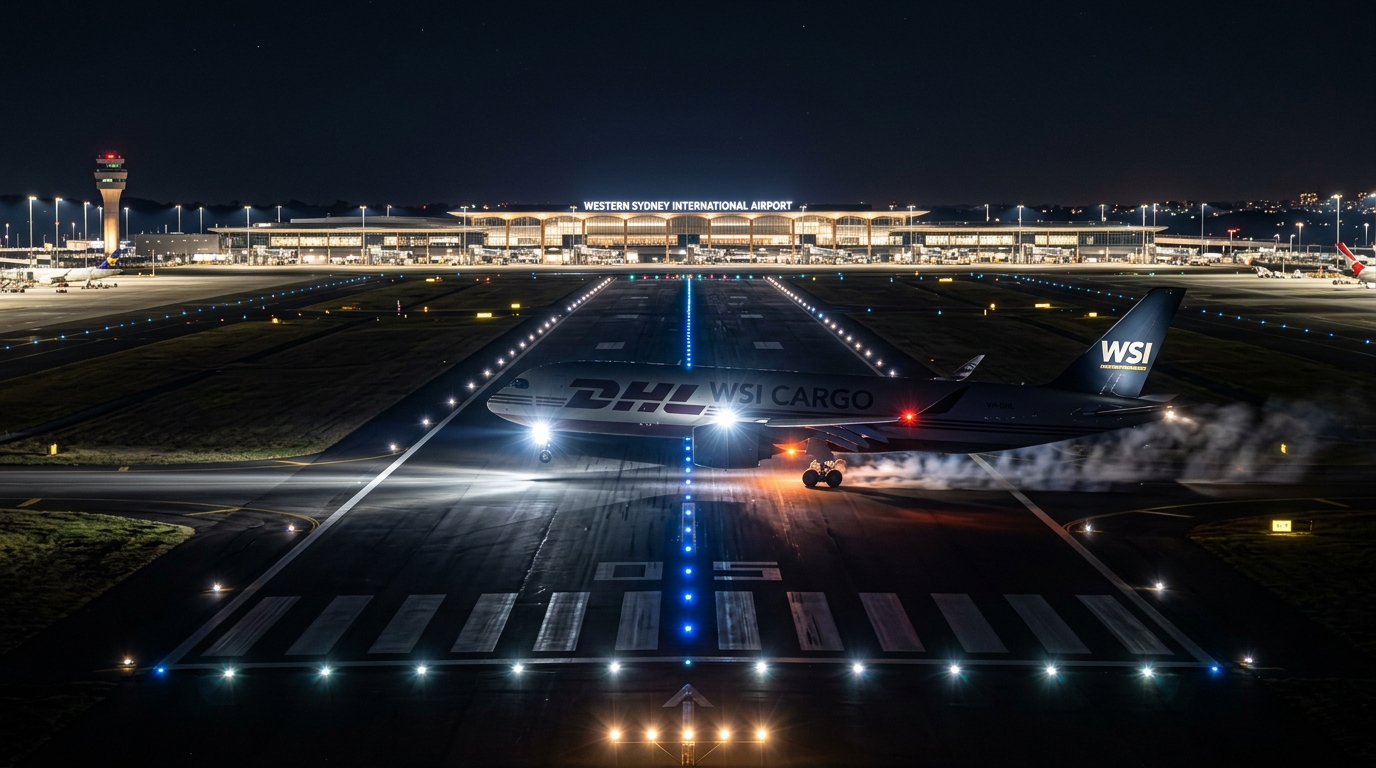
The launch of WSI 24-hour operations at Western Sydney International (Nancy-Bird Walton) Airport introduces a major structural shift: a greenfield facility designed to operate with an unrestricted, curfew-free mandate.
Operating continuously requires a carefully planned logistical ecosystem, next-generation aircraft engineering, and highly precise airspace management systems. These elements must work in concert to maximise commercial throughput while minimising the environmental and acoustic impact on local residential communities.
The table below provides a head-to-head comparison of the core operational parameters separating Sydney’s legacy inner-east hub from the new western gateway.
Enforced nightly 11:00 PM – 6:00 AM.
Fines up to $550,000 per unauthorised night flight.
Separate, fragmented domestic and international buildings.
Daytime belly cargo with strict evening cut-offs.
None. Unrestricted 24/7 continuous operations.
Not applicable; slots distributed across 24 hours.
Integrated swing-gate terminal under a single roof.
Dedicated 24-hour automated cargo precinct hub.
The video below breaks down how WSI’s 24-hour, curfew-free mandate will function once operations begin, including how it compares with the curfew restrictions currently governing Sydney Kingsford Smith Airport.
The Curfew-Free Economic Engine: Route Planning and Freight Realities
The specific curfew restrictions at Sydney Kingsford Smith Airport that WSI’s 24-hour mandate is designed to complement appear in the Sydney Airport Curfew Act 1995.
For a complete picture of the WSI opportunity, the full series compares the two Sydney gateways in the Sydney Airport vs Western Sydney Airport analysis.
WSI 24-hour operations unlock seven additional hours of slot availability daily, enabling airlines to optimise long-haul scheduling around peak arrival windows in Asian, European, and North American markets.
The commercial justification for WSI’s continuous operational mandate centres on improving aircraft asset rotation. However, in commercial aviation, a grounded aircraft represents an underutilised capital asset.
By offering landing and departure slots during the traditional midnight block, WSI allows international airlines to coordinate flights to arrive in major hubs during local morning peak periods.
Without restriction by an evening curfew in Sydney. Institutional investment infrastructure commitments across the cargo precinct reflect confidence in this round-the-clock model, with major logistics developers securing sites well ahead of the terminal opening date.
Low-Cost Carriers and Fleet Utilisation
Confirmed carrier schedules and airfare expectations are reviewed in detail in the WSI airlines and airfares guide.
For low-cost carriers (LCCs) operating tight domestic and regional networks, 24-hour access fundamentally changes fleet economics. An aircraft can run consecutive back-to-back domestic day sectors before transitioning into an overnight international flight to key regional destinations such as Auckland or Singapore.
This continuous operation lowers the baseline structural cost per seat-kilometre. These structural efficiencies allow airlines to offer competitive baseline pricing, stimulating new passenger markets throughout Greater Western Sydney.
Commercial real estate yields along transport corridors adjacent to these new airline routes should compress as occupier demand intensifies.
The Automated Air Cargo Catalyst
Freight and aviation economic modelling referenced in this analysis draws on data published by the Bureau of Infrastructure and Transport Research Economics (BITRE).
While passenger scheduling benefits are notable, the most immediate disruption occurs within the high-value, time-critical air logistics sector. Overall, legacy restrictions at Mascot forced e-commerce aggregators, express couriers, and priority freight forwarders to adhere to strict evening cut-off times.
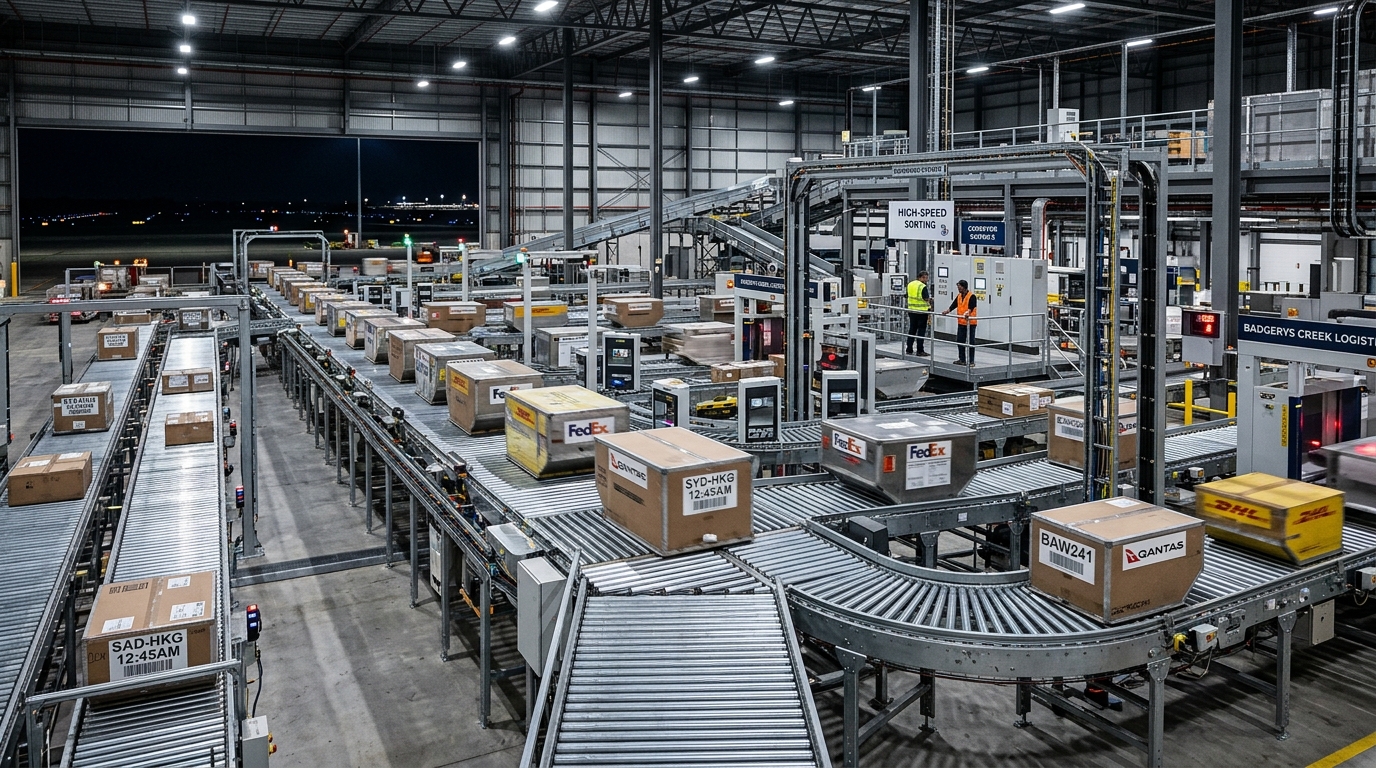
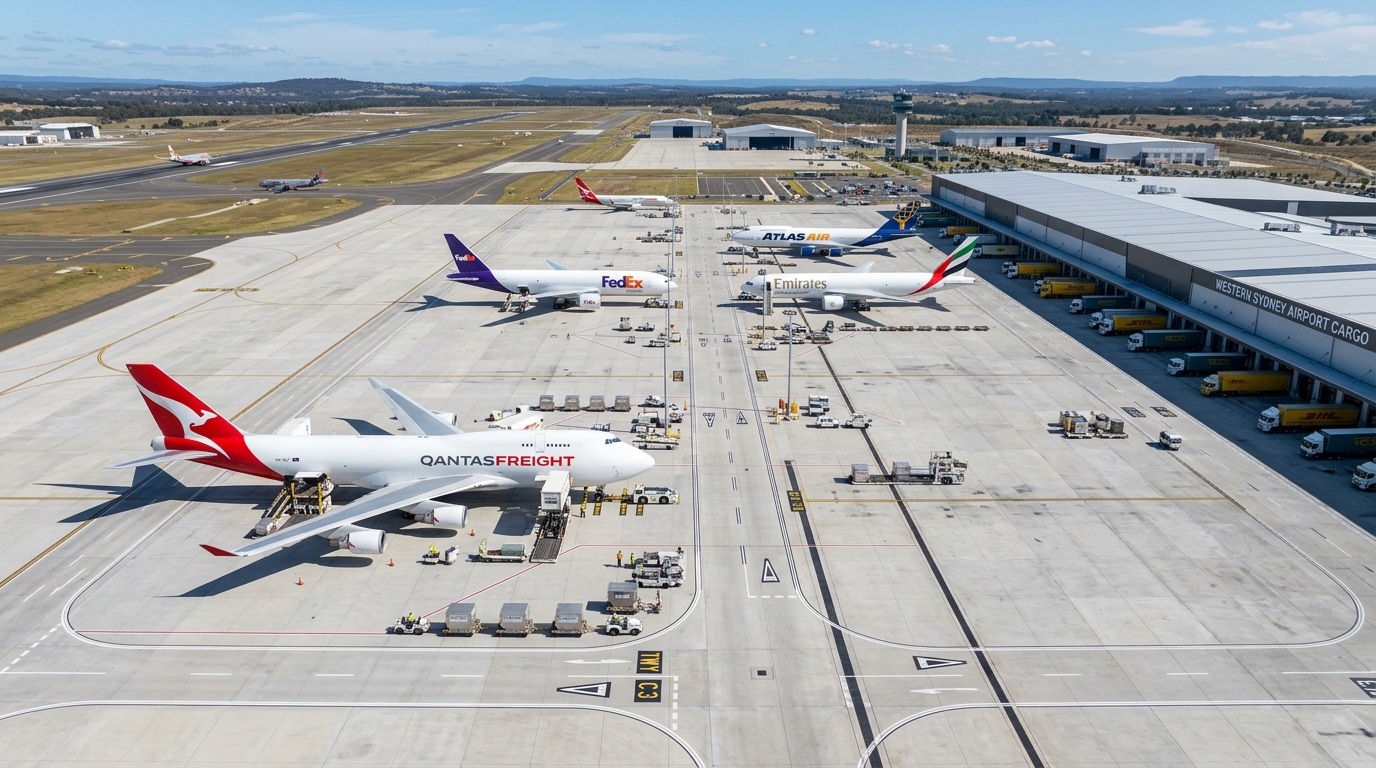
The WSI Cargo Precinct operates as a continuous, automated processing hub. Featuring direct airside access around the clock, freight operators can process, sort, and clear international express cargo in the middle of the night.
Freight bypasses peak urban traffic and feeds directly into interstate linehaul road transport networks by 3:30 AM, ensuring reliable next-day delivery cycles.
Foreign Direct Investment (FDI) Australia inflows into logistics and warehousing infrastructure have accelerated sharply since the final federal funding approvals for the WSI cargo precinct were confirmed.
Noise Management and Airspace Architecture
The curfew legislative framework and operational parameters governing WSI 24-hour operations fall under the Federal Government’s Department of Infrastructure, Transport, Regional Development, Communications and the Arts, Western Sydney International Airport portal.
Airspace management and safety regulations for unrestricted overnight operations fall under enforcement from the Civil Aviation Safety Authority (CASA), while Airservices Australia, the national provider of air navigation services, manages operational air traffic coordination.
WSI manages nocturnal noise exposure through Head-On runway configurations between 11:00 PM and 5:00 AM, routing aircraft over less-populated zones to the west and south-west.
Operating a 24-hour aviation gate requires strict management of acoustic exposure over the Western Sydney basin. Airspace planners address community and environmental concerns through next-generation aircraft mandates and specialised routing structures during quiet hours.
Head-On Operational Scenarios
Air traffic control protocols use “Head-On” runway configurations between 11:00 PM and 5:00 AM, provided weather patterns, cloud ceilings, and crosswind component speeds remain within safe regulatory thresholds.
Under this framework, aircraft both arrive and depart using a unified directional path over less-populated environmental zones to the west and south-west. This isolates the acoustic footprint from established residential suburbs to the east.
The table below outlines the standard operational routing scenarios applied at WSI depending on the time of day and prevailing weather conditions.
| Roster Period | Prevailing Weather / Wind | Active Flight Path Strategy | Primary Community Benefit |
|---|---|---|---|
| Day Operations (0600–2300) | Standard Meteorological Conditions | Parallel runway approach and departure paths. | Maximises hourly aircraft movement capacity. |
| Night Operations (2300–0500) | Wind speeds below 5 knots | Head-On Configuration (West/South-West) | Avoids noise exposure over eastern residential suburbs. |
| Adverse Weather Night Mode | Crosswinds exceeding safe limits | Directional single-path routing under strict limits | Prioritises safety while enforcing high-altitude profiles. |
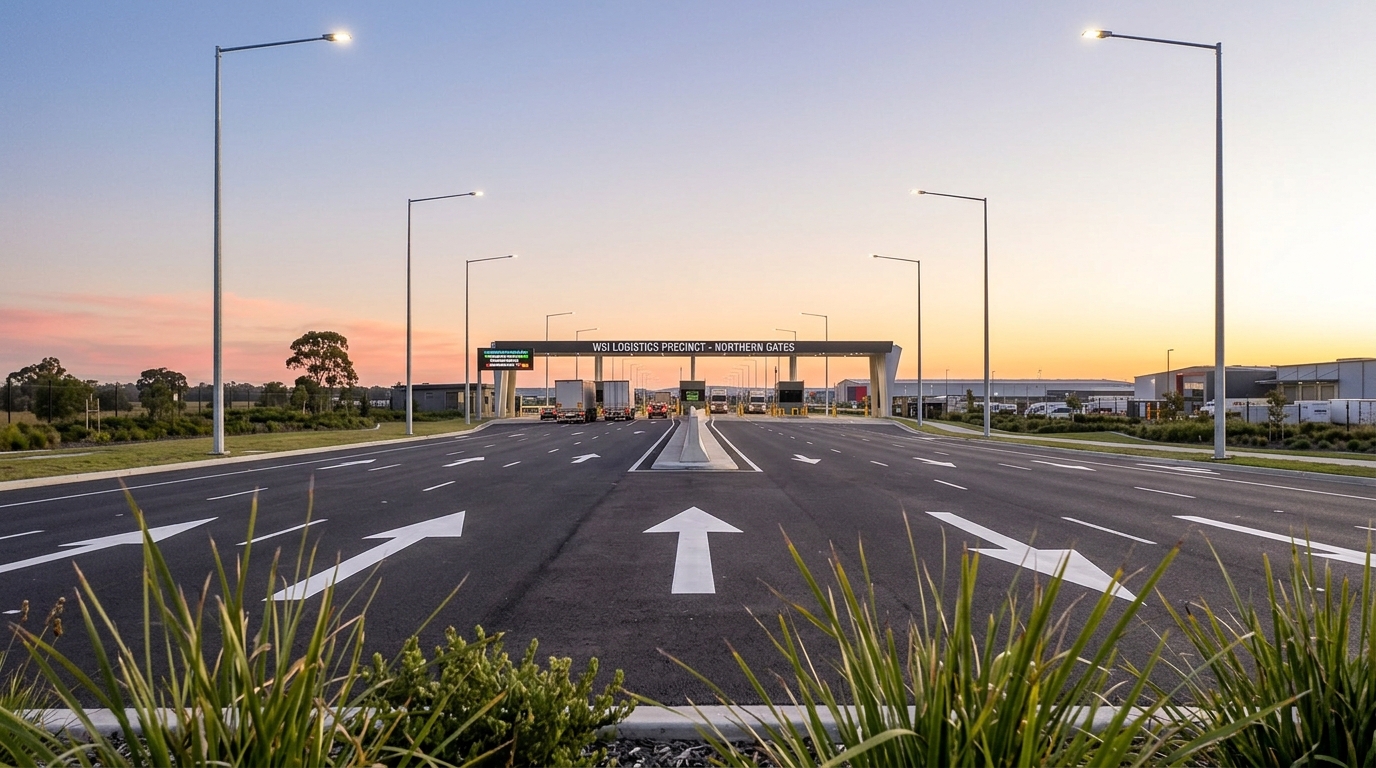
Infrastructure and Property Alignment Near 24-Hour Gates
Ground transport links connecting the 24-hour precinct to the metropolitan road network appear in the Transport for NSW: M12 Motorway Project documentation.
Land use planning controls surrounding the curfew-free flight path corridors fall under the NSW Department of Planning: Western Sydney Aerotropolis controls, while the Western Sydney International Airport — Official Site serves as the official WSI operational portal.
Suburbs closest to the curfew-free flight paths face distinct noise and planning considerations, a theme covered in Australia Develops’ Western Sydney Airport property hotspots guide.
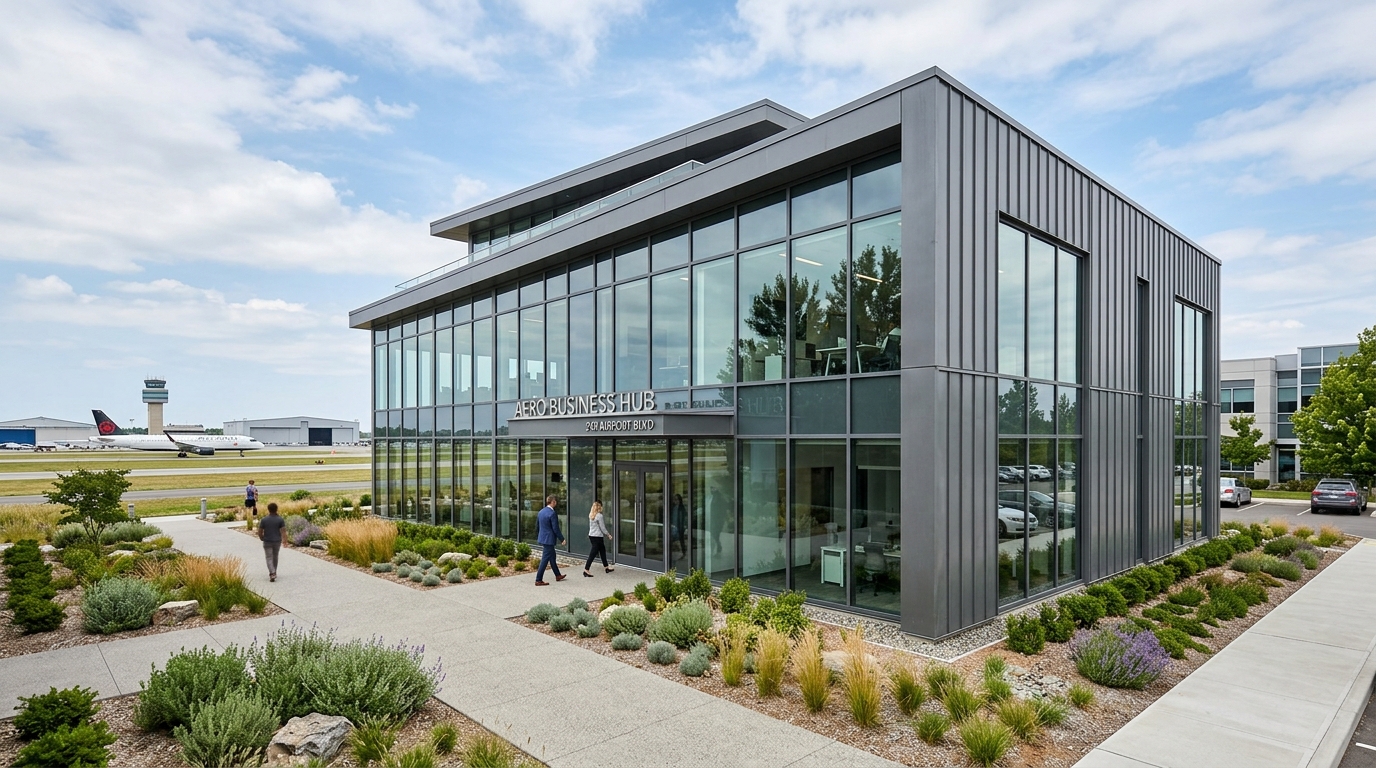
Under WSI 24-hour operations, a continuous logistics hub permanently restructures property development along adjacent transport corridors, replacing low-density residential stock with high-throughput industrial facilities engineered for 24-hour operation.
1. Industrial Sub-Market Compression
Industrial vacancy rates across Western Sydney have remained consistently tight across multiple property cycles. The arrival of a 24-hour aviation gate has intensified competition among major corporate occupiers for well-located industrial land.
Industrial developments situated within minutes of the WSI freight gates eliminate double-handling and urban traffic delays, allowing logistics firms to maximise fleet efficiencies.
Aerotropolis precinct land banking has entered its execution phase, with major institutional groups securing large sites ahead of terminal operations commencing.
Significantly, To evaluate the capital allocation patterns driving these major industrial developments and enterprise zones, view the comprehensive analysis of the Western Sydney Aerotropolis 2026 investment case.
2. The Critical Importance of Opening Timelines
For industrial and commercial occupiers, aligning facility construction completion with the actual commencement of flight operations is a critical operational requirement. Missing these structural infrastructure milestones can leave massive distribution facilities vacant, impacting cash flows and projected yields.
Critically, To track precise opening dates, confirmed carrier allocations, and transport integration phases across the initial launch window, read the detailed operational timeline guide on Western Sydney Airport 2026 airlines, transport and opening dates.
3. Specialised Building Design and Site Costs
The Inside WSI architectural design overview details the terminal infrastructure enabling these round-the-clock operations.
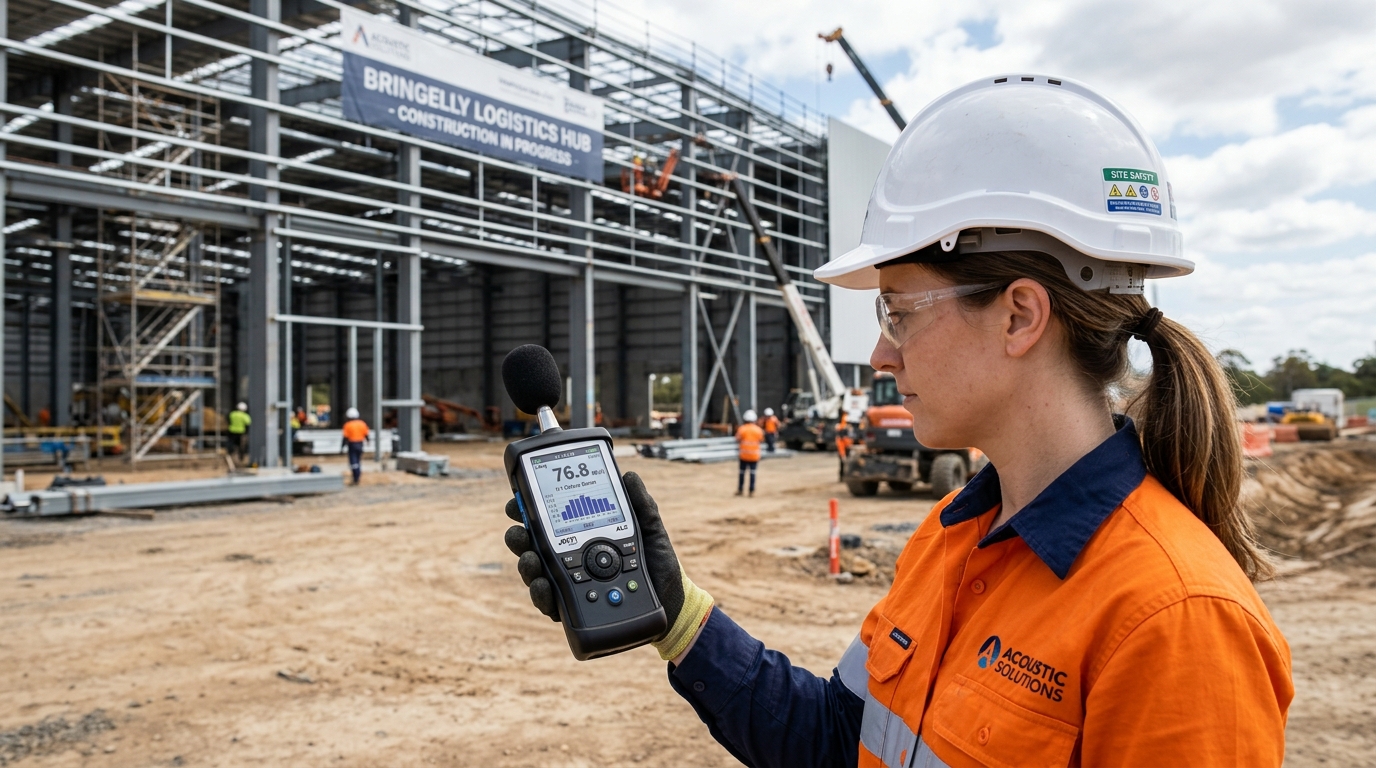
In practice, Constructing high-capacity logistics infrastructure within the immediate vicinity of an active airport requires careful attention to site-specific civil engineering.
Soil stabilisation for heavy vehicle hardstands, integration with regional stormwater management systems, and specialised acoustic insulation for nearby office components all influence initial building budgets.
Developers must plan for these structural additions prior to committing to major industrial land acquisitions. A detailed technical breakdown of the foundational engineering variables shaping these regional construction budgets is available in the guide on site costs in Australia and why cheap land can cost more to build on.
4. Protecting Supply Chains from Environmental Delays
While 24-hour operations offer clear logistical efficiencies, surface transport networks remain vulnerable to regional environmental conditions. Western Sydney’s low-lying geographical basin and drainage lines require industrial developers to carefully evaluate site elevations, access roads, and stormwater paths to prevent flooding disruptions during extreme weather events.
Ensuring distribution facilities and connecting transport corridors sit outside active overland flow paths is an essential risk-management step.
Specialised validation resources are available in the comprehensive overview of flood and bushfire maps Australia: essential mapping tools before buying property.
5. Managing Development Approvals for Unregistered Land
Many emerging industrial estates surrounding the airport reach the market via off-the-plan subdivisions or master-planned corporate releases. If an industrial land parcel encounters unexpected council approval delays or utility infrastructure hold-ups, the resulting delay in title registration can significantly push out building schedules and increase holding costs.
Collectively, Critical advisory information on protecting investment capital from lengthy registration delays is available in the guide on the Leppington development pipeline and land registration timelines.
WSI 24-Hour Operations: Key Data at a Glance
WSI’s continuous operating mandate delivers measurable structural advantages across freight throughput, runway capacity, and environmental performance relative to curfew-constrained peers.
| Performance Indicator | Baseline Design Specification | Strategic Logistics Advantage |
|---|---|---|
| Curfew Hours Reclaimed | 7 Hours Shifted Daily | Enables alignment with overnight Asian and European arrival banks. |
| Initial Freight Capacity | Up to 220,000 Tonnes Annually | Establishes the precinct as Australia’s primary high-value cargo gate. |
| Runway Length Parameter | 3.7 Kilometres (45m Width) | Built to support continuous operations for heavy Code-F widebody jets. |
| Environmental Code Target | 5-Star Green Star Standards | Incorporates on-site solar microgrids to offset 24-hour terminal draws. |
Summary
WSI 24-hour operations represent the most significant structural shift in Sydney’s aviation logistics since the introduction of the Curfew Act in 1995.
The unrestricted operating mandate enables airlines, freight operators, and logistics developers to align their capital strategies with a 24-hour metropolitan gateway rather than a curfew-constrained legacy hub.
The industrial and commercial property sub-markets adjacent to the airport boundary are undergoing a fundamental re-rating. Therefore, institutional investment infrastructure pipelines confirm that the precinct is already transitioning from speculative land acquisition to active development delivery.
The combination of curfew-free slot flexibility and a dedicated automated cargo hub positions WSI to capture a significant and growing share of Australia’s air freight task over the next decade.
The long-term commercial viability of WSI’s continuous flight schedules depends heavily on the surface transport networks connecting the terminal to Greater Sydney.
The WSI Transport Guide covering the Metro, M12 and commute times provides a technical breakdown of the driverless Sydney Metro line, the toll-free M12 Motorway, and realistic peak-hour commute estimates from key employment hubs across the region.
The 24-hour operations model outlined here depends on the surrounding road and rail network, mapped in full in the WSI transport guide to Metro, M12 and commute times.
The 24-hour operations model outlined here drives significant regional employment demand, detailed in the WSI jobs and careers employment pathways guide.
This article is general information only and is not financial, legal or planning advice. See the Disclaimer for details.