The 1.2 million homes target sits at the heart of the National Housing Accord. Build 1.2 million new homes between July 2024 and June 2029, and the housing shortage starts to ease. Seven quarters in, Australia has a record number of homes under construction and approvals are climbing. But completions have gone sideways. So for anyone buying or renting in 2026, the question is simple. Is NSW on track, and if not, how far behind is it?
This article was produced and reviewed by the Australia Develops editorial team. See our Editorial Policy for sourcing standards and methodology.
What the 1.2 million homes target actually requires
The Accord covers five years, so the maths is blunt. Australia needs about 240,000 completions a year, or roughly 60,000 every quarter. Each state signed up for a share. For example, NSW Planning says the NSW share is “377,000 new well-located homes” over the same five years.
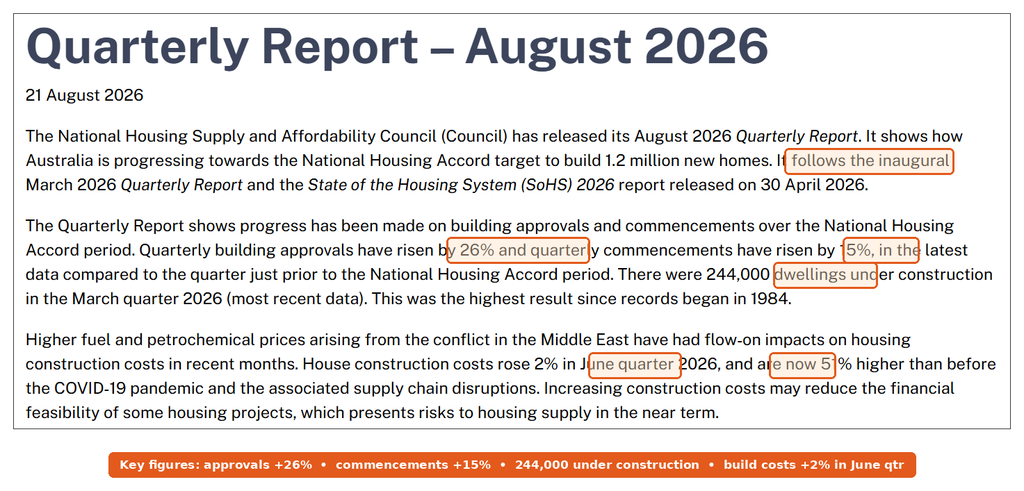
The independent National Housing Supply and Affordability Council (NHSAC) tracks progress for the federal government. It released its first quarterly report in March 2026. Then on 21 August 2026 it published the second one, using data up to the March quarter 2026.

Where completions stand in 2026
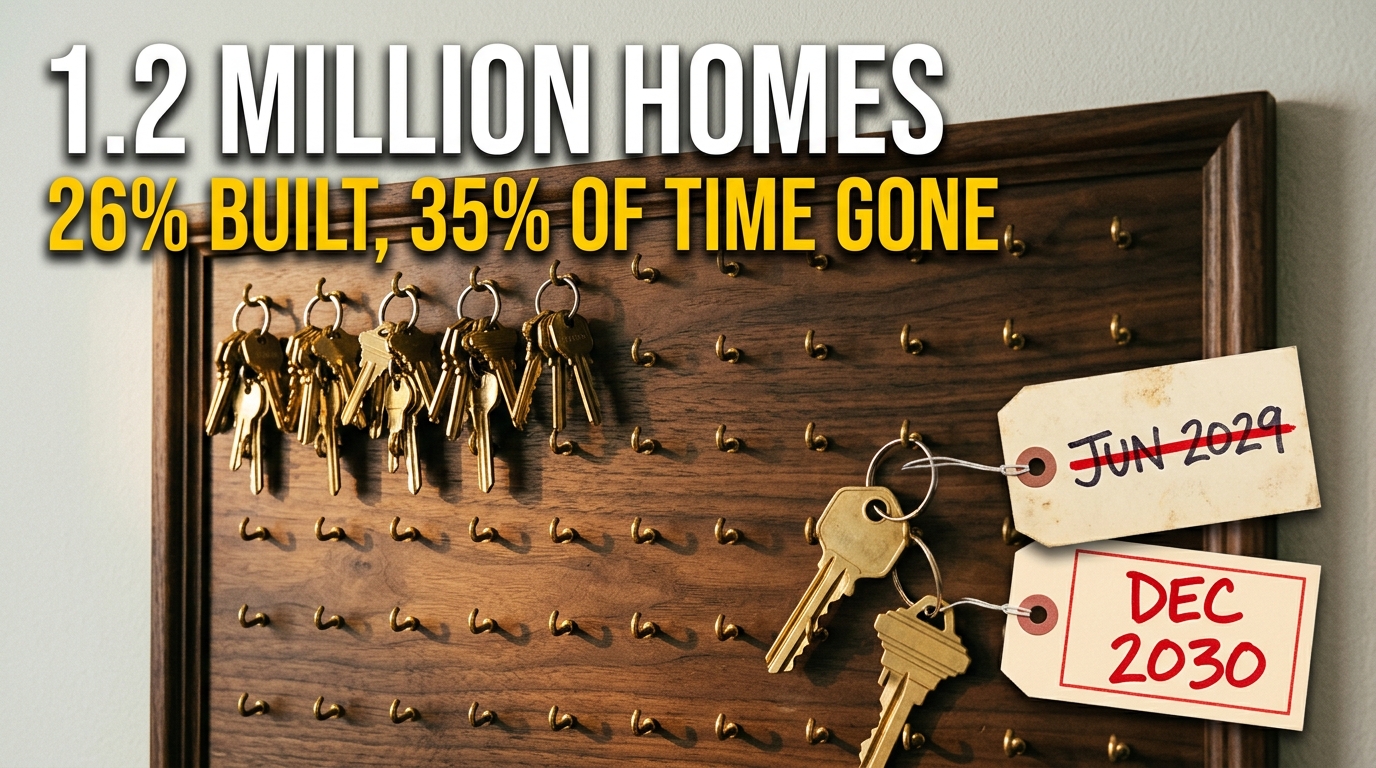
According to the NHSAC August 2026 Quarterly Report, Australia completed 308,000 new homes after the Accord started. The Council calls that “around one-quarter of the target”. However, seven of the twenty quarters had already gone by March 2026. That’s 35% of the time used for 26% of the homes.
The pipeline itself looks full. The Council counted 244,000 dwellings under construction in the March quarter 2026. It’s the highest figure since records began in 1984. Quarterly approvals are up 26% on the quarter before the Accord, and commencements are up 15%. Also, it’s now 10% faster to build a new house than when the Accord began.
The bottleneck shows up in the ABS numbers. Its Building Activity release for the March quarter 2026, out on 8 July, shows 43,816 dwellings completed, down 0.4%. Commencements fell 11.2% to 48,012. So the country is finishing about 44,000 homes a quarter, when the target needs about 60,000. Since the start, the average has sat at roughly 44,000 too.
Approvals are rising, but units are the weak spot
Approvals are the most positive part of the story. On 30 July, Housing Minister Clare O’Neil said Australia approved 205,249 dwellings across 2025–26. Her release put that “up 9.2 per cent” on the year before. But a later quote in the same ministerial release says 8.9 per cent. Either way, it was the highest year since 2020–21.

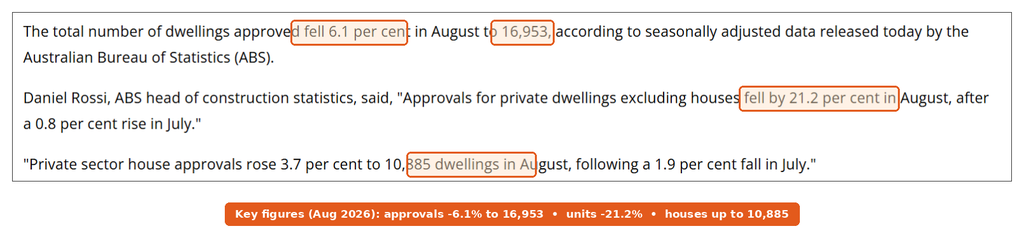
Still, 205,000 approvals is not 240,000 completions. Some approved projects never start, and others take years to finish. Then the August numbers wobbled. The ABS reported on 30 September that total approvals fell 6.1% to 16,953 in August. Private house approvals rose 3.7% to 10,885, the eighth month in a row above 10,000. But approvals for apartments and townhouses dropped 21.2%.
That split matters. Houses are quicker to build, but they use more land and tend to sit on the fringe. Apartments near transport are what the Accord means by “well-located”, and that is exactly the segment losing momentum.
State by state progress on the 1.2 million homes target
The NHSAC table shows how much of each state’s share it has built and when the Council expects it to finish. Remember that about 35% of the Accord period had passed by March 2026.
- ACT: 34% built, expected December 2029.
- Victoria: 32% built, expected December 2029.
- Western Australia: 29% built, expected December 2029.
- South Australia: 28% built, expected March 2031.
- Queensland: 24% built, expected March 2031.
- NSW: 21% built, expected March 2032.
- Tasmania: 16% built, expected June 2034.
- Northern Territory: 9% built, expected after 2034.
No state is on schedule to finish by June 2029. Victoria, WA and the ACT come closest, about six months late. By contrast, NSW, the biggest share by far, now sits nearly three years behind. In March the Council had pencilled in June 2031 for NSW. So it slipped three quarters in a single report. Queensland moved from September 2030 to March 2031.
Why the 1.2 million homes target keeps slipping
The Council now expects the nation to hit the 1.2 million homes target in the December quarter 2030. That’s 18 months after the deadline, and one quarter later than its own estimate from earlier in the year. It points to three pressures.
- Construction costs. House construction costs rose 2% in the June quarter 2026. The Council links that to higher fuel and petrochemical prices from the conflict in the Middle East. It says costs now sit 51% above pre-COVID levels, and that some projects may no longer stack up financially.
- Interest rates. The Council expects “the recent interest rate increases” to see some construction deferred. Since then, the Reserve Bank lifted the cash rate by another 25 basis points to 4.60% on 29 September.
- Softer sentiment. Fewer off-the-plan buyers means fewer apartment projects reach the presales they need for finance.

Builder capacity is the fourth pressure, even if the Council puts it less directly. A record 244,000 homes under construction alongside flat completions tells you the industry can’t finish homes as fast as it starts them. In other words, the trades, site supervisors and finance now stretch across too many jobs at once.
What it means for buyers and renters
For renters, falling short of the 1.2 million homes target means tight vacancy for longer. Each quarter the country finishes about 16,000 fewer homes than the target needs, so demand keeps outrunning supply. The look at rental vacancy rates across Australia in 2026 shows where that pressure is worst.
For buyers, the picture is mixed. Rising rates cut borrowing power, yet the lack of new stock props up prices for established homes. House-and-land buyers on the fringe have more choice, because detached approvals keep rising. Apartment buyers near transport have less, because developers are deferring those projects first. That’s why the NSW TOD rezoning around 47 stations matters. Rezoning is only half the job, since builders still need projects that pencil out.
What’s still missing or not confirmed
- The ABS June quarter 2026 building activity data, which would show whether completions picked up, wasn’t out at the time of writing.
- The NHSAC estimates rely on current trends. So they don’t yet include the September rate rise or the weak August unit approvals.
- Neither level of government has said what happens if Australia misses the target. There is no penalty and no formal reset of the 2029 deadline so far.
- The minister’s release gives two different growth figures for 2025–26 approvals (9.2% and 8.9%).
Editorial take: the 1.2 million homes target won’t be met by June 2029, and the Council’s December 2030 estimate looks optimistic. It came before the latest rate rise, and unit approvals have just fallen by a fifth in a month. Still, the target has done something useful. It forces governments to publish a scorecard every quarter, so NSW falling behind can be seen rather than guessed at.
If you’re trying to time a purchase, completions are a better signal than approvals. Approvals make the headlines, but completions are the homes people can actually live in. Until that quarterly number gets closer to 60,000, rents and prices for well-located homes will stay under pressure.
Wondering where rates head next? Then read the interest rate and property forecast for 2027.
This article is general information based on NHSAC, ABS, Reserve Bank of Australia and federal and state government releases available at publication. It isn’t financial advice. Housing data is revised often, so check the latest ABS and NHSAC releases before making property decisions.