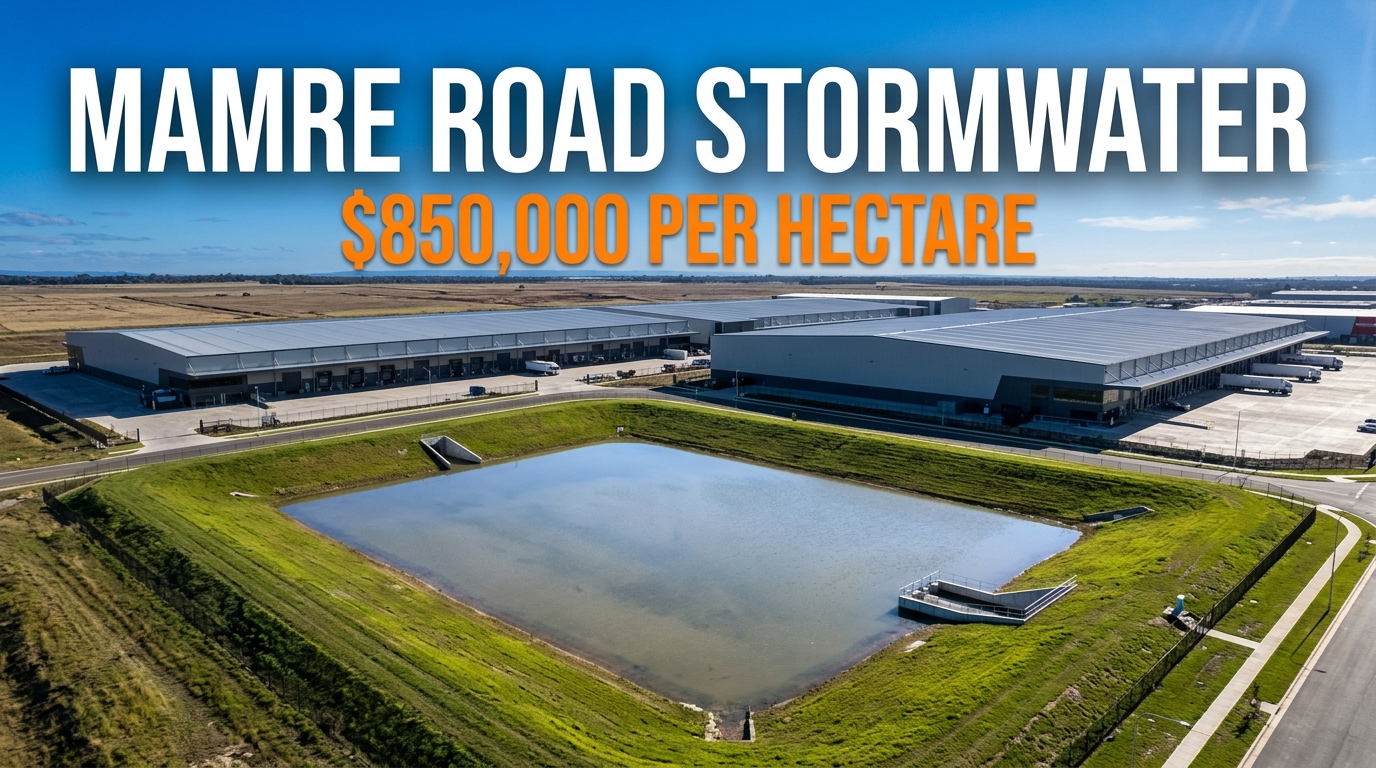
Every hectare developed in the Mamre Road Precinct carries a Mamre Road stormwater charge, and the industry spent two years arguing about how big it should be.
IPART settled it in November 2024 at around $850,000 per hectare. This article sets out who argued what, and which parts of a site attract no charge at all.
Written by Daniel Whitfield, founder of Australia Develops, who has personally bought, subdivided, and built property across Australia.
Mamre Road Stormwater 2026 — What Developers Pay
Sydney Water builds and owns the regional stormwater network, and recovers the cost from developers through a charge levied on each hectare of developable land.
| Party | Scheme cost | Position on the charge | Stage |
|---|---|---|---|
| Sydney Water | About $1 billion scheme cost | Around $1.02 million per hectare | Proposed |
| IPART | $860 million efficient cost | Around $850,000 per hectare | Final report, November 2024 |
| Mamre Road Landowners Group | — | Cannot feasibly be borne | Submission, 18 October 2024 |
| Urban Taskforce | — | Risks industrial land supply | Submission to the review |
| Property Council and UDIA NSW | — | Standards not peer reviewed | Submissions, June and October 2024 |
The Mamre Road stormwater charge
IPART figures in 2023-24 dollars. Area figures from Sydney Water, updated January 2024.
The dispute ran through the Independent Pricing and Regulatory Tribunal, which reviews what Sydney Water may charge and publishes every submission.
That process is why the figures below are public. Each party filed its position on the record, with a date attached.
The charge matters beyond this precinct. Mamre Road was the first scheme of its kind, and the same method now applies across the Aerotropolis precincts, including the Northern Gateway.
Why the Charge Exists
Sealing farmland with roofs and hardstand sends far more water into the creek, far faster. The scheme exists to absorb that change.
How the water moves, and who pays
Schematic layout — relative positions only, not to scale.
The NSW Government appointed Sydney Water as Regional Stormwater Authority for the Mamre Road Precinct and the Aerotropolis initial precincts in 2022.
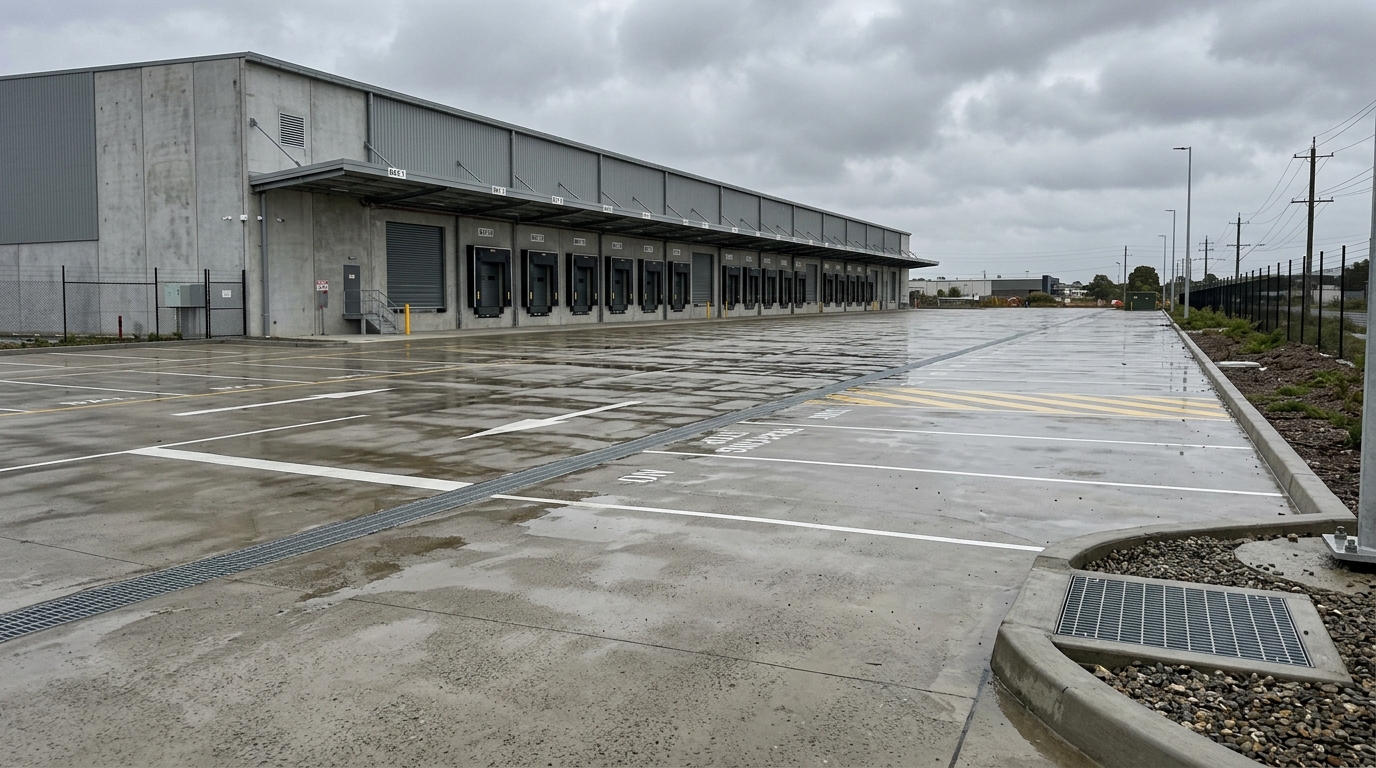
The Department of Planning, Housing and Infrastructure assessed regional stormwater management as the most efficient way to meet waterway health targets across Greater Sydney.
The department set discharge standards so that Wianamatta–South Creek and its catchment do not progressively degrade as the precinct builds out.
Sydney Water designs the wetlands, harvesting basins and trunk drainage, then recovers the cost through a Development Servicing Plan registered with IPART.
Google Maps shows the creek line but not the scheme assets. The NSW Planning Spatial Viewer carries the zoning that determines what is chargeable.
POSITION 1 — Sydney Water: About $1.02 Million per Hectare
POSITION: SCHEME PROPOSED, SUBMITTED TO IPART FOR REVIEW
Sydney Water prepared a Scheme Plan defining the wetlands, basins and trunk drainage for the precinct, then costed it and proposed a charge.
Its revised estimate put the cost to developers at around $1.02 million per hectare, based on a conceptual scheme design.
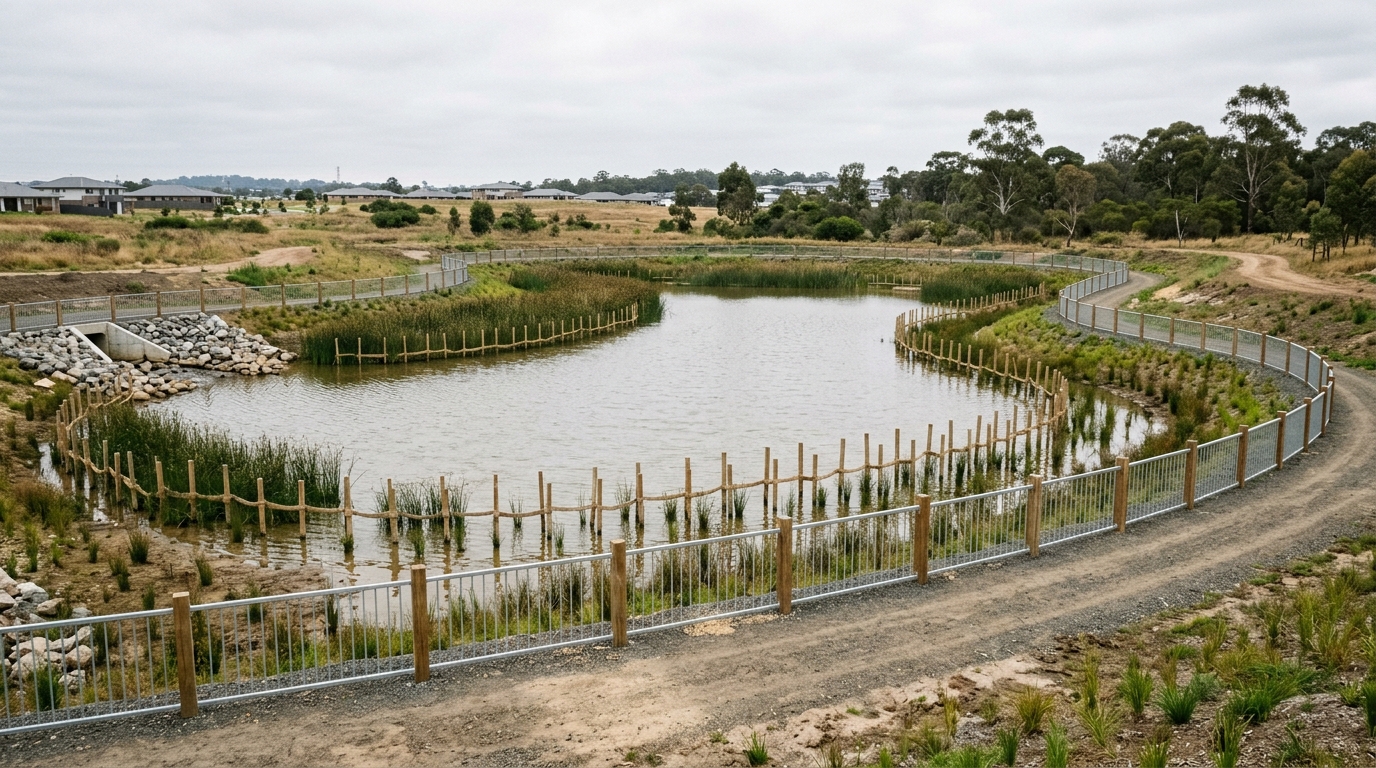
The total scheme cost it proposed came to roughly $1 billion over 30 years, which IPART later reduced by $140 million.
Sydney Water cannot simply set this figure. IPART must exhibit, review and register a Development Servicing Plan before any charge applies.
POSITION 2 — IPART: Smaller, Deeper Basins and $140 Million Less
POSITION: FINAL REPORT PUBLISHED NOVEMBER 2024
IPART’s final report found the efficient cost of delivering stormwater services to the precinct was around $860 million in 2023-24 dollars, spread over 30 years.
That is $140 million below Sydney Water’s proposal, a reduction of about 16 per cent, and it rests on one design change.
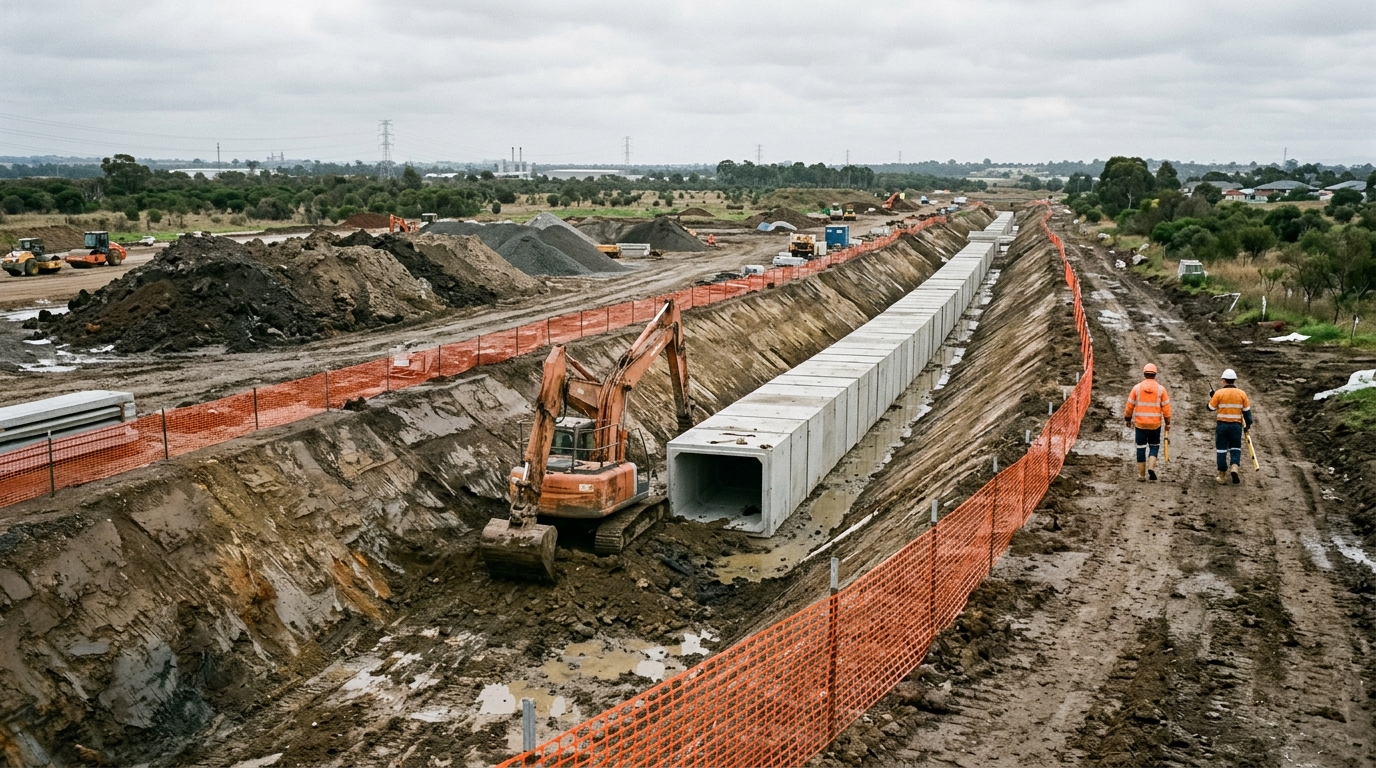
IPART compared the conceptual scheme with an alternative using smaller, deeper basins. Less surface area means less land to acquire.
It then recommended recovering those costs from development, which produces an infrastructure contribution charge of around $850,000 per hectare.
IPART called the charge necessary and reasonable to manage runoff from large format industrial development and prevent irreversible degradation to the creek.
It also concluded that most developers would still find development feasible after allowing for holding costs and interim land sterilisation.
The warning came in the next sentence. Lengthy delays in implementing the scheme have the potential to materially affect developer returns and development.
POSITION 3 — Landowners: Development Will Stall
POSITION: SUBMISSION LODGED 18 OCTOBER 2024
The Mamre Road Landowners Group told IPART that Sydney Water’s proposal carried costs the industry could not feasibly bear.
Its submission argued that if the proposal proceeded as drafted, further development within the precinct would be likely to stall.
The group made a circular argument that IPART took seriously. Stalled development deprives Sydney Water of the very funds it needs to deliver the scheme.
A charge set too high therefore defeats itself, because nothing gets built and nobody pays it. The same tension shapes pipelines at Leppington and Austral.
POSITION 4 — Urban Taskforce: Look at Alternative Providers
POSITION: SUBMISSION TO THE IPART REVIEW
The Urban Taskforce argued that Sydney Water’s analysis lacked a thorough investigation of project feasibility.
It pressed government to weigh alternative providers and alternative solutions, rather than accept a single regional scheme from one authority.
Its warning was blunt. The proposal risked killing off industrial land supply in a precinct Sydney needs.
That claim carries weight, because Sydney holds less than one year of zoned and serviced industrial land, according to submissions filed in the review, while housing precincts such as Edmondson Park keep absorbing land.
POSITION 5 — Property Council and UDIA: No Peer Review
POSITION: SUBMISSIONS JUNE AND OCTOBER 2024
The Property Council of Australia and the Urban Development Institute of Australia NSW filed jointly, twice.
Their first submission responded to IPART’s issues paper on the cost of stormwater drainage in June 2024.
Their second, in October 2024, argued that IPART’s draft report fell short of peer reviewing the engineering standards and water quality targets underneath the scheme.
The distinction matters. IPART reviews whether costs are efficient for a given standard, not whether the standard itself is set correctly.
That gap is the strongest argument the industry made, and IPART did not close it.
What IPART Decided
IPART published its final report in November 2024, and its findings barely moved from the draft.
How the charge was settled
Sources: IPART issues paper, submissions register, draft report and final report.
Beyond the cost figure, IPART made three further recommendations that received far less attention than the headline charge.
It asked the NSW Government to consider updating its strategic impact assessment under the planning department’s framework, and to revisit its assessment under the framework for waterway health outcomes in land use planning.
It asked government to work with the Federal Government and Western Sydney International Airport so the airport’s own stormwater discharge does not undermine developers’ investment.
That recommendation is easy to miss. Developers pay to protect a creek that the airport next door also discharges into.
IPART also said Sydney Water should ringfence any Negotiated Service Agreements, so precinct costs are not transferred to customers in other areas.
The 256 Hectares Nobody Pays For
Sydney Water’s developable land fact sheet puts the precinct at about 1,021 hectares, but the charge applies to only 765 hectares. The gap is land Sydney Water treats as undevelopable.
| Excluded land | Hectares |
|---|---|
| Public open space, zoned RE1 | 69.16 |
| Land at or below the flood planning level, zoned C2 | 62.27 |
| Existing roads and planned widening, including Mamre Road and the Southern Link Road | 34.67 |
| Easements for public utilities | 34.22 |
| Trunk drainage | 31.85 |
| Collector roads, including Aldington Road | 31.85 |
| Regional stormwater basins and wetlands | 30.99 |
| Rail corridor | 11.69 |
| Place of public worship | 10.15 |
| Waterways | 8.36 |
| Sydney Water sewage pumping stations | 1.07 |
Public open space and floodplain land form the two largest exclusions. Together they strip more than 130 hectares out of the charged area.
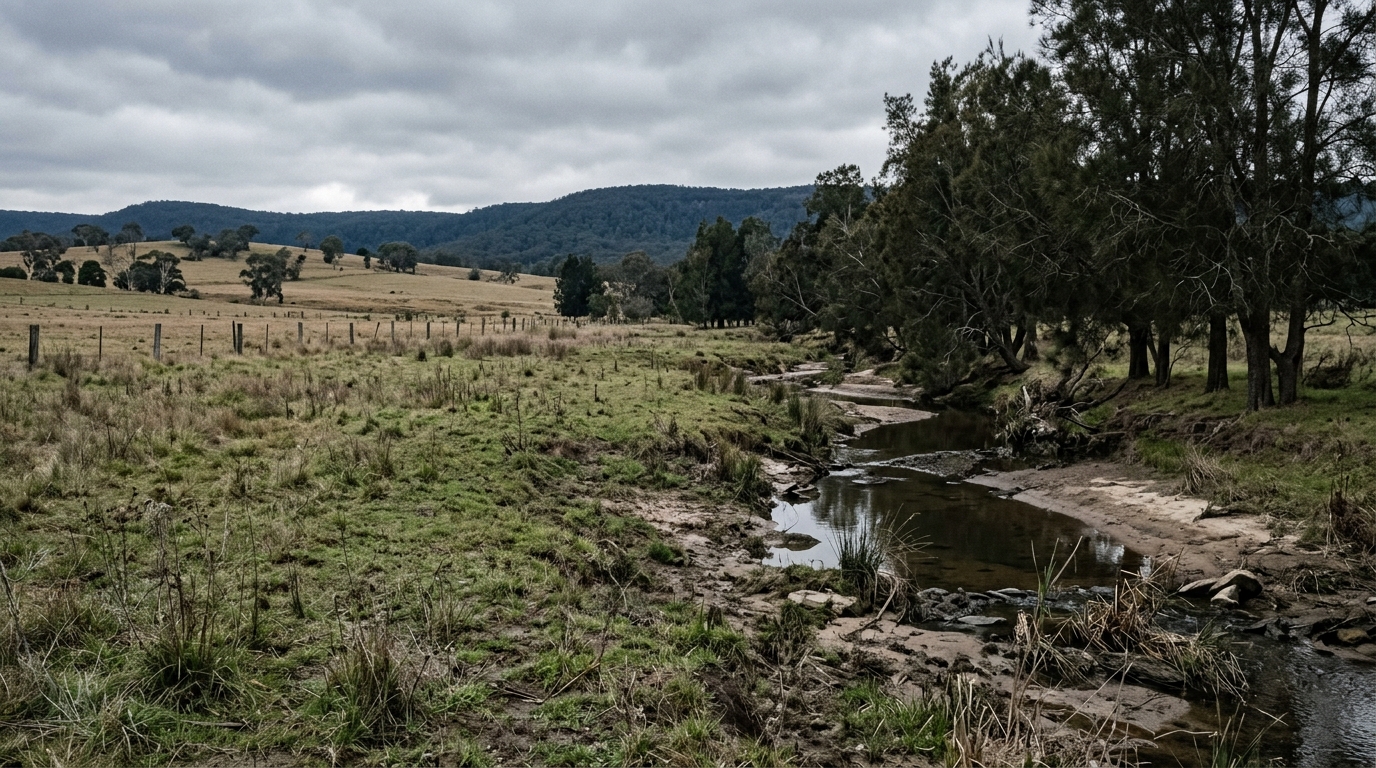
The basins and trunk drainage that the scheme itself builds are also excluded, which means the infrastructure does not pay a charge to fund itself.
Two categories surprise people, because the charge covers them. On-site detention areas and new internal access roads both count as chargeable.
The zones that attract the charge are Agribusiness, Enterprise, Mixed Use, Industrial IN1 and Private Recreation RE2.
What the Charge Costs a Real Site
The arithmetic turns simple once you strip out the excluded land, and the exclusions are where the money moves.
| Site area | Excluded land | Net developable area | Charge at $850,000 per hectare |
|---|---|---|---|
| 5 hectares | 1 hectare | 4 hectares | $3.4 million |
| 10 hectares | 2 hectares | 8 hectares | $6.8 million |
| 20 hectares | 5 hectares | 15 hectares | $12.75 million |
| 50 hectares | 12 hectares | 38 hectares | $32.3 million |
A site with two hectares of floodplain or riparian land pays about $1.7 million less than a site of the same size without it.
That single fact explains why the flood planning level boundary is worth checking before any purchase in the precinct.
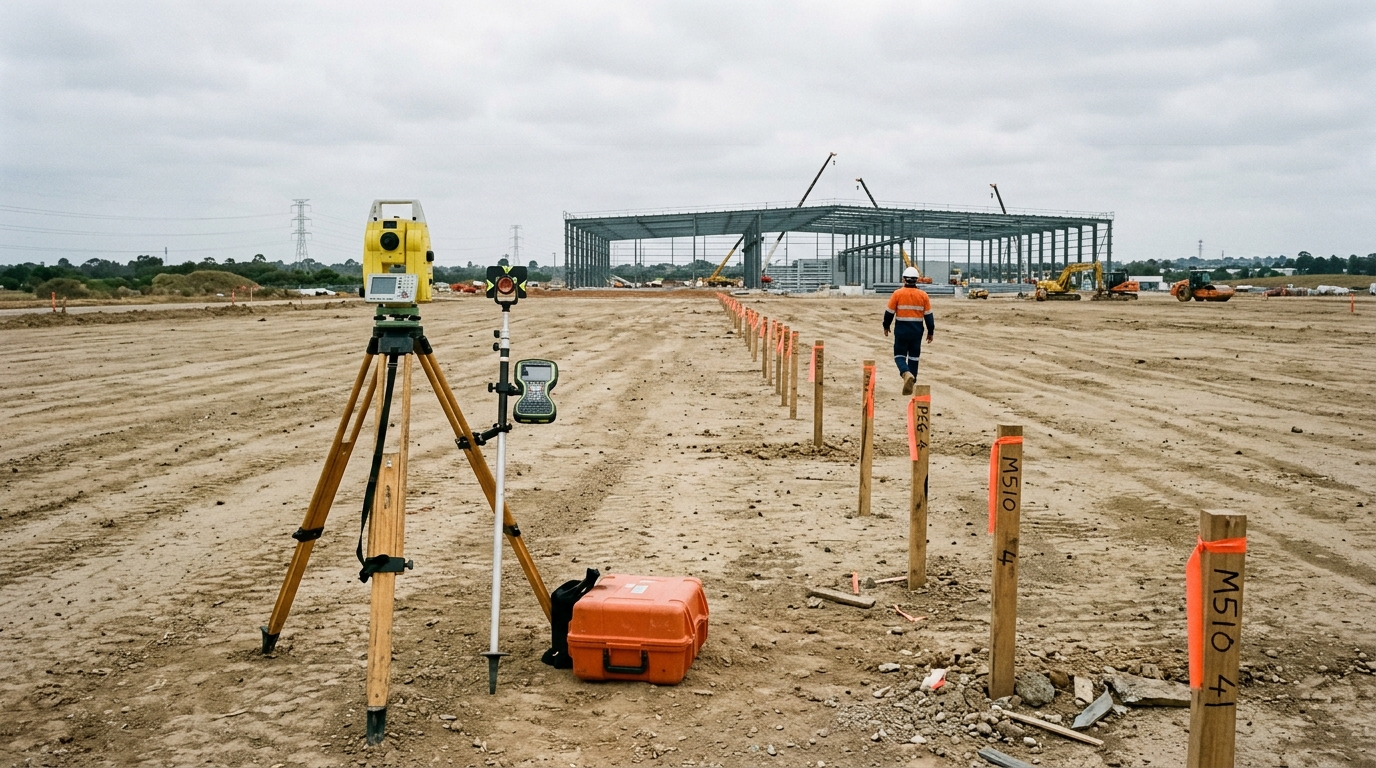
Sydney Water verifies the net developable area at the time of a Section 73 application, and its figure may differ from the mapped assumption, much as unregistered land can differ from what a plan shows.
How and When Developers Pay
Unlike local contributions, payment attaches to the Section 73 process rather than to development consent, which puts it later in the sequence than most contributions.
A developer applies for a Section 73 Compliance Certificate. Sydney Water then issues a Notice of Requirements setting out what must happen before it issues the certificate.
That notice carries an estimate of the infrastructure contribution, which Sydney Water calculates from its own mapping, or from site-specific mapping the developer supplies.
Applications lodged before IPART registers the Development Servicing Plan require a bond, usually a bank guarantee. Sydney Water releases that bond once the developer pays the charge.
Applications made after registration must pay the charge before the certificate issues. Sydney Water does not levy the charge on lots awaiting further subdivision where nobody has requested services.
What Has Not Been Confirmed
IPART settled the headline figure, but several things around it remain open, and this article separates them deliberately.
On the public record
IPART efficient cost of $860 million over 30 years
Recommended charge of about $850,000 per hectare
765 chargeable hectares out of about 1,021
Payment follows the Section 73 certificate
Not settled here
The current indexed rate, which changes each year
Whether the engineering standards were peer reviewed
How the airport’s own discharge is dealt with
Whether basin savings survive geotechnical testing
IPART’s $850,000 is a 2023-24 figure. The registered charge is indexed, so the amount payable on any given day differs from the recommendation.
IPART itself flagged that actual savings from smaller basins depend on geotechnical and other investigations still to be done.
It also expected Sydney Water to find further savings through ongoing design work, which means the cost base is not fixed.
Nobody resolved the peer review question the Property Council raised. IPART reviewed costs against a standard, not the standard itself.
Anyone pricing a specific site should take the figure from the Notice of Requirements rather than from any published rate.
Mamre Road Stormwater: Key Data
| Field | Value |
|---|---|
| Precinct area | About 1,021 hectares |
| Chargeable net developable area | 765 hectares |
| Regional stormwater authority | Sydney Water, appointed 2022 |
| Reviewer | Independent Pricing and Regulatory Tribunal |
| IPART efficient scheme cost | About $860 million in 2023-24 dollars, over 30 years |
| Reduction against Sydney Water | $140 million, about 16 per cent |
| Design change behind the saving | Smaller, deeper basins |
| Recommended charge | About $850,000 per hectare, 2023-24 dollars |
| Final report | November 2024 |
| Payment trigger | Section 73 Compliance Certificate |
| Waterway protected | Wianamatta–South Creek |
Summary
The Mamre Road scheme set the template. Sydney Water builds the regional stormwater network and developers fund it by the hectare.
IPART cut $140 million from the proposal by redesigning the basins, then landed on about $850,000 per hectare and called it reasonable.
Industry did not win the argument it cared most about. No independent reviewer ever tested the engineering standards or the water quality targets.
For a landowner, the practical lever is the excluded land. Floodplain, riparian and open space areas carry no charge at all.
How much is the Mamre Road stormwater charge?
IPART recommended about $850,000 per hectare of net developable area in its November 2024 final report, stated in 2023-24 dollars. The registered rate is indexed and changes each year.
Who pays the Mamre Road stormwater charge?
Developers pay it, on each hectare of net developable area, through Sydney Water’s Section 73 Compliance Certificate process.
What land is excluded from the charge?
Public open space, floodplain land at or below the flood planning level, waterways, roads and planned widening, easements, rail corridor, the scheme’s own basins and trunk drainage, and places of public worship.
Why is there a stormwater charge at Mamre Road?
Sealing farmland with roofs and hardstand increases runoff into Wianamatta–South Creek. Sydney Water builds a regional network of wetlands, basins and trunk drainage, and recovers the cost from development.
This article is general information only and is not financial, legal or planning advice. See the Disclaimer for details.