Modular Homes Australia is becoming a serious cost question for buyers, investors and developers. Factory-built housing can reduce on-site time, weather delays and some labour waste. It does not remove land, approvals, foundations, transport, services or finance risks.
Written by Daniel Whitfield, founder of Australia Develops, who has personally bought, subdivided, and built property across Australia.
The short answer is simple. Modular, prefab and kit homes can be cheaper when the design is repeatable and the site is straightforward. They can cost the same, or more, when access is poor, the slope is difficult or the module requires long-distance transport.
Quick answer: a modular home may save around 5-15% on the build component. The finished project can still lose that saving through transport, craneage, foundations, services and approvals.
How Much Do Modular Homes Cost in Australia?
Modular homes often cost less on the building shell, but not always on the finished project.
| Cost Item | Indicative 2026 Market Range | Main Risk |
|---|---|---|
| Basic kit or shell | A$1,500-A$2,500 per sqm | Excludes many site works |
| Mid-range modular home | A$2,500-A$3,500 per sqm | Transport and crane costs |
| Higher-end architectural prefab | A$3,500-A$5,000+ per sqm | Customisation reduces savings |
| Conventional new house | A$2,500-A$4,500+ per sqm | Weather, labour and variations |
These ranges are indicative only. They vary by state, design, specification and site conditions. A small regional kit home can look cheap at quote stage. The final cost can change once delivery, foundations, services and compliance are included.
Australia-wide construction pricing remains under pressure. The Australian Bureau of Statistics Producer Price Indexes reported that building construction output prices rose in the March 2026 quarter, driven by house construction.
This matters because prefab suppliers still buy steel, concrete, electrical equipment, windows, plumbing fixtures and transport services.
Realistic Total Budget Example
A lower module price does not equal a lower finished home price.
This means a A$320,000 modular contract can become a A$420,000-A$560,000 finished project. Serious comparisons should use a completed-project number, not a brochure price.
Buyers purchasing a block that is still under registration face an added layer of uncertainty here, since soil and drainage conditions cannot always be verified before settlement — a risk explored in Australia Develops’ guide to unregistered land in Australia.
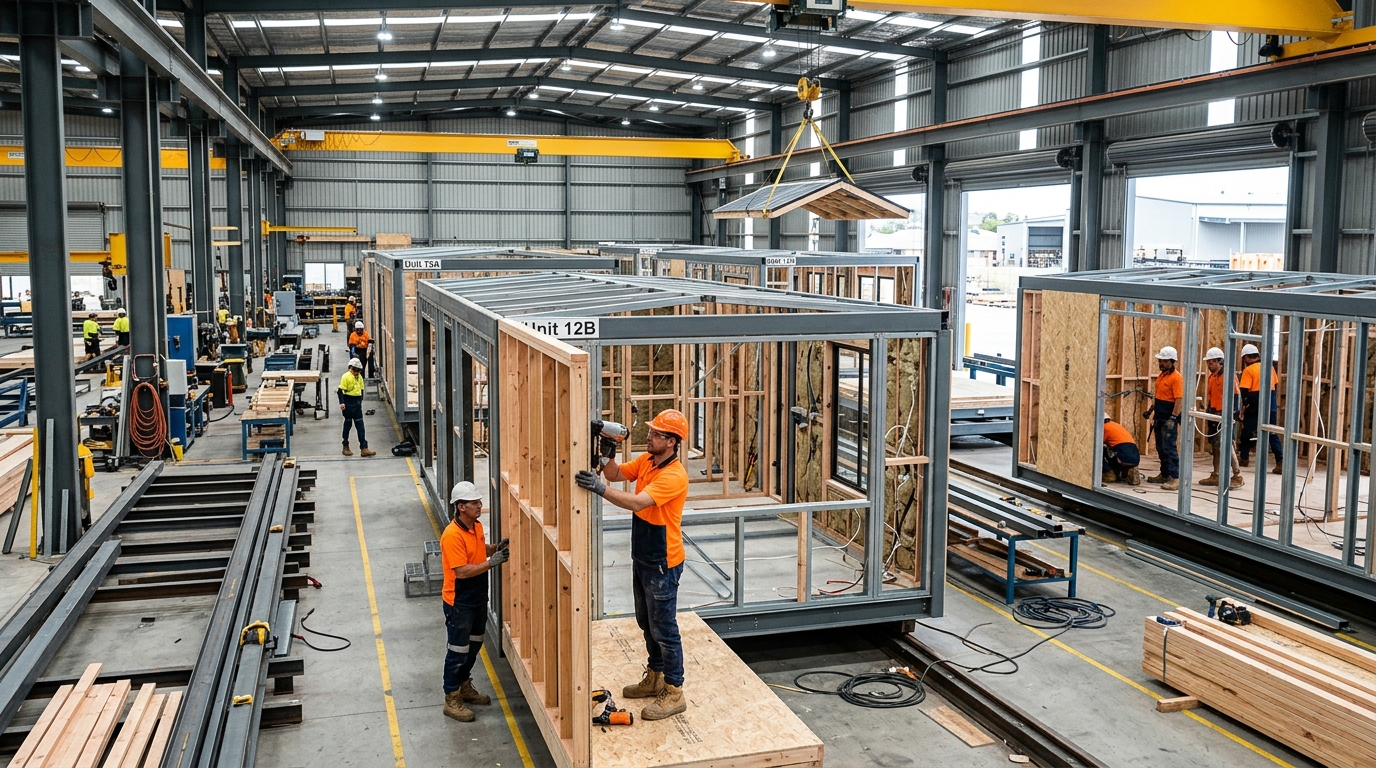
Why Prefab Can Be Cheaper Than Traditional Building
Prefab saves money when factory repetition reduces delays, waste and labour overlap.
Traditional construction happens in sequence. Trades often wait for previous works to finish. Rain, subcontractor shortages and inspection delays can slow progress, a pattern the Housing Industry Association tracks closely across the traditional build sector.
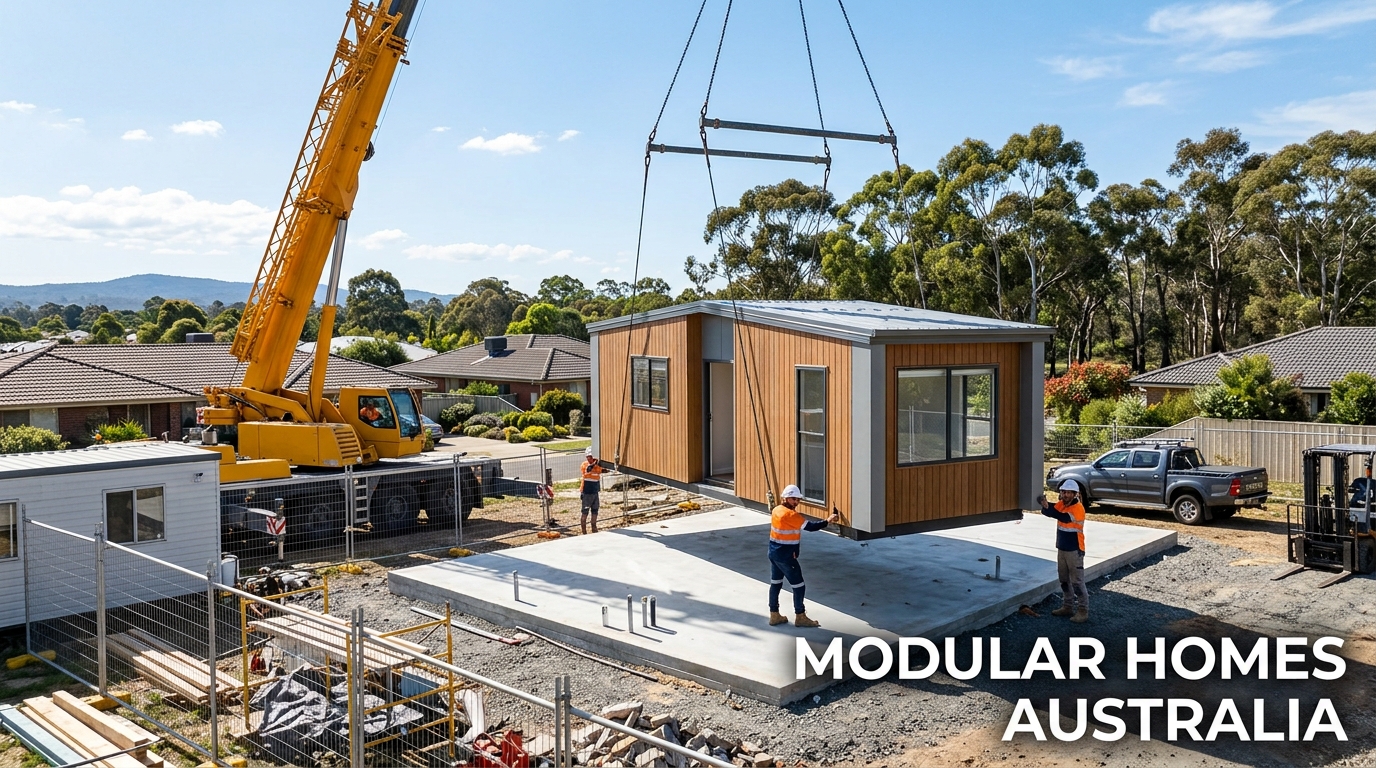
Modular construction moves part of the build into a factory. Site preparation can occur while modules are built. Total delivery time can fall when the builder coordinates both streams well.
The saving is not automatic. A one-off custom modular design may lose the efficiency that makes prefab cheaper. In particular, unusual rooflines, wide spans, heavy glazing and premium cladding can push costs near traditional construction.
The best results usually come from repeatable plans. This includes compact secondary dwellings, worker accommodation, regional housing and small investor-grade homes. For that reason, prefab can pair well with granny flat projects in NSW where the site suits standardised delivery.
The Costs Prefab Quotes Often Exclude
Prefab quotes can look low because site costs sit outside the factory price.
| Excluded Cost | Why It Matters | Typical Trigger |
|---|---|---|
| Foundations | Modules still need engineered support | Reactive soil, slope or fill |
| Transport | Modules require trucks and permits | Long distance or tight roads |
| Crane lift | Modules need safe lifting access | Trees, powerlines or narrow blocks |
| Services | Water, sewer, power and stormwater still apply | Unserviced or battle-axe land |
| Approvals | Council and certifier rules still apply | Bushfire, flood or planning controls |
A prefab contract may price the building module only. A livable home needs civil works, service connections and certification. These items can decide whether prefab is genuinely cheaper.
Soil classification is a major example. Reactive clay, uncontrolled fill or steep land can require more engineering. As a result, the foundation package may become expensive even if the house module remains affordable.
Transport can change the equation. A factory-built module must fit road rules, bridge clearances and site access limits. In some cases, buyers need escorts, traffic control or special delivery windows.
This is why a prefab comparison should include the same hidden cost categories discussed in Australia Develops’ hidden building costs guide. The house price alone does not show the final project cost.
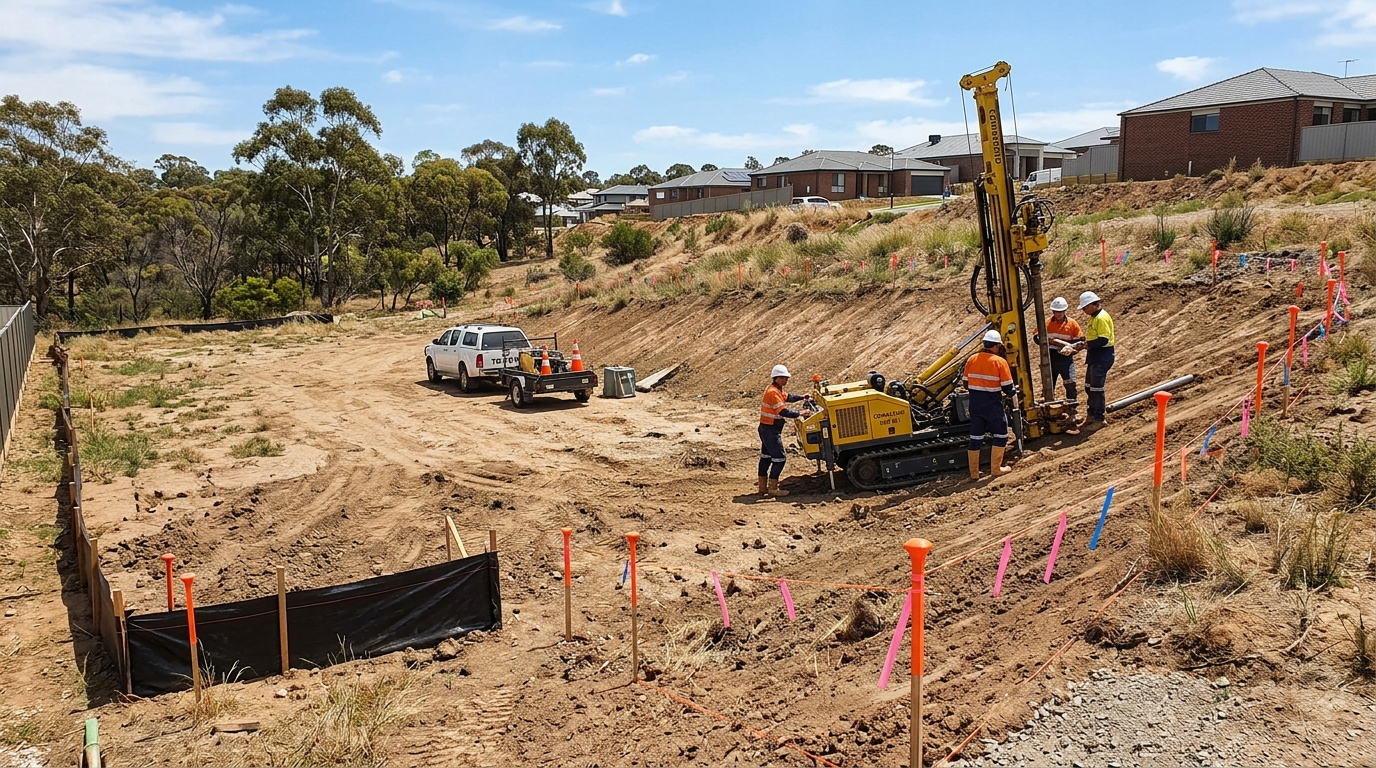
Site Conditions Can Remove the Prefab Saving
The block of land often decides whether prefab remains affordable.
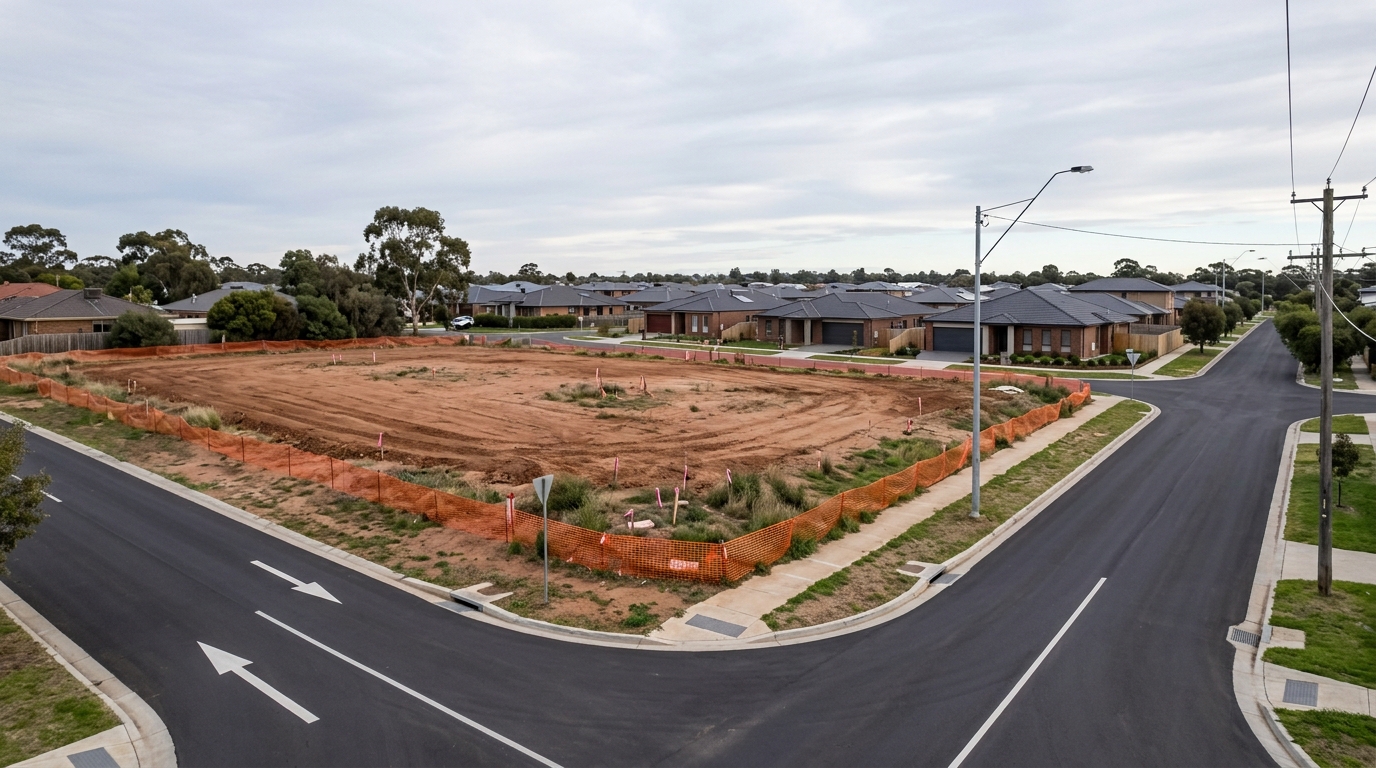
A flat, clear and serviced block is usually the best prefab candidate. The builder can prepare foundations, connect services and crane modules into position with fewer surprises.
A difficult site can reduce or remove the saving. Slope may require retaining walls, deeper footings or split-level design. A restricted frontage can stop a large module from reaching the pad.
Bushfire Attack Level ratings also matter. BAL requirements can affect windows, cladding, vents, decks and external openings. A cheap standard module may need upgraded materials before approval.
Checking a site against the relevant overlays early is worthwhile, and Australia Develops maintains a guide to flood and bushfire maps in Australia for exactly this kind of pre-purchase check.
Easements add another layer. A sewer, drainage or access easement can restrict where the module sits. Buyers should review title constraints before ordering a factory-built home. The same issue appears in property easement due diligence in NSW.
Approvals and NCC Compliance Still Apply
Prefab homes must still satisfy planning, building and certification rules.
Prefab is a construction method, not an exemption from building law. A permanent modular home still needs the correct approval pathway. Depending on the state, that may involve a development approval, a complying development pathway or a building permit.
The Australian Building Codes Board manages the National Construction Code framework with governments and industry. The National Construction Code sets minimum technical requirements for buildings and plumbing.
State planning systems also remain relevant. In NSW, the NSW Planning Portal is commonly used for planning and building applications. Meanwhile, sustainable design guidance from YourHome can assist early design decisions.
For investors, this matters when comparing prefab with dual occupancy development strategies. The approval pathway can affect holding costs as much as the building method.
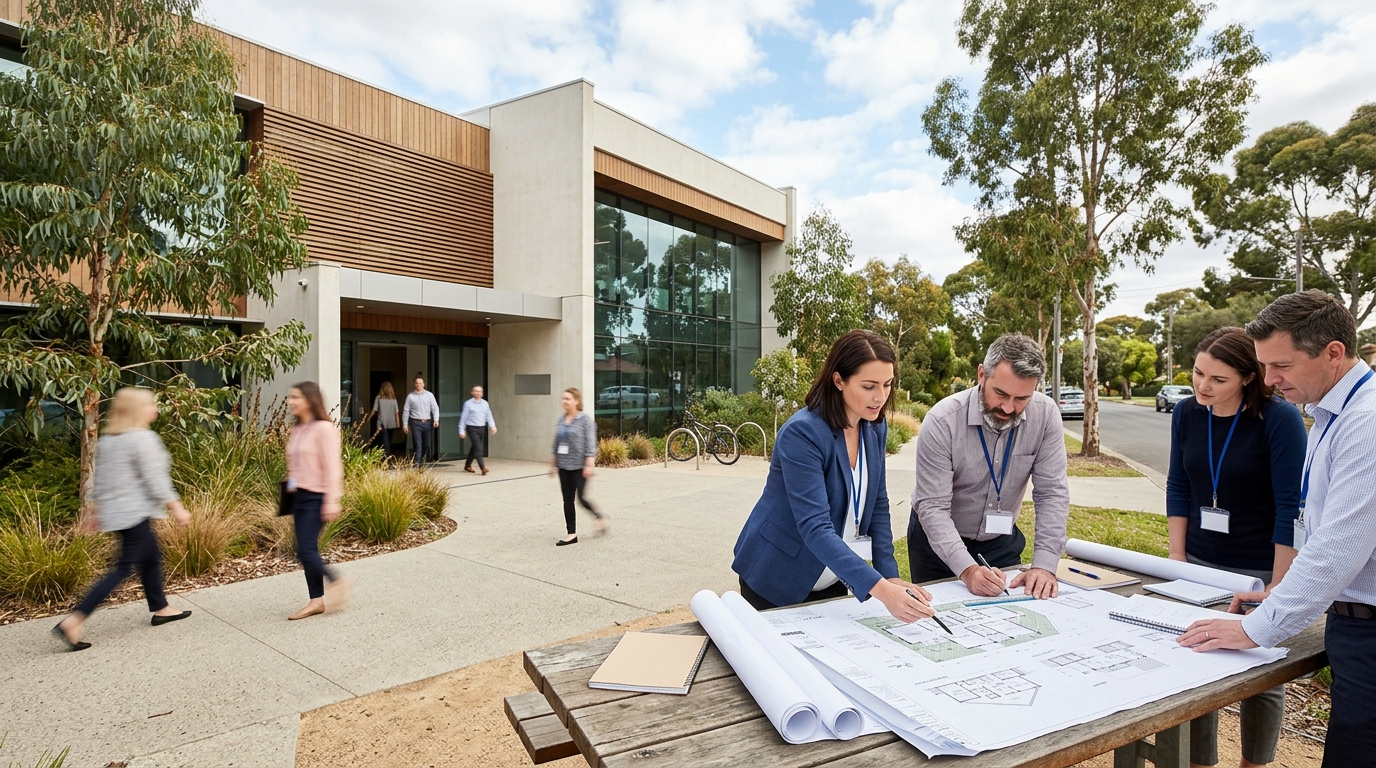
Finance Can Be Harder for Modular Construction
Prefab finance can be more complex because the house starts off site.
Traditional construction loans usually release money at familiar stages. Slab, frame, lock-up and completion milestones are well understood by lenders.
Prefab can disrupt that model. The most valuable work may happen inside a factory before the structure is attached to the land. Some lenders may treat the risk differently.
Buyers should confirm finance before signing. The contract should explain payment milestones, ownership of modules during manufacture, insurance during transit and remedies if delivery is delayed.
Verifying the builder’s licence and disciplinary history before committing to any deposit is worthwhile too, as covered in Australia Develops’ guide to checking the worst builders in Australia.
This is also where legal review matters. A cheaper building quote can become risky if the payment schedule transfers too much risk before site delivery. Master Builders Australia publishes standard contract guidance that is a useful independent reference point when comparing a modular supplier’s terms.

- All 16 checks, with space to record each answer
- A worksheet that converts three quotes to cost per square metre
- Five “Watch for” notes on payment, lead time and lender approval
Enter your email and the PDF arrives straight away. You will also get occasional emails about Australian property and development. Unsubscribe any time. See the Privacy Policy.
When Prefab Is Most Likely to Beat a Traditional Build
Prefab performs best when speed, repeatability and access align.
| Project Type | Prefab Suitability | Reason |
|---|---|---|
| Backyard granny flat | High | Small size and repeatable plans |
| Regional worker housing | High | Speed and repeat delivery matter |
| Flat-lot investor home | Moderate to high | Simple site supports efficiency |
| Luxury custom house | Mixed | Custom design reduces savings |
| Steep coastal site | Low to mixed | Access and engineering risk rise |
Modular homes in Australia are most compelling for compact and repeatable housing. A secondary dwelling can benefit because disruption is short and the module size is manageable, and the same logic applies to backyard granny flats — see Australia Develops’ Granny Flat Rules Australia 2026 guide for state-by-state approval and cost detail.
A modular secondary dwelling is one way to add a second home to an existing block, but it is not the only one.
Full subdivision into two separate titles — dual occupancy — is another pathway, with its own approval process, costs, and construction sequencing.
The video below breaks down that alternative in detail, including DA versus CDC approval and real subdivision costs.
Regional housing can benefit where trade shortages are severe. Factory labour can reduce dependence on local subcontractor availability. Long-distance transport may offset part of that advantage.
Fast-growing corridors close to Sydney face a similar trade squeeze — Australia Develops’ Austral Precinct Development 2026 guide covers one such growth area where modular delivery timelines can matter.
Traditional building may remain better for complex custom homes. It can adapt more easily to difficult slopes, narrow blocks and bespoke architecture. The cheapest method depends on site conditions, not only the construction system.
The national housing shortage explains why modular homes in Australia keep attracting policy attention. The National Housing Accord targets 1.2 million new homes over five years from 1 July 2024.
Faster construction methods may help supply, but they still need planning, finance and infrastructure support.
Modular Homes Australia: Prefab vs Traditional Build Cost Comparison
The fairest comparison uses total finished cost, not supplier headline price.
A prefab supplier may offer a lower building price. That does not guarantee a lower total project price. Foundations, services, crane access and approvals can close the gap.
The fairest test is a like-for-like scope. Both quotes should include design, engineering, approvals, site works, service connections, energy compliance, stormwater and certification.
A traditional builder may include items that a prefab quote excludes. A prefab supplier may include fit-out items that a conventional builder treats as upgrades. Buyers should compare inclusions line by line.
Resale and Valuation Considerations
Modern modular homes Australia buyers choose can resell well when quality and land value are strong.
Resale value depends heavily on land, location and build quality. A well-designed modular home on a permanent foundation can compete with conventional housing.
Low-spec transportable products may face buyer hesitation. Lenders and valuers may ask more questions if the home appears temporary or poorly integrated with the site.
Documentation helps. Engineering certificates, approvals, warranties, energy reports and completion records should stay with the property file. These documents may support future resale and finance conversations.
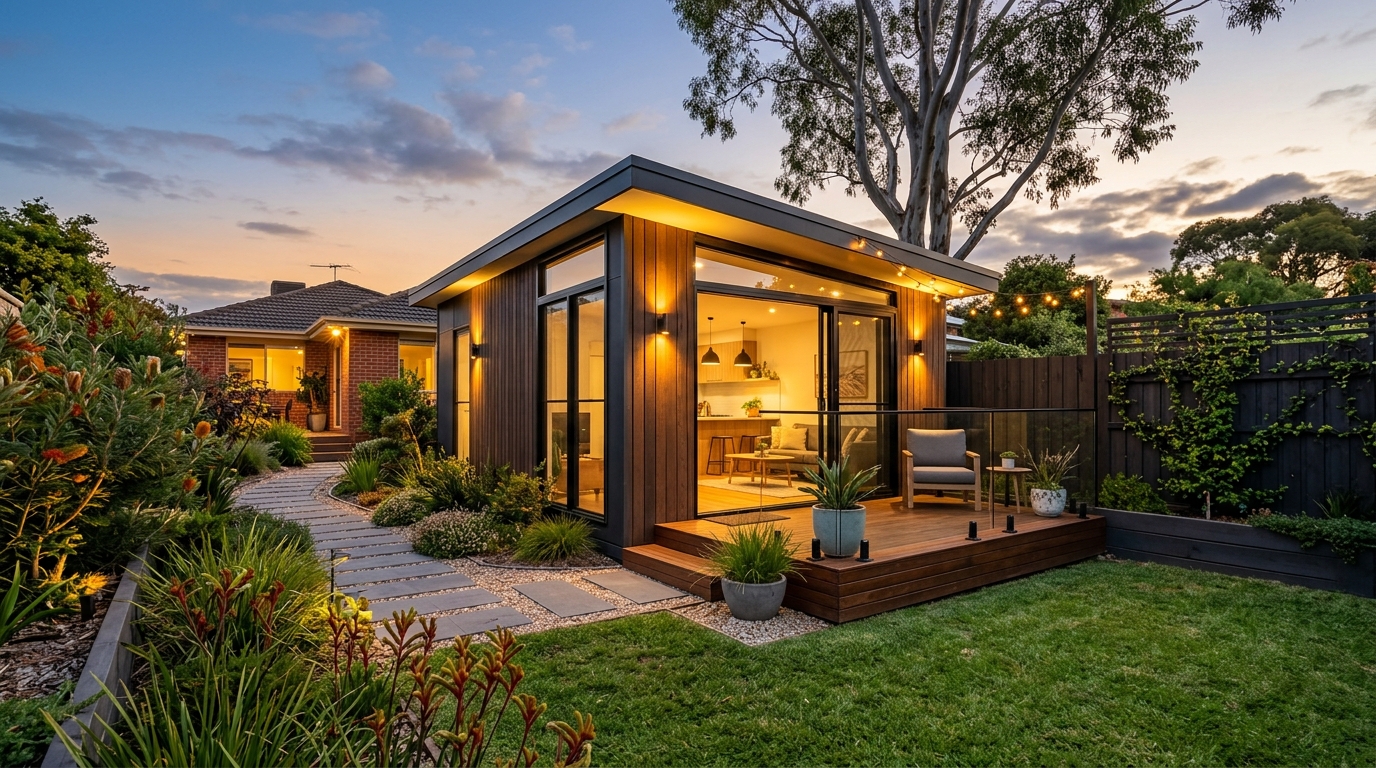
Key Data at a Glance
Current data shows why cost certainty matters in 2026.
| Metric | 2026 Reference Point | Why It Matters |
|---|---|---|
| Total dwellings approved | 17,019 in May 2026, down 1.1% | Supply remains uneven |
| Private sector houses | 10,537 in May 2026, up 2.8% | Detached demand remains active |
| Residential building value | A$10.24b in May 2026, down 5.7% | Project values remain volatile |
| Construction price pressure | House construction drove building output price rises | Cost control remains important |
| National housing target | 1.2 million homes over five years | Faster methods attract policy interest |
| Compliance framework | NCC and state planning systems | Prefab still needs approval |
Summary
Modular Homes Australia can reduce delivery time and improve cost control in suitable conditions. The saving depends on repeatable design, simple access and disciplined contract review.
The cheapest outcome usually appears on flat, serviced land with a standardised module. Steep blocks, bushfire overlays, long transport distances and complex finance can remove the advantage.
The strongest conclusion is practical. Prefab should be compared against traditional construction using a complete project budget. That budget should include land preparation, transport, craneage, approvals, services, finance and final certification.
This article is general information only. It is not legal, financial, building or engineering advice. Construction costs, planning controls and lender policies vary by project. Independent professional advice should be obtained before signing any residential building contract.
How Much Do Modular Homes Cost to Build in Australia?
A mid-range modular home in Australia costs A$2,500 to A$3,500 per square metre in 2026. A basic kit or shell runs A$1,500 to A$2,500.
Site costs are where budgets move. Connections, earthworks, crane access and council fees sit outside the quoted module price on most contracts.
Kit homes sit lower again because the buyer supplies the labour. The kit covers materials and plans, not construction.
Whether prefab works out cheaper than a traditional build depends on the block. Flat, serviced land favours modular. Steep or remote sites erode the saving.