Written by Daniel Whitfield, founder of Australia Develops, who has bought and developed property across NSW through multiple market cycles.
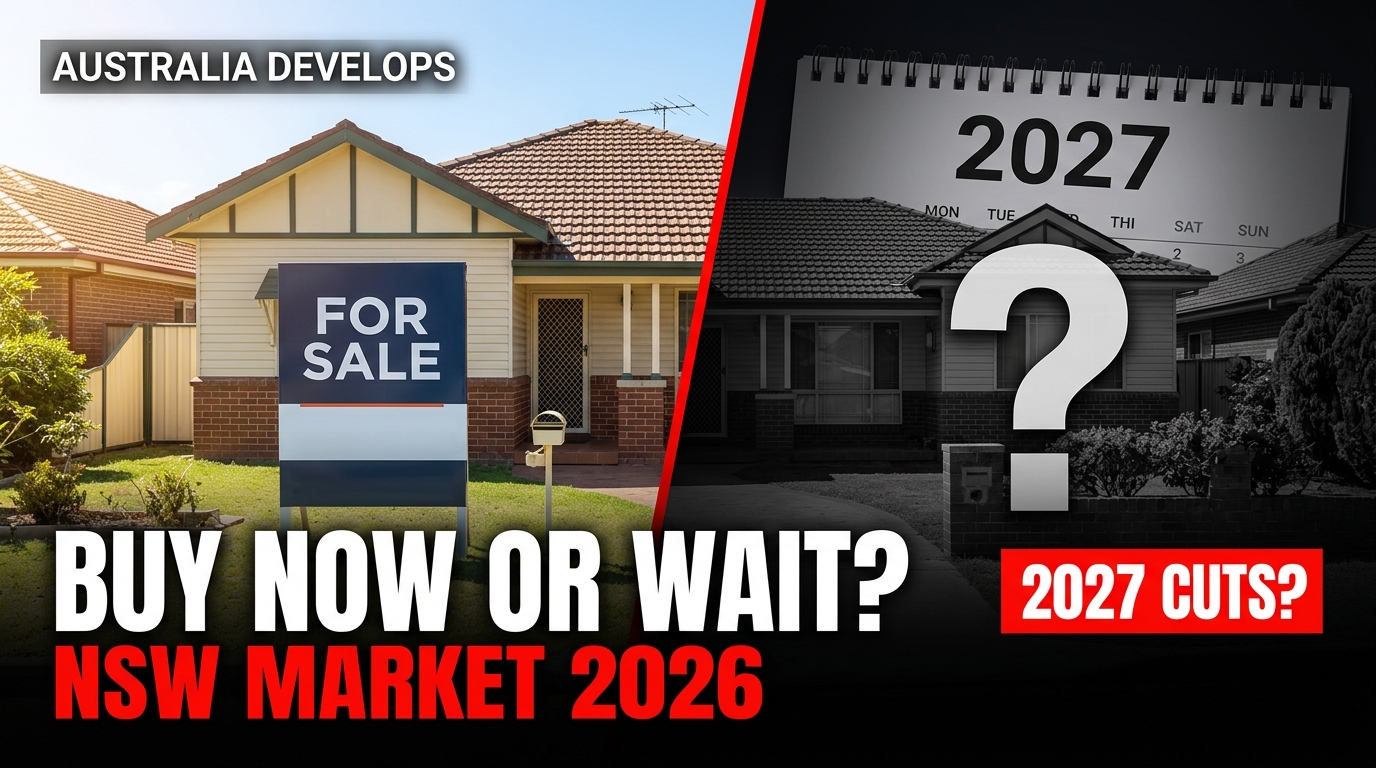
Should you buy property in NSW now or wait? It is the question dominating conversations at open homes, in mortgage broker offices, and at family dinners across the state in 2026.
And it is a question that does not have a single correct answer — because the right decision depends on your financial position, your intended use of the property, your timeline, and your specific target location within NSW.
What this article does is cut through the noise to give you the factual market picture for NSW property in 2026: what prices are doing, what interest rates are likely to do over the next 12 to 24 months, what supply and demand forces are at play, and what the relevant considerations are for different buyer types.
This is not financial advice, and we encourage you to seek your own professional guidance. What it is, is an honest assessment of the evidence available in 2026.
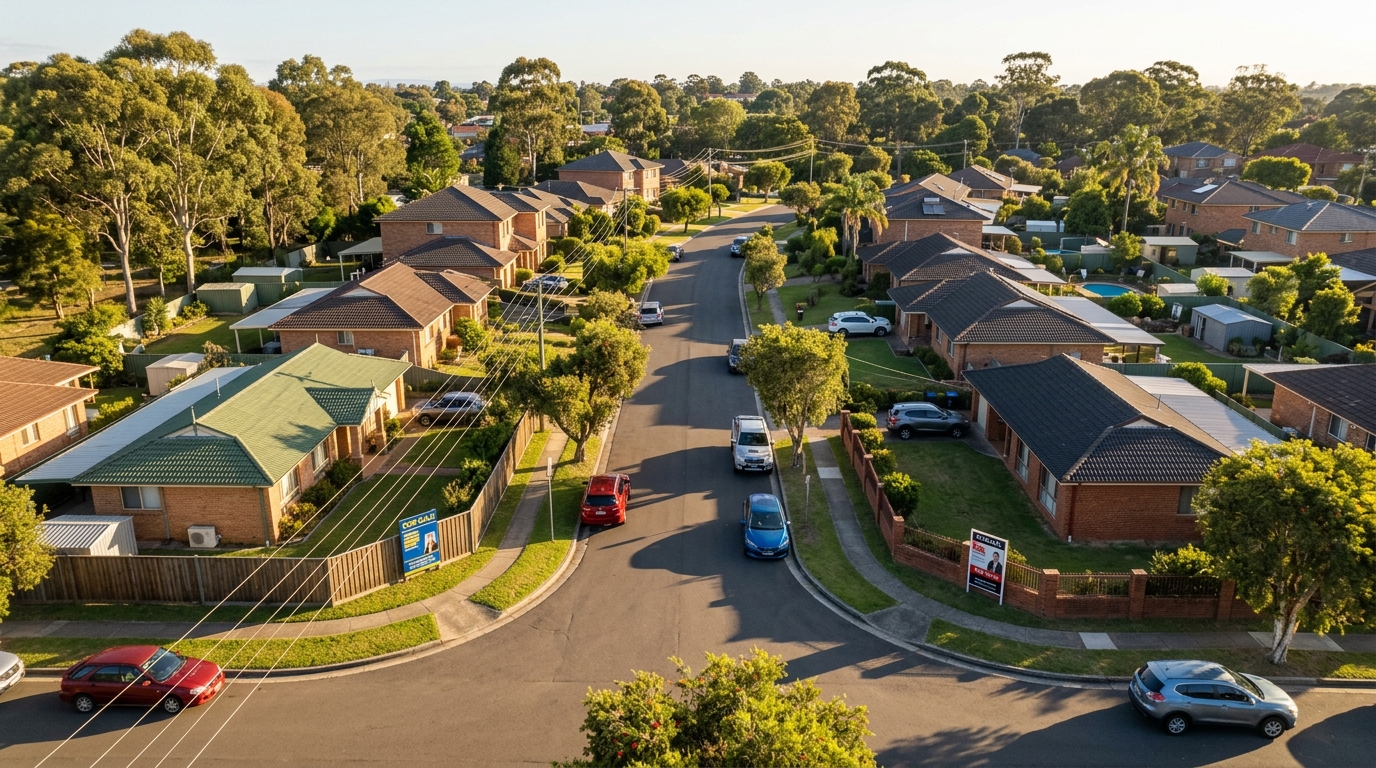
NSW Property Price Outlook 2026: What the Forecasters Are Saying
Bank Forecasts for 2026
The consensus forecast from major Australian bank research teams for 2026 is a modest price decline or flat growth for Sydney property. ANZ Research projected Sydney prices to fall by approximately 0.7% across 2026 before rebounding to growth of around 2.6% in 2027, according to data cited in multiple property market reports.
This expectation of near-term weakness followed the strong price recovery of 2023 and early 2024, when Sydney values rose sharply after the 2022 correction, and the subsequent slowdown driven by sustained high interest rates and affordability constraints.
The key driver of this forecast — and the most closely watched variable by both buyers and sellers — is the Reserve Bank of Australia (RBA) cash rate and when meaningful cuts are expected to occur.
The RBA Rate Cut Timeline
As at mid-2026, most major bank economists do not expect the first meaningful RBA rate cut until mid-2027, with the consensus projecting the cash rate to remain above 4% through the remainder of 2026.
Some forecasters have pushed expectations further out, citing persistent services inflation, a resilient labour market, and the RBA’s stated commitment to returning inflation sustainably to the 2% to 3% target band before easing policy.
This “higher for longer” rate environment is the single most significant headwind for NSW property prices in 2026, as it constrains borrowing capacity, increases holding costs for leveraged buyers, and extends the period of elevated mortgage stress for existing borrowers.
AMP Capital and several other major forecasters project that the full impact of rate cuts — when they eventually arrive — will likely unlock a more significant price recovery in 2027 and 2028, particularly for Sydney where the relationship between borrowing capacity and dwelling values is unusually tight relative to the rest of Australia.
Indeed, the price trajectory below shows the forecast path through the 2026 soft patch and into the 2027 recovery.
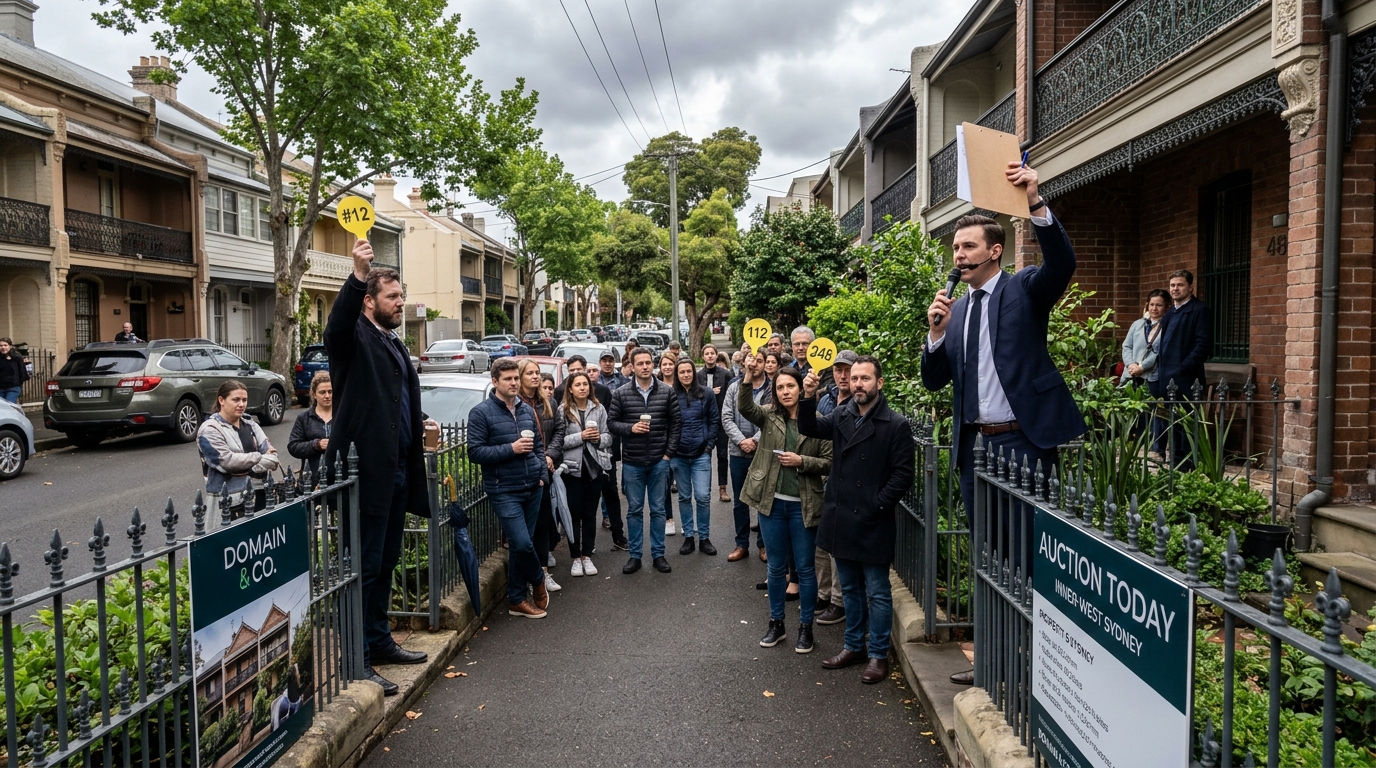
However, auction results provide a real-time read on the price forecasts discussed above. Clearance rates across Sydney have held in a moderate range through the first half of 2026, consistent with a market that is neither collapsing nor booming, and broadly in line with the flat-to-slightly-negative price consensus for the year.
The Supply-Demand Imbalance: Why NSW Prices Have a Floor
Population Growth vs Housing Supply
Despite the headwinds from interest rates, the NSW property market in 2026 retains structural supply constraints that provide a meaningful floor under prices — particularly for established dwellings in established suburbs.
NSW population growth continues to significantly exceed dwelling completions. Greater Sydney adds approximately 100,000 new residents per year through a combination of net overseas migration and natural population increase, while annual dwelling completions across the Greater Sydney region have consistently tracked below 50,000 units per year in recent years, and are under further pressure in 2026 from elevated construction costs, labour shortages in the building trades, and a pipeline of apartment projects stalled by viability challenges at prevailing construction cost levels.
This structural deficit between population growth and housing supply is reflected in the rental market, where the Sydney vacancy rate sat at approximately 1.7% in mid-2026 — well below the 3% threshold considered to represent a balanced rental market.
As covered in Australia Develops’ article on the Sydney Rental Market 2026, rental yields in NSW have increased relative to historical norms as rents have risen faster than purchase prices, providing an improved income return for investors who can manage the higher borrowing costs of the current rate environment.
This ongoing rental market tightness also incentivises renters who can access purchase finance to accelerate their buying decision — a factor that provides some demand support for entry-level dwelling prices despite the broader affordability challenge.
Planning Reform and Infrastructure
The NSW Government’s planning reform agenda is also relevant to the supply outlook. The Transport Oriented Development (TOD) program — as detailed in Australia Develops’ guide to TOD Rezoning NSW 2026 — is progressively adding medium and high-density zoning capacity around train stations across Greater Sydney.
While increased zoning capacity does not automatically translate to increased housing supply in the short term — the gap between rezoning and completed construction spans multiple years — it does signal the direction of NSW planning policy and has implications for the value of established properties near affected stations.
Similarly, the infrastructure investment driving growth in Western Sydney — including the Western Sydney International Airport, the Sydney Metro West extension, and the development of the Western Sydney Aerotropolis as a major employment centre — is reshaping the long-term price trajectory of formerly peripheral suburbs in ways that point to above-average growth over a 5 to 10 year horizon.
Interest Rate Expectations: What Could Change the Calculus
Consensus Rate Path
The timing and pace of RBA rate cuts is the most significant variable in the buy-now-or-wait equation for NSW property in 2026.
The consensus view, as of mid-2026, is that cuts will begin in mid-2027 and proceed gradually — potentially two to three cuts of 25 basis points each across 2027 — bringing the cash rate from its current level toward a terminal rate in the 3.5% to 4.0% range over the 12 to 24 months following the first cut.
This trajectory would provide meaningful relief to existing mortgage holders and would expand borrowing capacity for new buyers, potentially reigniting price growth in 2027 to 2028, particularly in Sydney where even modest increases in borrowing capacity translate to significant price movements given the high price-to-income ratios in the market.
Upside and Downside Risks
The risk to this consensus is in both directions. If inflation surprises on the upside — driven by energy price increases, further services inflation, or global supply chain disruptions — the RBA could delay cuts further, extending the period of price pressure on the NSW market.
Conversely, if the Australian economy weakens more sharply than expected — through a deterioration in employment conditions, a sustained decline in consumer confidence, or an external shock — the RBA could move earlier and more aggressively, which would provide a stronger and more rapid boost to property prices than the current consensus implies.
Buyers who are attempting to “time the market” based on rate expectations should be aware that the history of property market timing by individual buyers is poor: the majority of market participants who wait for rates to fall before buying find that prices have already risen by the time they re-enter the market, reflecting the fact that property prices respond to expectations of future rate cuts, not just the cuts themselves.
Furthermore, the timeline below traces the cash rate path underlying the buy-now-or-wait calculus.
For First Home Buyers: The Case for Acting Now in 2026
Government Assistance Schemes
For first home buyers in NSW, the calculus in 2026 tilts toward acting rather than waiting — with important caveats around financial readiness.
The First Home Buyer Choice scheme (now consolidated into the NSW property tax scheme) provides eligible first home buyers with the option of paying an annual property tax rather than upfront stamp duty for properties up to certain price thresholds, reducing the immediate cash requirement for entry into the market.
Additionally, the federal First Home Guarantee scheme — which allows eligible first home buyers to purchase with as little as a 5% deposit without paying Lenders Mortgage Insurance, guaranteed by the federal government — applies to property purchases up to $1.5 million in NSW, enabling access to established markets that a 20% deposit would place out of reach for many first home buyers.
The Case for Acting Now
The arguments for first home buyers acting in 2026 rather than waiting include: the prospect of increased competition from other buyers when rates do eventually fall; the ongoing cost of renting in a tight Sydney rental market while accumulating a larger deposit; the ability to fix a portion of the mortgage at current rates and benefit from variable rate reductions when they occur; and the reality that a 0.7% forecast price decline on a $900,000 property represents a saving of approximately $6,300 — a number that is likely to be outweighed by rent costs and potential price increases if the timing of the wait is misjudged.
First home buyers who are financially ready — with a stable income, adequate deposit, and a clear understanding of their borrowing capacity — should not allow forecast uncertainty to substitute for a disciplined, well-researched buying decision.
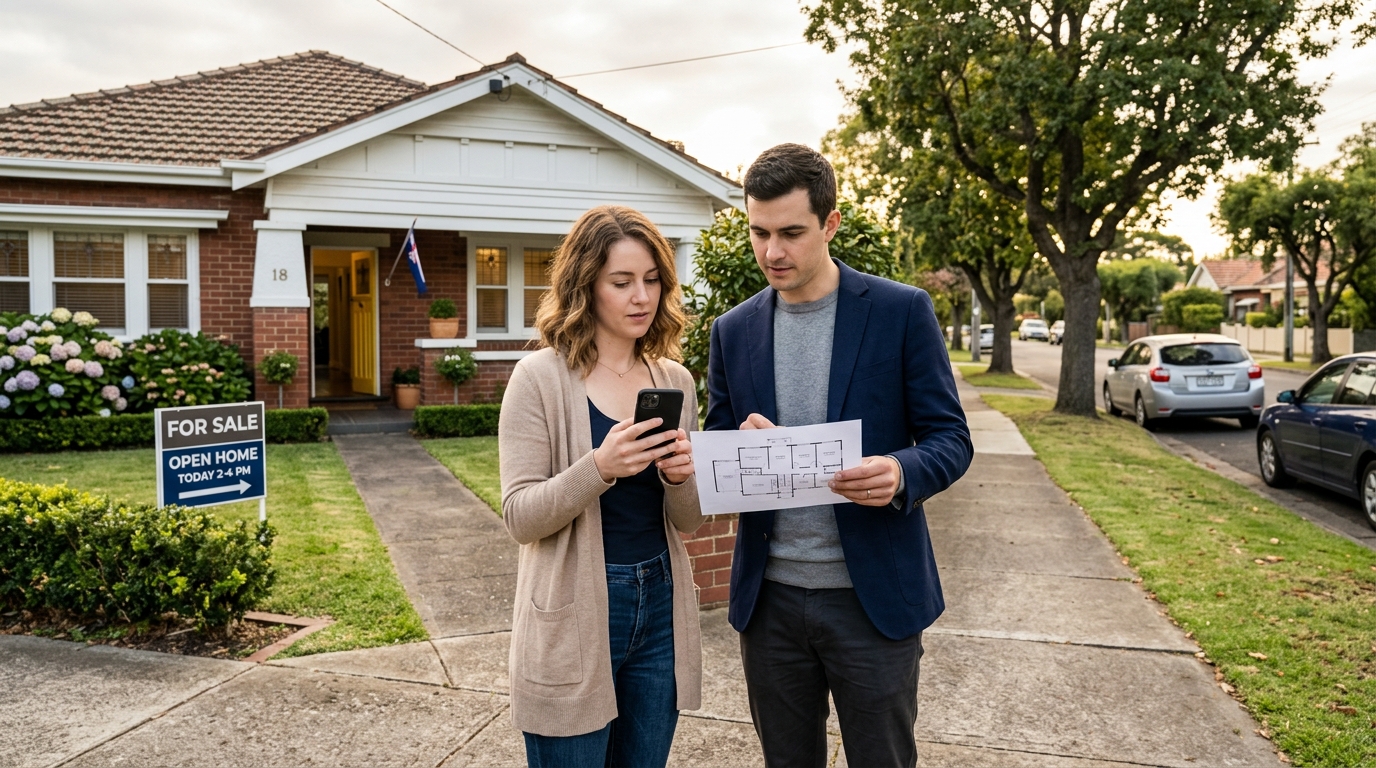
For Upgraders and Downsizers: Market Conditions Provide Flexibility
Considerations for Upgraders
For existing property owners looking to upgrade to a larger home or downsize to a smaller dwelling, the 2026 market offers a different set of considerations.
Upgraders — those selling an existing property to fund the purchase of a more expensive one — benefit from buying and selling in the same market.
If both their existing property and their target property have declined in value by a similar percentage, the gap between the two values (the amount they need to finance) is only modestly affected.
The primary financial risk for upgraders in 2026 is holding two properties simultaneously — a risk that can be managed through appropriate bridging finance and conditional sale arrangements.
The soft market conditions of 2026 may in fact favour upgraders who are prepared to negotiate, as vendors of higher-priced properties are often more motivated to accept realistic offers in subdued conditions than in a strongly rising market.

Considerations for Downsizers
Downsizers — typically older owner-occupiers or empty nesters moving from larger family homes to smaller apartments or townhouses — are in a structurally favourable position in the NSW market of 2026.
The supply of well-located medium-density dwellings (townhouses, villas, and smaller apartments in established inner and middle-ring suburbs) has increased through the pipeline of projects approved and completed in recent years, providing more purchasing options.
Stamp duty concessions available to downsizers over 65 who have lived in their existing home for at least 10 years provide further financial incentive to act.
And the ability to contribute the after-tax proceeds of a property sale to superannuation through the Downsizer Contribution scheme — which allows contributions of up to $300,000 per person from age 55 — provides tax-effective wealth management opportunities that should be considered with the guidance of a financial adviser.
For Investors: Where the Numbers Work in NSW 2026
Yield and Finance Costs
For property investors evaluating NSW in 2026, the return picture has improved relative to the pre-2022 environment of ultra-low yields, but the cost of finance remains elevated.
Gross rental yields in Sydney in mid-2026 are approximately 3.2% to 3.8% for houses and 4.5% to 5.5% for units, according to recent property research — higher than in the sub-3% yield environment that prevailed when the cash rate was at its 2021 low.
However, with variable mortgage rates for investors at 6.5% to 7.0%, most NSW investment properties remain negatively geared in the current rate environment, meaning investors are relying on capital growth to generate total returns.
The investment case for NSW property in 2026 therefore depends significantly on an investor’s view of the medium-term capital growth trajectory and their capacity to sustain negative cash flow through the period of elevated rates.
Moreover, the circles below summarise the yield gap between houses and units in the current market.
Where to Invest: Growth Corridors
The regions of NSW most likely to deliver above-average total returns over a 5 to 10 year horizon — based on infrastructure investment, employment growth, and planning activity — include the Western Sydney Aerotropolis and surrounding LGAs (Liverpool, Campbelltown, and the proposed Bradfield City area), the Parramatta CBD and surrounding transit-connected precincts, and regional centres with strong employment bases and improving transport connectivity such as Newcastle, Wollongong, and the Central Coast.
As detailed in Australia Develops’ articles on Parramatta CBD Development, Liverpool Rezoning, and Campbelltown-Macarthur Development, and Camden & Oran Park Development, these precincts are in the early to mid stages of long-term structural transformation driven by government and private investment.
Investors with a long-term horizon and appropriate risk tolerance may find that the current period of price softness provides a more attractive entry point in these growth corridors than was available during the 2021 to 2022 peak.
Buyers considering options beyond the metropolitan market may also find value further afield — see Australia Develops’ guide to buying rural property in Australia.
Key Data at a Glance — NSW Property Market 2026
| Indicator | 2026 Position |
|---|---|
| Sydney House Price Forecast (Full Year 2026) | -0.7% (ANZ) / Broadly flat to slight decline (consensus) |
| Sydney Price Rebound Forecast (2027) | +2.6% (ANZ) / Recovery expected as rates ease |
| RBA Cash Rate (Mid-2026) | Above 4% – cuts not expected until mid-2027 (consensus) |
| Sydney Rental Vacancy Rate | ~1.7% (well below 3% balanced market threshold) |
| Sydney House Gross Rental Yield | 3.2%–3.8% |
| Sydney Unit Gross Rental Yield | 4.5%–5.5% |
| NSW Population Growth (Greater Sydney, annual) | ~100,000 new residents per year |
| First Home Guarantee Scheme (NSW threshold) | Up to $1.5M, 5% deposit, no LMI |
| Investor Variable Rate (2026) | 6.5%–7.0% (most properties negatively geared) |
| Top Growth Corridors (5–10 year horizon) | Western Sydney Aerotropolis, Parramatta CBD, Liverpool, Campbelltown |
Frequently Asked Questions
The questions below address the specific figures and timing points raised throughout this analysis.
Will NSW property prices fall in 2026?
The consensus forecast is a modest decline of around 0.7% for Sydney across 2026, according to ANZ Research, followed by a rebound of approximately 2.6% in 2027 as interest rates ease. The market is not in freefall, but structural supply constraints continue to provide a floor under prices.
When will the RBA cut interest rates in 2026?
Most major bank economists do not expect the first meaningful RBA rate cut until mid-2027, with the cash rate expected to remain above 4% through the remainder of 2026 due to persistent services inflation and a resilient labour market.
Should first home buyers wait for prices to drop further?
Most financially ready first home buyers benefit from acting rather than waiting. The federal First Home Guarantee scheme allows a 5% deposit with no Lenders Mortgage Insurance for purchases up to $1.5 million in NSW, and history shows buyers who wait for rate cuts often find prices have already risen by the time they re-enter the market.
Where are the best NSW growth corridors for property investors in 2026?
Corridors most cited for above-average 5 to 10 year returns include the Western Sydney Aerotropolis and Bradfield City area, Liverpool and Campbelltown, Parramatta CBD and transit-connected precincts, and regional centres such as Newcastle, Wollongong, and the Central Coast.
The Bottom Line: Buy Now or Wait?
The honest answer to the buy-now-or-wait question in NSW in 2026 is: it depends on who you are and what you are buying. The market is not in freefall.
It is not booming. It is navigating a period of adjustment driven by high borrowing costs, with structural demand support from population growth and supply constraints providing a floor beneath prices.
The window of relatively soft conditions in 2026 — before the anticipated rate cutting cycle begins and competition among buyers intensifies — represents a genuine opportunity for buyers who are financially ready and who have done thorough research on their arget property and location.
Overall, the summary below distills the buy-now-or-wait verdict for each type of buyer covered in this analysis, from first home buyers to long-term investors.
In particular, the summary below distills the verdict for each buyer type covered in this analysis.
This article is for informational purposes only and does not constitute financial, investment, or legal advice. Seek independent professional advice before making any property decisions.