Liverpool City Centre rezoning 2026 links Amendment 52 with a major transport and civic investment pipeline. Western Sydney International Airport will open for passengers in October 2026. Meanwhile, the $1.2 billion FAST Corridor is advancing toward tender. In addition, the University of Wollongong is expanding its Liverpool campus presence.
Written by Daniel Whitfield, founder of Australia Develops, who has personally bought, subdivided, and built property across Australia.
The Liverpool City Centre rezoning 2026 framework supports mixed-use delivery across the CBD. Moreover, the airport and Western Sydney Aerotropolis connect Liverpool with new employment areas around Badgerys Creek. Therefore, the guide assesses planning controls, confirmed projects, transport delivery and the Leppington development pipeline using primary sources.
Furthermore, commercial real estate yields in Liverpool depend on demand from the hospital, university and civic precincts. Moreover, institutional investment infrastructure commitments along FAST and the airport corridor will influence project timing. However, aerotropolis precinct land banking remains sensitive to zoning, servicing and delivery risk.
For instance, the Parramatta CBD development pipeline provides a useful comparison for mixed-use centre delivery. In addition, Infrastructure NSW tracks state priorities that shape employment access across Greater Sydney.
Liverpool City Centre Rezoning 2026: Amendment 52 and the Third CBD
In particular, the foundation for Liverpool’s CBD transformation is the 2018 rezoning of 25 hectares in the Liverpool city core to mixed-use zoning under Amendment 52 to the Liverpool Local Environmental Plan 2008. Known as the “Sydney’s Third CBD” framework, this rezoning enabled the construction of multi-purpose buildings integrating cafes, restaurants, retail, childcare, office space, and residential uses across the city centre — transforming what had been a predominantly low-rise commercial precinct into a genuine mixed-use urban core.
Indeed, Amendment 52 laid the legal foundation for Liverpool’s entire CBD transformation.
Source: Liverpool Local Environmental Plan 2008, Amendment 52.
How Amendment 52 Supports an 18-Hour Economy
Consequently, the mixed-use rezoning aims to create an 18-hour economy in Liverpool City Centre, moving beyond the traditional 9-to-5 commercial district toward a precinct that is active throughout the day and evening. Moreover, the integration of residential uses within the CBD core is central to this vision — a resident population living in close proximity to retail, food and beverage, and employment uses generates the foot traffic and vibrancy necessary to sustain the commercial uses that make urban centres economically viable. As a result, the rezoning has already catalysed several major development projects, with the most significant being the Liverpool Civic Place precinct.
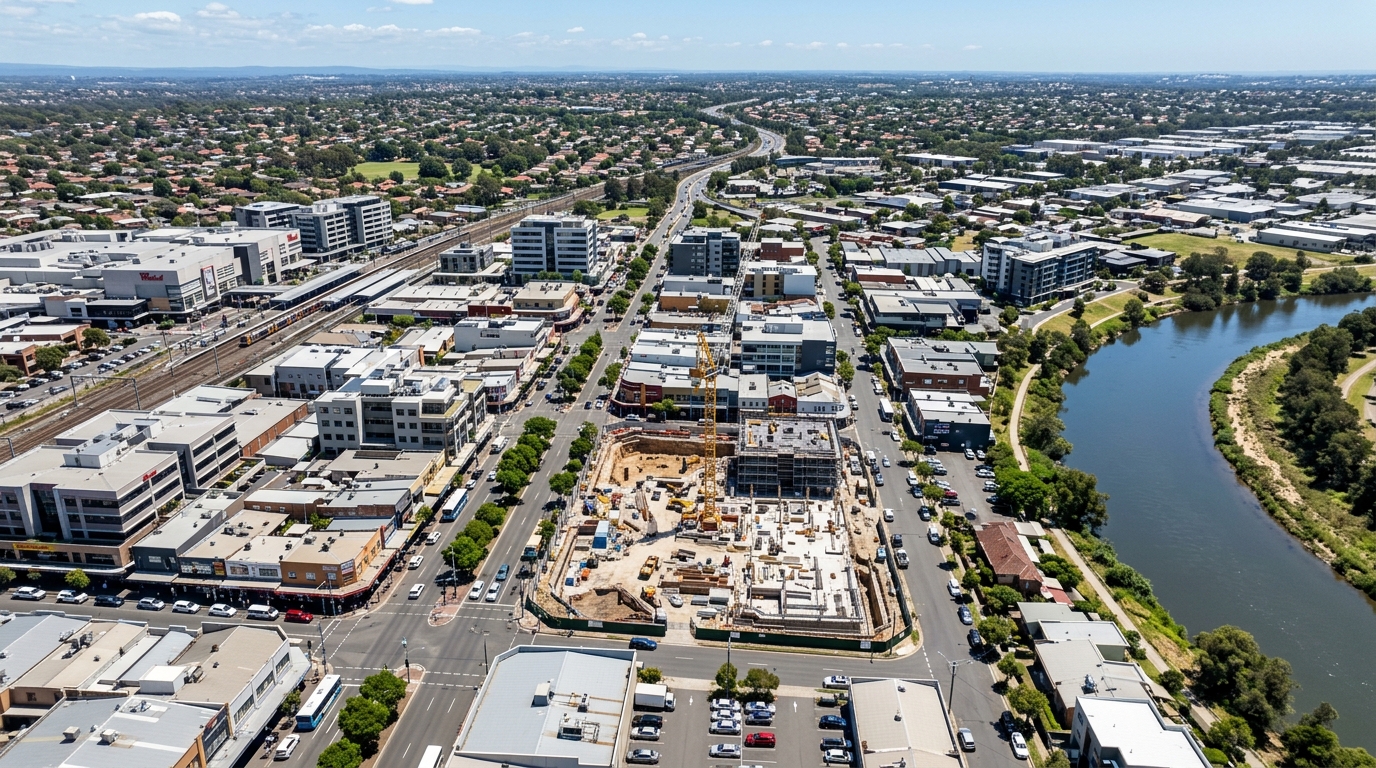
Furthermore, Liverpool’s position as the seat of the Liverpool City Council LGA, which encompasses one of the fastest-growing population catchments in Australia, also underpins the Third CBD ambition. Moreover, the LGA’s population is projected to reach 440,000 by 2041, up from an estimated 285,000 in 2026, with the Austral and Leppington North growth areas alone accounting for 17,500 new dwellings over the next two decades. Consequently, this population base, combined with the proximity to the new airport and Aerotropolis, gives Liverpool a scale of demand for goods, services, employment, and urban amenity that is qualitatively different from outer suburban centres. The NSW Government’s housing targets reflect this growth trajectory.
Liverpool City Centre Rezoning 2026: Civic Place Anchor Development
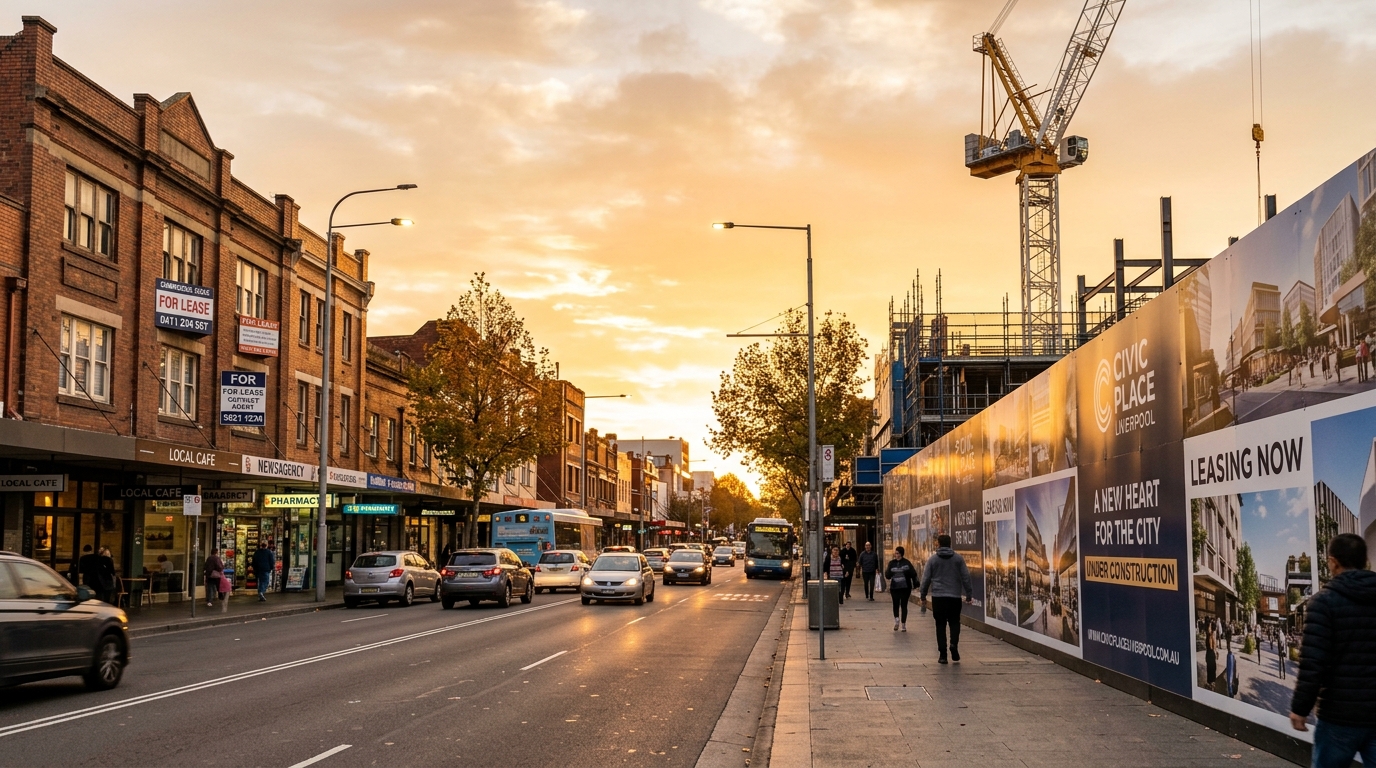
In particular, the Liverpool Civic Place precinct at Scott Street is the most significant single development project in the Liverpool CBD, delivering a major mixed-use complex that combines civic facilities, education, research, co-living accommodation, and public open space on a prominent site at the southern end of the city centre. Developers are delivering the precinct in multiple phases, with Stage 1 (the Liverpool Civic Tower) substantially complete and the University of Wollongong (UOW) set to occupy 6,000 square metres of space within the tower from 2026 — establishing Liverpool’s first dedicated university presence in the CBD.
Meanwhile, the final stage of Liverpool Civic Place — the Helix Hub — commenced construction in 2025 and targets completion in mid-2028. Moreover, the Helix Hub is a genuinely mixed-use building that will deliver 11 storeys of university space for UOW education and research programs, five storeys of flexible workspace designed to support life sciences and innovation tenants, and Liverpool’s first nine-storey co-living building. Consequently, this co-living component, replacing a previously approved hotel, reflects the growing demand for flexible, affordable accommodation in emerging urban centres catering to students, researchers, and young professionals. In addition, UOW has committed to an additional 11,300 square metres within the Helix Hub, taking its total Liverpool CBD footprint to over 17,000 square metres.
Helix Hub Education, Research and Co-Living
Furthermore, the inclusion of a life sciences flexible workspace cluster in the Helix Hub is strategically significant. In particular, Liverpool Hospital, located adjacent to the CBD, is one of the largest hospitals in New South Wales and serves as the primary facility for a significant health research catchment. As a result, the colocation of university research programs and flexible life sciences workspace in the CBD creates a potential innovation ecosystem that could attract health-tech, medical research, and professional services businesses to Liverpool over time. Liverpool City Council’s Civic Place project page provides detailed updates on construction progress and precinct activation plans.
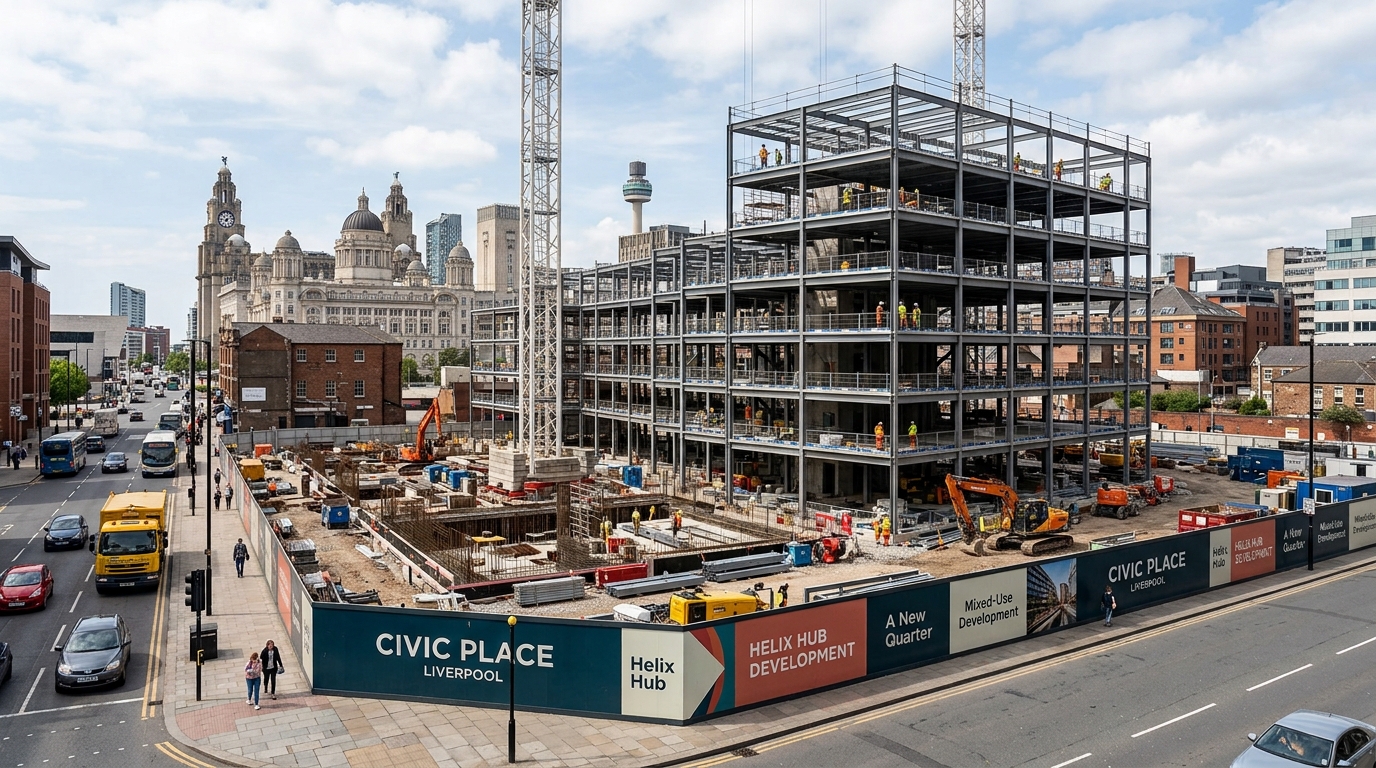
Indeed, this construction progress reflects the pace of delivery tracked in the milestone timeline below.
Furthermore, the timeline below tracks Liverpool City Centre’s key planning and infrastructure milestones from 2018 to 2028.
Liverpool City Centre — Key Milestones 2018–2028
Liverpool City Centre Rezoning 2026: Airport Economic Impact
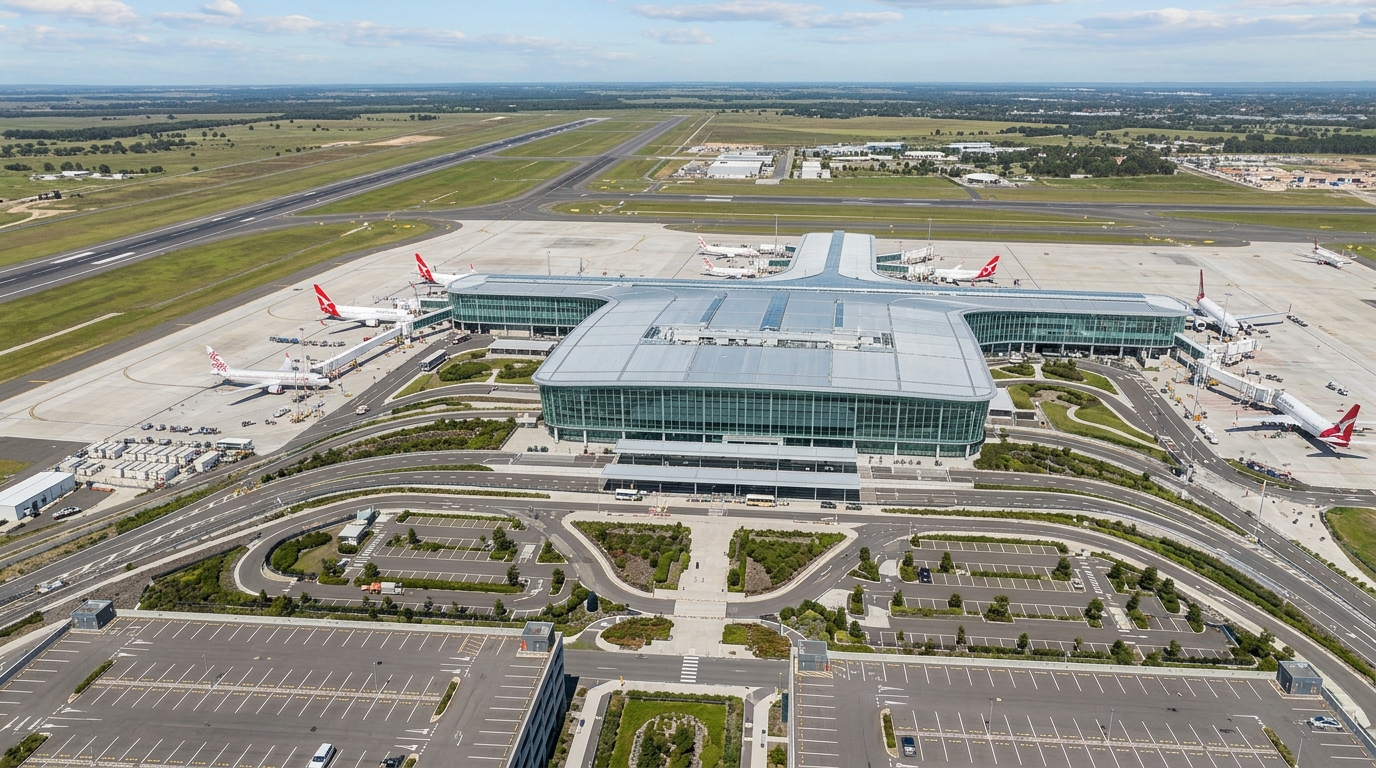
In particular, the opening of Western Sydney International Airport — officially renamed Nancy-Bird Walton Airport — to cargo flights in July 2026 and passenger services in October 2026 is the single most consequential economic event for Liverpool in recent decades. Liverpool is the largest established urban centre within practical commuting distance of the airport at Badgerys Creek, and the airport’s catchment of workers, business travellers, and logistics operations will generate demand for office space, hotels, services, and residential accommodation across Liverpool’s CBD and surrounds for years to come.
Furthermore, the airport’s opening timeline is the single most consequential economic event for Liverpool in decades.
Source: Western Sydney International (Nancy-Bird Walton) Airport project timeline.
Airport-Led Employment and Housing Demand
However, the airport’s economic impact on Liverpool will depend primarily on transport connections. The Fifteenth Avenue Smart Transit (FAST) Corridor, a $1.2 billion project to deliver dedicated electric bus rapid transit lanes between Liverpool CBD and the airport precinct, is currently advancing through design and approvals with a construction tender expected in 2026 and major construction commencing in 2027. The FAST Corridor will provide a direct, high-frequency connection between Liverpool’s existing rail station and the new airport, reducing travel times and making Liverpool a viable base for airport-connected workers and businesses. Transport for NSW’s announcement of design plans and early works confirms the project’s momentum.
Moreover, the airport’s opening also accelerates the rezoning and development activity in the broader western corridor of the Liverpool LGA. Current plans allocate the Fifteenth Avenue area capacity for 63,000 additional residents by 2041, with the combined Austral and Leppington North growth areas planned for 17,500 new dwellings over the next two decades. This residential growth, concentrated along a corridor directly connecting Liverpool CBD to the airport, will generate sustained demand for the retail, commercial, and community infrastructure that anchors a functioning urban centre. Australia Develops has tracked the broader airport precinct in our coverage of the Western Sydney Aerotropolis 2026 and the airport’s impact on Western Sydney property.
Liverpool Hospital Expansion and the Health Precinct
In particular, Liverpool Hospital is one of the critical institutional anchors of the Liverpool CBD, employing thousands of health workers and serving as the principal referral hospital for South West Sydney. Ongoing expansion works at the hospital, combined with the establishment of UOW’s health research presence in Civic Place, are strengthening Liverpool’s position as a health and medical services hub for the growing South West Sydney population. The colocation of a major hospital, a university research precinct, and a growing CBD generates the kind of institutional employment base that supports high-density residential development and urban activation in established international precedents for health-education urban precincts.
Consequently, the health and research precinct is generating an institutional employment base that supports residential growth.
Source: Liverpool Hospital, University of Wollongong.
Consequently, the demand for key worker and professional housing in close proximity to Liverpool Hospital and the broader health precinct underpins the residential development activity in Liverpool’s CBD and surrounding medium-density zones. The co-living component of the Helix Hub, for example, is explicitly designed to cater to the accommodation needs of health workers, researchers, and students who require affordable, well-located accommodation in the CBD. Liverpool City Council’s major projects page provides current updates on hospital expansion, civic improvements, and CBD activation initiatives.
Liverpool City Centre Rezoning 2026: FAST Transport Transformation
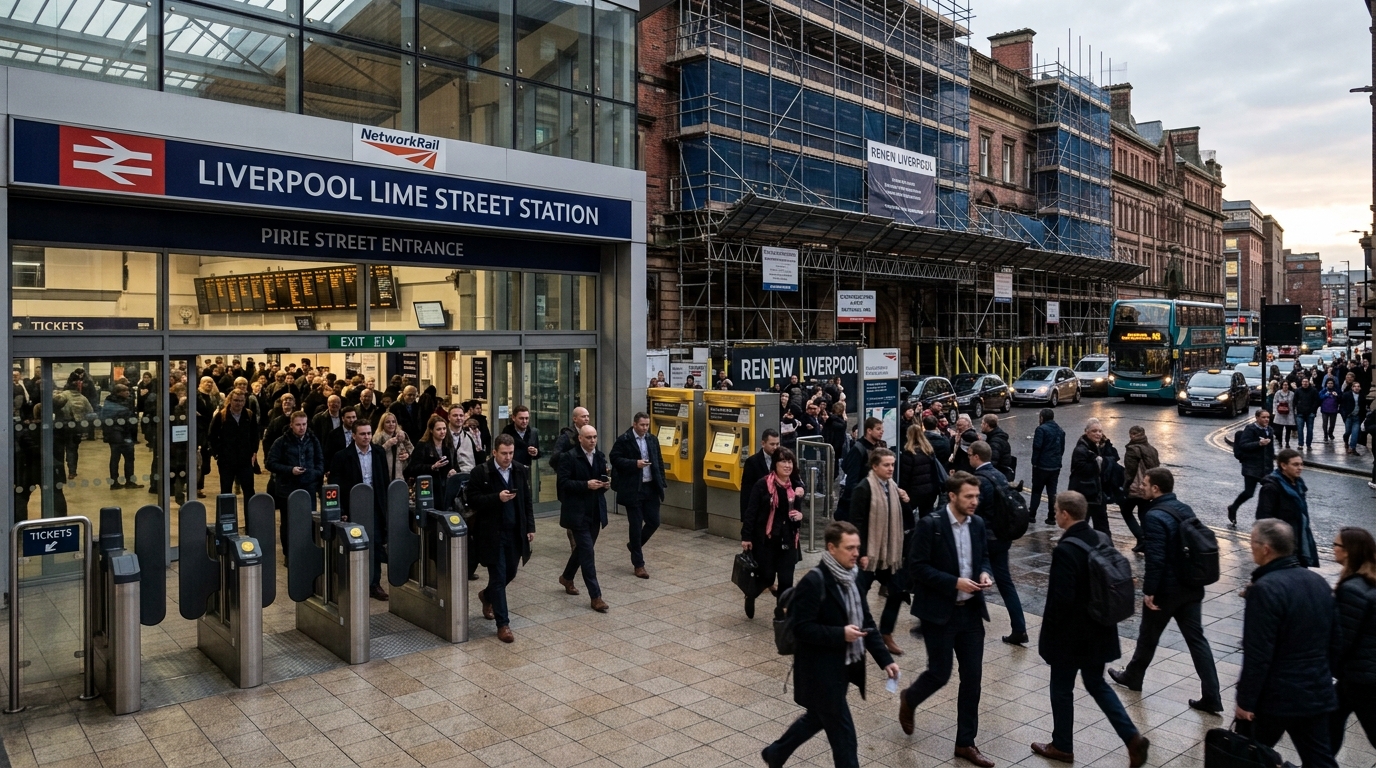
In particular, the Fifteenth Avenue Smart Transit Corridor is Liverpool City Council’s most ambitious infrastructure project and the primary mechanism for integrating the city’s existing CBD with the new economic opportunities generated by the Western Sydney Airport. The $1.2 billion corridor will use dedicated lanes for fast electric buses connecting Liverpool CBD directly to the airport precinct, providing a reliable, high-frequency transit option for the 63,000+ projected new residents in the Fifteenth Avenue growth corridor. Construction tender is expected in 2026 with major works commencing in 2027.
Additionally, the FAST Corridor is the primary mechanism linking Liverpool CBD to the new airport economy.
Source: Liverpool City Council, Fifteenth Avenue Smart Transit Corridor project.
FAST Route Capacity and Delivery Timeline
Moreover, the FAST Corridor also has significant implications for land use along its alignment. The land reservation and rezoning associated with the corridor route ensures that future development cannot compromise the transit alignment, while the prospect of high-frequency public transport along Fifteenth Avenue is already informing master-planned estate designs and residential density decisions in Austral, Leppington North, and the broader south-western growth corridor. The NSW Government’s announcement of design plans includes detailed mapping of the corridor and its integration with the airport landside network.
Meanwhile, the T3 Liverpool rail line already serves Liverpool (City to Liverpool via Bankstown and Glenfield), providing direct rail access to the Sydney CBD and connections to the South West Rail Link. The FAST Corridor will complement this existing rail service by providing a dedicated connection to the airport that the standard rail network cannot efficiently serve. When combined with the potential future extension of the airport’s own rail line, Liverpool’s position as the primary transit hub for South West Sydney will be significantly reinforced by the end of the decade.
Woodward Park Masterplan and Public Domain Investment
In particular, the Woodward Park Masterplan is one of Liverpool City Council’s major public realm investments, proposing to transform a 28-hectare parkland site into a thriving community hub with active recreation facilities, passive open space, event infrastructure, and community amenity. The masterplan reflects Liverpool City Council’s recognition that quality public domain — parks, plazas, streetscapes, and recreational facilities — is essential to attracting and retaining the professional and family population that underpins CBD economic activation. Upgraded streetscapes on George Street and Moore Street are also underway, improving the pedestrian experience in the heart of the Liverpool retail and commercial core.
Moreover, public domain investment is central to attracting and retaining professional residents in Liverpool.
Source: Liverpool City Council, Woodward Park Masterplan.
Consequently, public domain investment in Liverpool is particularly significant given the city’s historical challenge of retaining higher-income workers and residents who may otherwise choose to live in more established inner-city or middle-ring suburbs. The combination of improved public realm, a functioning university campus, upgraded transport connections to the new airport, and an expanding health precinct is creating the conditions for Liverpool to compete more effectively in the metropolitan residential market. The Liverpool City Council Planning the Future page details the council’s broader urban design and place-making strategy.
Liverpool City Centre Rezoning 2026: Austral and Leppington Growth
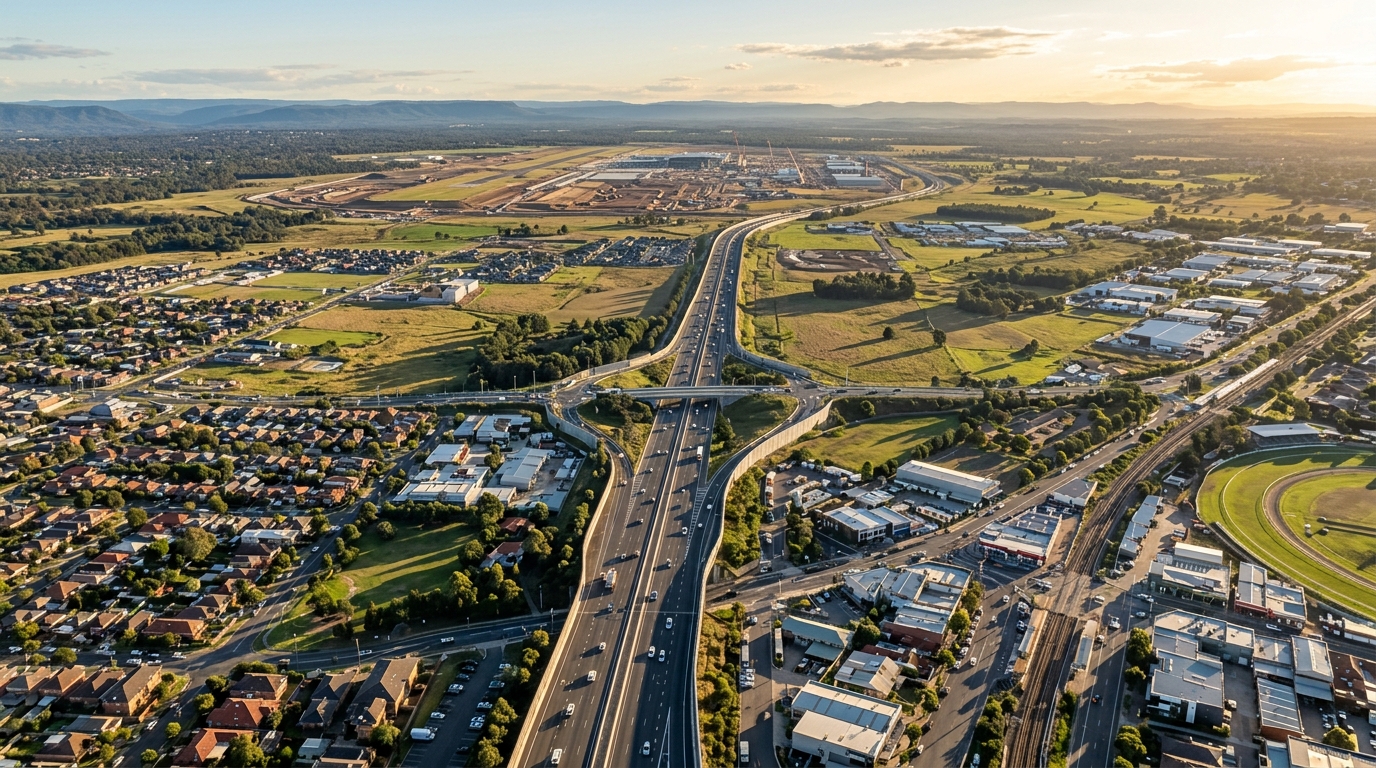
Meanwhile, beyond the Liverpool CBD, the most significant development activity in the Liverpool LGA is occurring in the greenfield growth areas of Austral and Leppington North. These master-planned communities, totalling approximately 17,500 new dwellings over the next 20 years, represent the residential backbone of Liverpool’s population growth strategy. The South West Rail Link extension to Leppington has already improved connectivity for residents in this corridor, and the FAST Corridor will provide the final link to the airport precinct that makes the Fifteenth Avenue corridor genuinely transit-accessible.
Moreover, the rezoning of Austral and Leppington North has attracted major development interest from Sydney’s largest residential builders and land developers, with a succession of land releases and new estate registrations in recent years. As of 2026, construction activity across Austral and Leppington is one of the most active residential building environments in Greater Sydney, with land values in these areas continuing to benefit from the proximity to the new airport and the anticipation of the FAST Corridor’s completion. The broader South West Sydney development market is covered in detail in Australia Develops’ guide to Camden and Oran Park development in 2026.
Additionally, the chart below compares planned new dwellings across Liverpool LGA’s major growth areas.
Liverpool LGA — New Dwellings by Growth Area (20-Year Plan)
Liverpool City Centre Rezoning 2026: Key Data at a Glance
| Metric | Figure |
|---|---|
| CBD Rezoning Framework | Amendment 52 — 25 hectares mixed-use (since 2018) |
| Liverpool Civic Tower — UOW Occupancy | 6,000sqm from 2026 |
| Helix Hub (Civic Place Final Stage) | 11-storey UOW + 5-storey flex workspace + 9-storey co-living |
| Helix Hub Completion (target) | Mid-2028 |
| Nancy-Bird Walton Airport Opens (passengers) | October 2026 |
| FAST Corridor Cost | $1.2 billion |
| FAST Corridor Construction (expected start) | 2027 (tender 2026) |
| Liverpool LGA Population (2026 est.) | ~285,000 |
| Liverpool LGA Population Target (2041) | 440,000 |
| New Dwellings — Austral & Leppington North | 17,500 (20-year plan) |
| Total New Dwellings — Liverpool LGA (20 years) | 27,000+ |
| Fifteenth Avenue Corridor Additional Population | 63,000 by 2041 |
| UOW Total Liverpool CBD Footprint (Helix Hub) | 17,300sqm+ |
Overall, this scale of planned housing growth is matched by a corresponding wave of public and private capital, summarised below.
Indeed, the figures below summarise the scale of public and private investment converging on Liverpool in 2026.
Major Investment Highlights — Liverpool City Centre 2026
Liverpool City Centre Rezoning 2026: Frequently Asked Questions
Overall, these answers summarise the planning framework, delivery dates and growth targets documented in the article.
What changed under Liverpool CBD Amendment 52?
Liverpool City Centre rezoning 2026 builds on Amendment 52, which rezoned 25 hectares for mixed-use development in 2018.
When will the airport and FAST Corridor affect Liverpool?
The airport will begin passenger services in October 2026. Moreover, transport agencies expect FAST tendering in 2026, followed by major construction from 2027.
How much growth is planned across Liverpool LGA?
The 20-year plan identifies more than 27,000 dwellings. Consequently, planning forecasts place Liverpool LGA at 440,000 residents by 2041.
Liverpool City Centre Rezoning 2026: Summary for NSW Property
Overall, Liverpool City Centre rezoning 2026 marks a genuine transition. Moreover, Liverpool is moving from a suburban centre toward a mixed-use employment hub. As a result, the convergence of the Western Sydney Airport opening, FAST Corridor advancement, UOW campus establishment, Liverpool Civic Place construction, and sustained residential growth in the LGA’s greenfield areas is creating a fundamentally different urban context than existed even five years ago. Consequently, the CBD rezoning framework established in 2018 is now bearing fruit in the form of major mixed-use developments that are beginning to deliver the retail activation, educational presence, and residential population that define a functioning city centre.
In particular, the most significant driver of Liverpool’s medium-term trajectory remains the Western Sydney Airport and its associated economic precinct. Moreover, the Aerotropolis, the FAST Corridor, and the broader network of infrastructure investments along the western corridor of the Liverpool LGA are repositioning South West Sydney as a major employment destination in its own right — not merely a dormitory suburb for the Sydney CBD. Consequently, this repositioning continues to gain momentum over the next decade, Liverpool’s role as the gateway city between the established metropolitan network and the new western frontier will become increasingly central to the Greater Sydney story. Therefore, understanding Liverpool’s development pipeline is therefore essential for anyone tracking the NSW property and planning market in 2026. In addition, broader context appears in the coverage of NSW TOD rezoning and the Campbelltown-Macarthur development corridor.
This article is for general informational purposes only and does not constitute financial, investment, or legal advice. Seek independent professional advice before making property decisions. See our Disclaimer for details.